Mick Jones, Big Audio Dynamite and Me…
Really to see where you've come from, you have to go someplace else. Otherwise you wouldn't understand that the world didn't finish at the end of your street.
Mick Jones
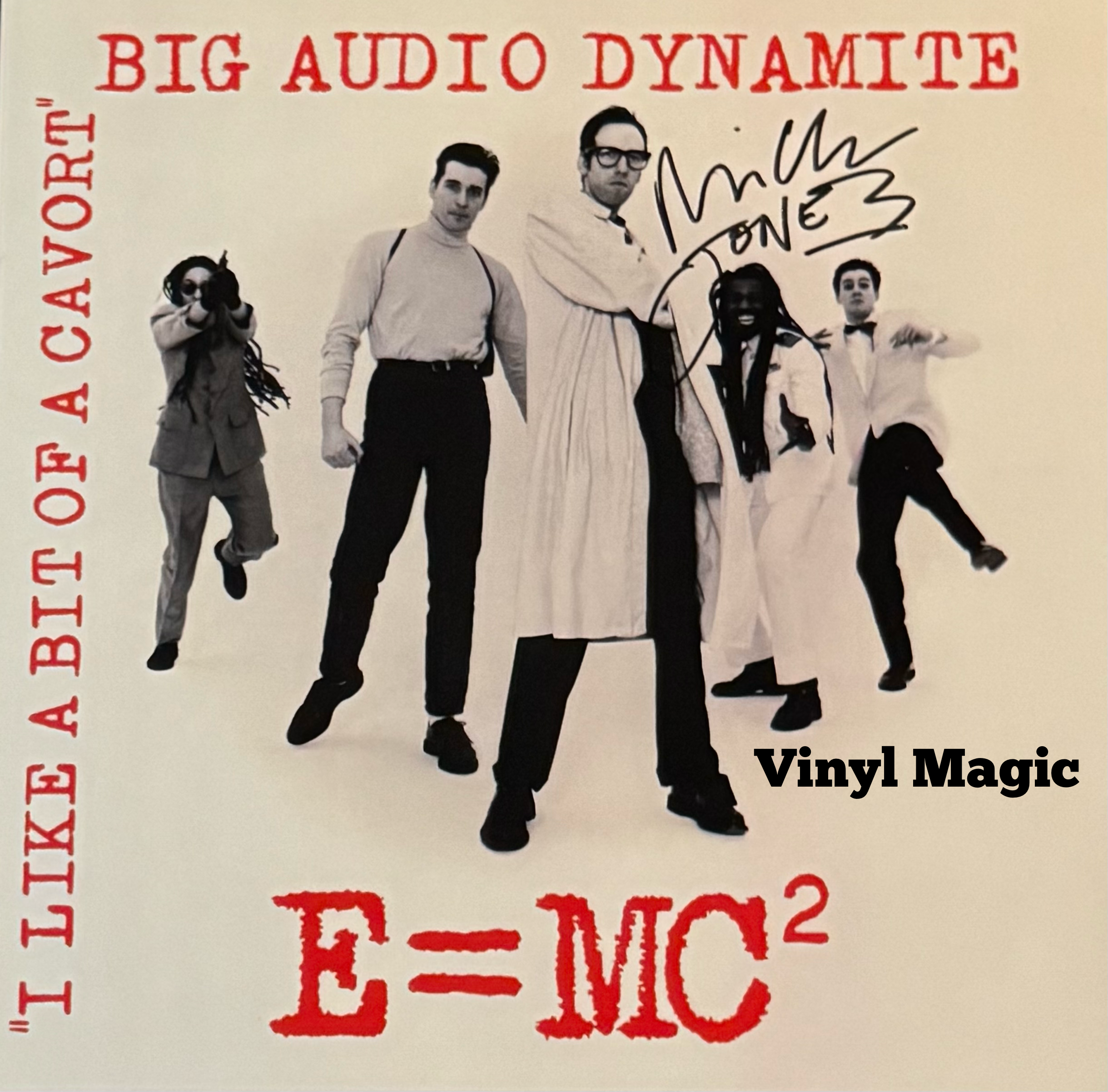
E=MC2 (1986 12” single) signed by Mick)
But even before the New York Dolls, I used to follow bands around. I followed Mott the Hoople up and down the country. I'd go to Liverpool or Newcastle or somewhere—sleep on the Town Hall steps, and bunk the fares on the trains, hide in the toilet when the ticket inspector came around. I'd jump off just before the train got to the station and climb over the fence. It was great times, and I always knew I wanted to be in a band and play guitar. That was it for me.
Mick Jones
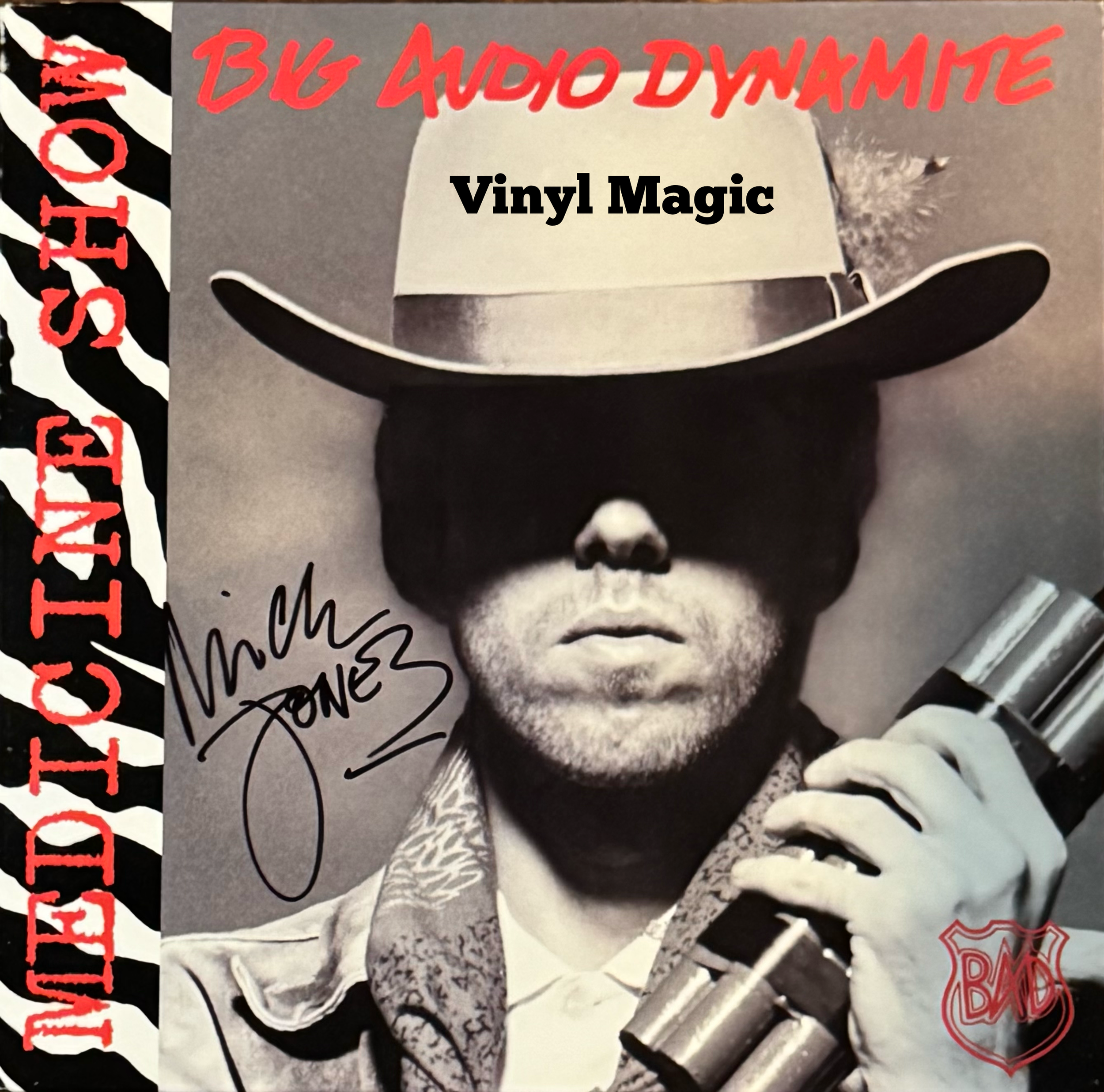
Medicine Show (1986 12” single) signed by Mick
In a way, I killed off what I was good at, in order to do something different.
Mick Jones
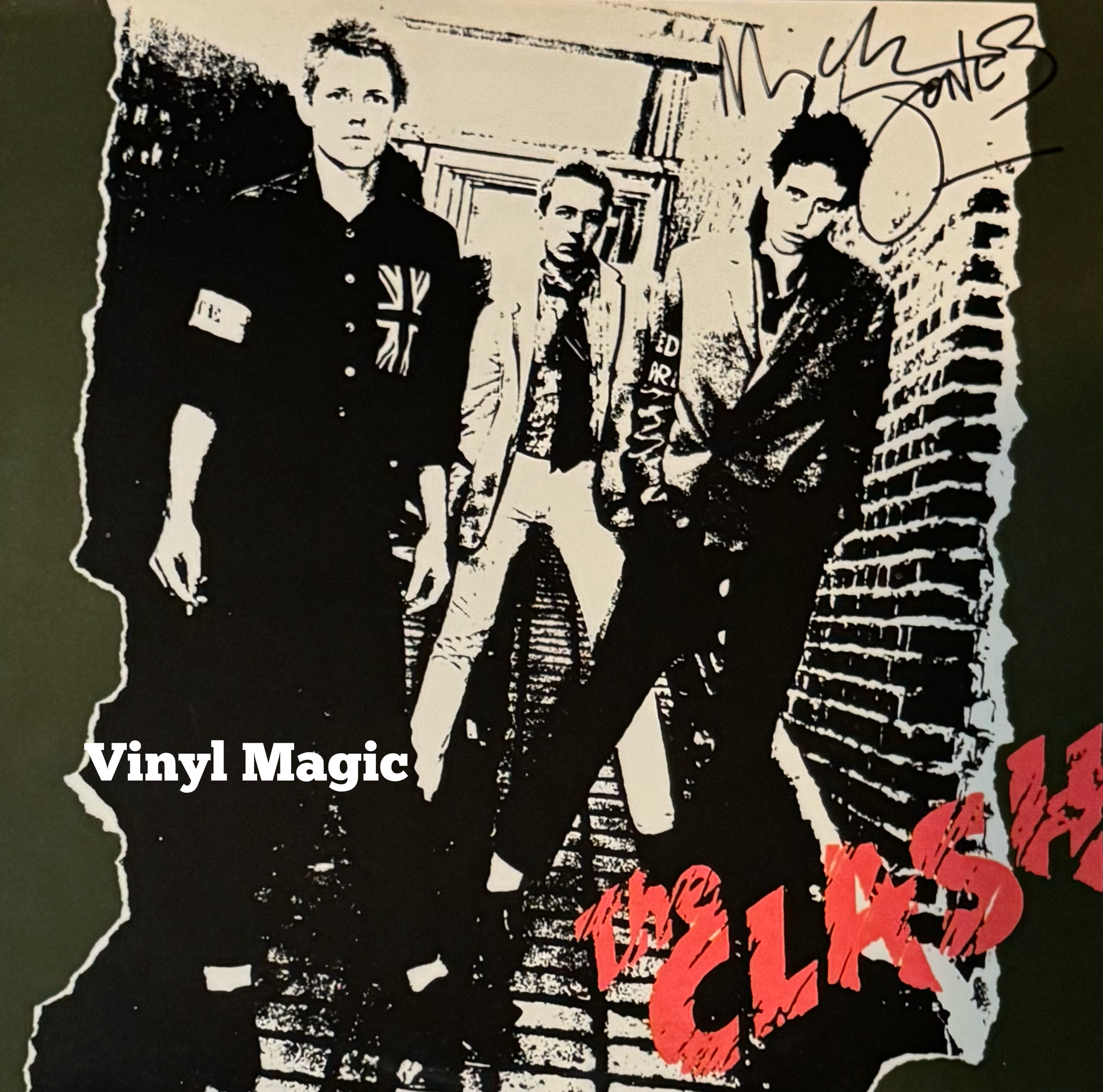
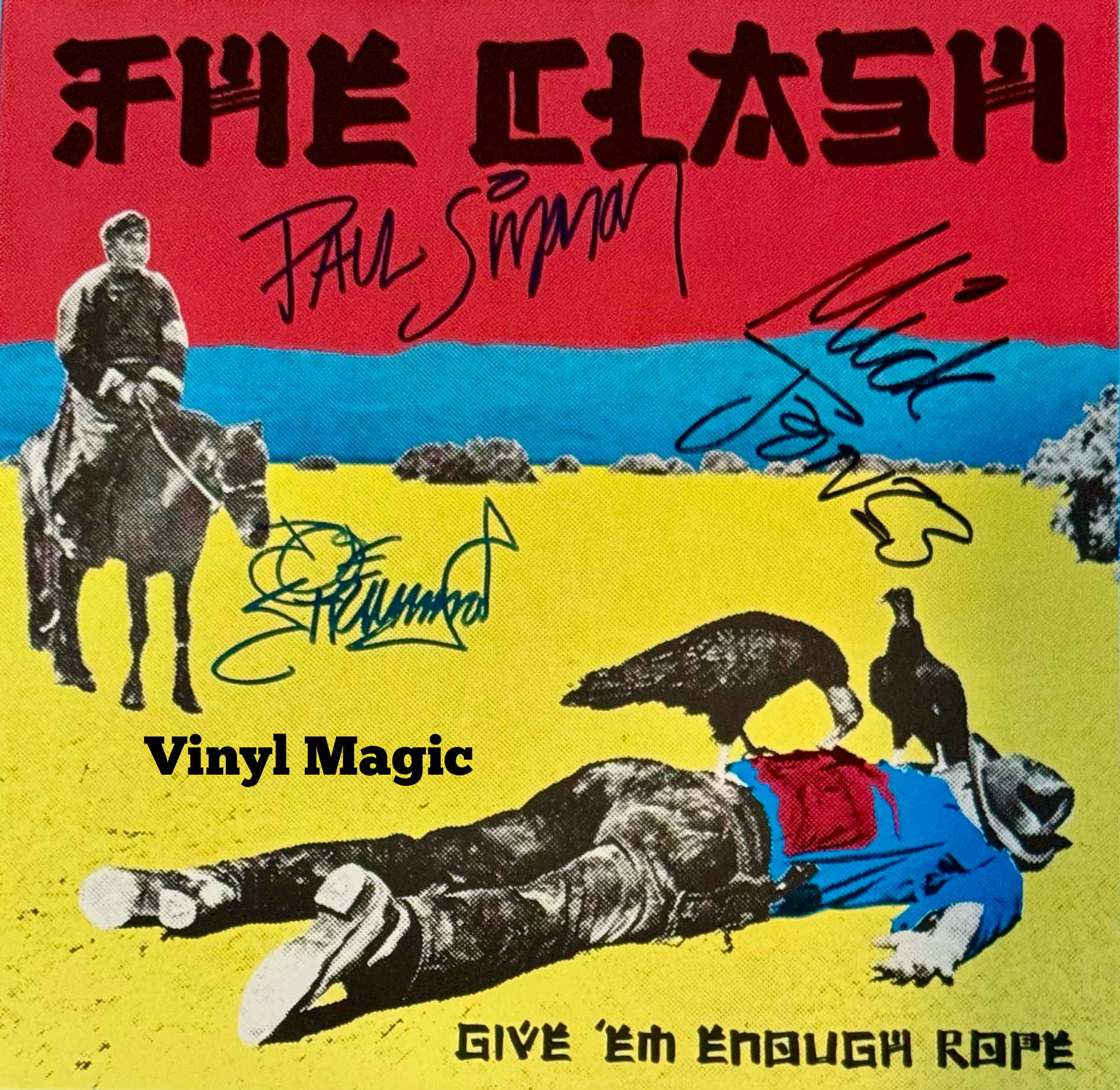
The Clash (1977) signed by Mick
Well, I think we did a fairly good job. I would’ve liked to have done more, if the occasion had arisen. But it never did. We gradually just got bigger and bigger, I guess, until we burst. Maybe that’s all right. We came, did our bit, and it all carries on.
Mick Jones on the legacy of The Clash
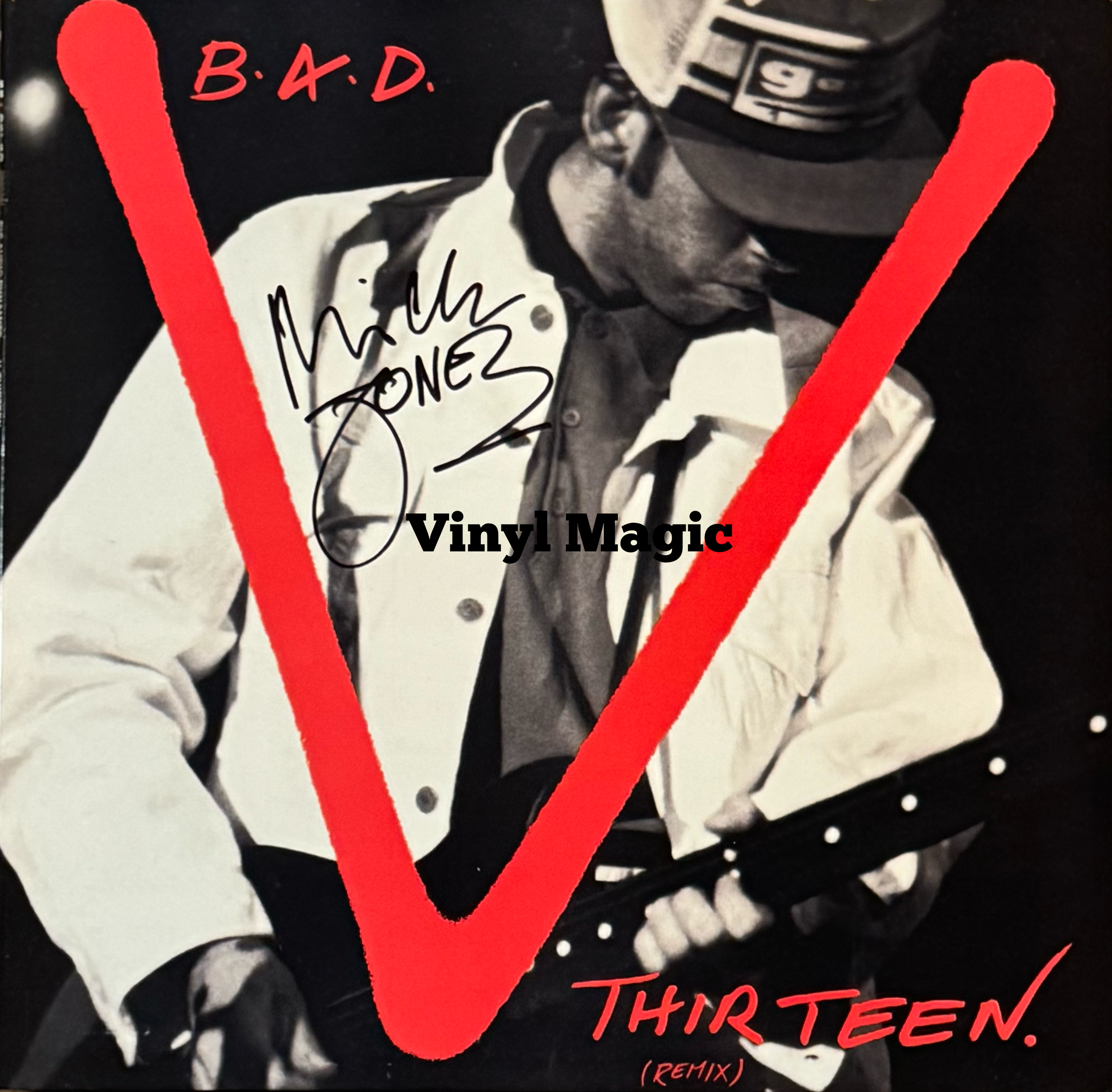
When Mick Jones got bounced from The Clash in 1983, he formed Big Audio Dynamite (BAD) with Don Letts, a filmmaker who helmed The Punk Rock Movie (1978) and The Clash documentary Westway To The World (2000). The music of BAD was a strange amalgam, with elements of punk, funk, hip hop, rock, reggae, dub, dance, spoken word and, even spaghetti western. All the music food groups. This Is Big Audio Dynamite(1985) is an impressive debut with an original and unusual sonic alchemy. Most songs were co-written by Mick Jones and Don Letts and reflect Letts' aural filmography paired with Jones' tuneful melodies. And liberal use of movie samples. Ennio Morricone's spaghetti western masterpiece The Good, The Bad and The Ugly is quoted directly on the first track, "Medicine Show", and Clint Eastwood shows up with two quotes from A Fistful Of Dollars: "Get three coffins ready" and "I don't think it's nice, you laughin'." And from John Huston's classic The Treasure Of Sierra Madre, the admonition "I don't have to show you any stinkin' badges." The third track, "E=MC2" uses extensive quotes from Nicholas Roeg's Performance (1970), including Mick Jagger's cheeky line, "I like a bit of a cavort."
BAD would release nine albums over their career with a revolving cadre of musicians, but the core was Mick Jones' singing and songwriting. The first time I saw BAD was at The Channel in Boston in the mid-late 80s. The Channel was an important Boston music club, and many artists played there, everyone from James Brown, Bo Diddley, and John Lee Hooker to punk bands like Husker Du, The Jam and X. The great Warren Scott was the primary booker of talent from 1980 to its eventual closing in 1991, and the artists reflected his discerning and eclectic tastes. He was masterful. Warren was also my older brother's college friend which gave me access to some incredible shows. Thank you, Warren!
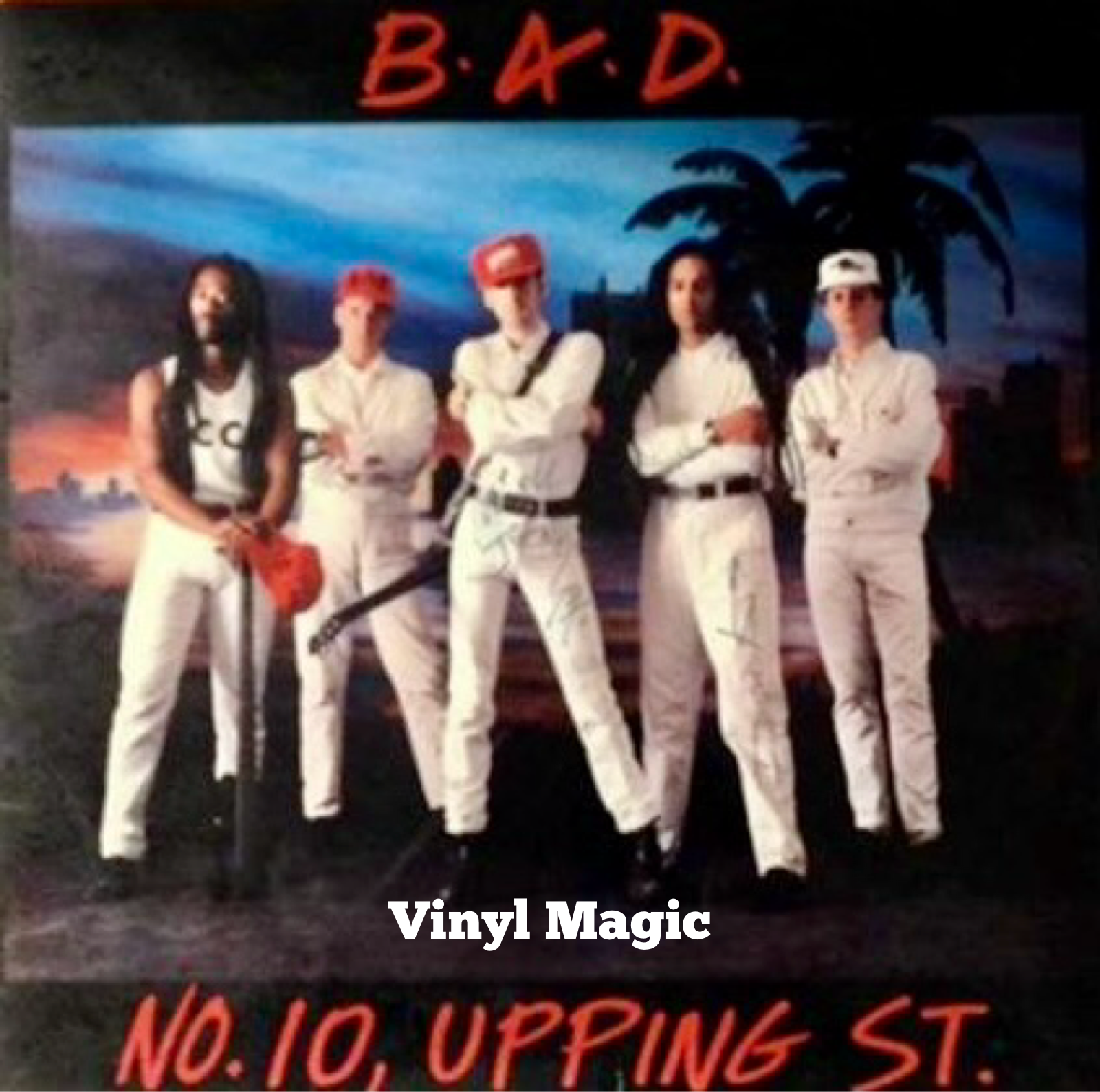
No. 10, Upping St. (1986) signed by Mick, Don Letts)
I met Mick Jones and Don Letts before a Channel soundcheck and they were very kind in signing some albums. No.10, Upping Street (1986) featured a painting by Tim Jones with Mick and the boys in front of palm trees and the Miami skyline as a backdrop. The portrait was an homage to a still lifted from Brian De Palma'sScarface (1983). And the film school references didn't stop there. The coda to "Dial A Hitman" has original dialog recorded with Matt Dillon and Laurence Fishburne credited to Lafayette-Zero-Six, a "film" Jim Jarmusch neither made nor exists. And "Hollywood Boulevard" samples Orson Welles and Peter O'Toole, while "Sambadrome" contains Brazilian football announcer Osmar Santos' epic call "Goooooaaaaallllllllll...." All the while, Jones provides some very danceable hooks, proving one man's pastiche can be another man's genius. Especially on the dance floor.
A decade later, I saw an incarnation of Big Audio Dynamite which featured vocalist Rankin' Roger of the English Beat at The Bayou in Washington, DC. The Bayou was a storied rock club at the base of Georgetown, steps from the Potomac River, under the Whitehurst Freeway. It started as The Pirate's Den in 1939, owned by Captain Don Dickerman who believed he was a reincarnated pirate. For Captain Don, every day was National Talk Like A Pirate Day. Mercifully, his ownership ended after a couple of years, and the club became an after hours club called The Hideaway, and finally, it was renamed The Bayou in 1953. The Bayou began life as a dixieland jazz club, then switched to rock and roll in 1965 until it closed in 1999. It had a great run and hosted some impressive bands: The Replacements, Dave Matthews, Neutral Milk Hotel, Warren Zevon and (incredibly) U2 opened for DC's own Slickee Boys in the the early 80s in one of U2's first US gigs. The Bayou was razed in 1999 to make room for a development. Yes, they paved paradise and they put up a cineplex!
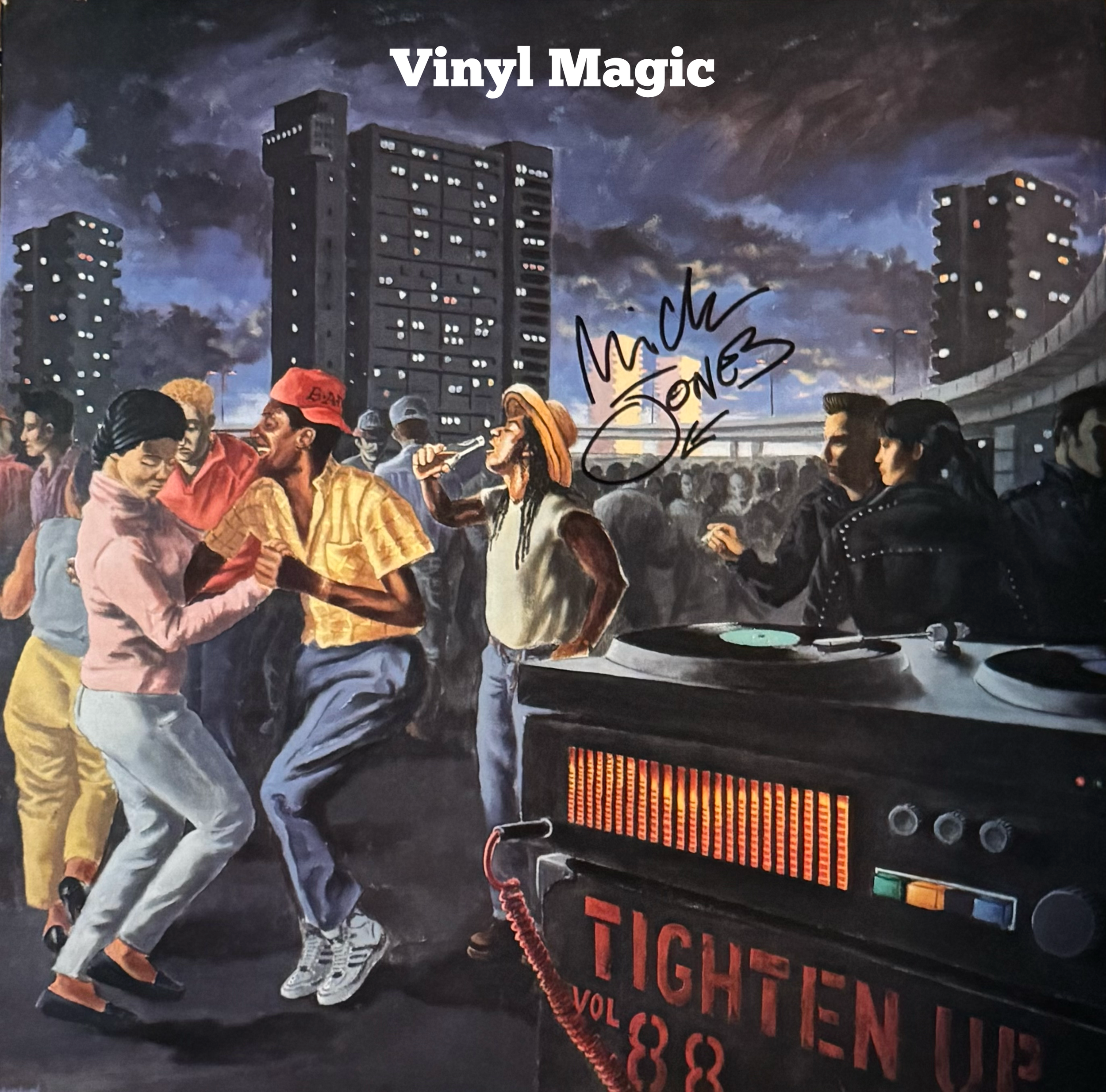
Tighten Up Vol 88 (1988) signed by Mick
After a spirited BAD show at The Bayou, I headed backstage which was upstairs in the back of the balcony, stage left. I slid in line with one of the newer band members who was an MC. I told him that I had some albums for Mick to sign. He said, "Sure, follow me." So I did. The door swung open to a 10' x 10' dressing room, square with no windows. In the middle of the room, a table with a disheveled pile of cold cuts and sandwiches, unappealing, and untouched. No hint of champagne and caviar, this was a decidedly low-brow banquette. There were at least 25 people crammed in every nook and cranny.They were everywhere, except near the buffet table. I saw Mick. He looked aghast. He was about to light up a spliff and he felt busted. I assured him that he could do anything, it wouldn't faze me. When he saw Tighten Up Vol. 88, (1988) he smiled and said that Paul Simonon (former Clash bassist) had painted the cover. He was quite proud of Paul's prowess as a painter, and Mick circled where he was (with his back to the crowd talking with Joe Strummer, his co-producer and co-writer). He pointed to Paul Simonon and his girlfriend who were near the DJ's turntables.. It is a great album cover and design, and Paul Simonon has had a successful second career as an artist, showing in several prominent London galleries.
Big Audio Dynamite: an influential band with an intoxicating brew of sounds.You don't have to go to film school to enjoy them, but it helps. And who doesn't like a bit of a cavort?