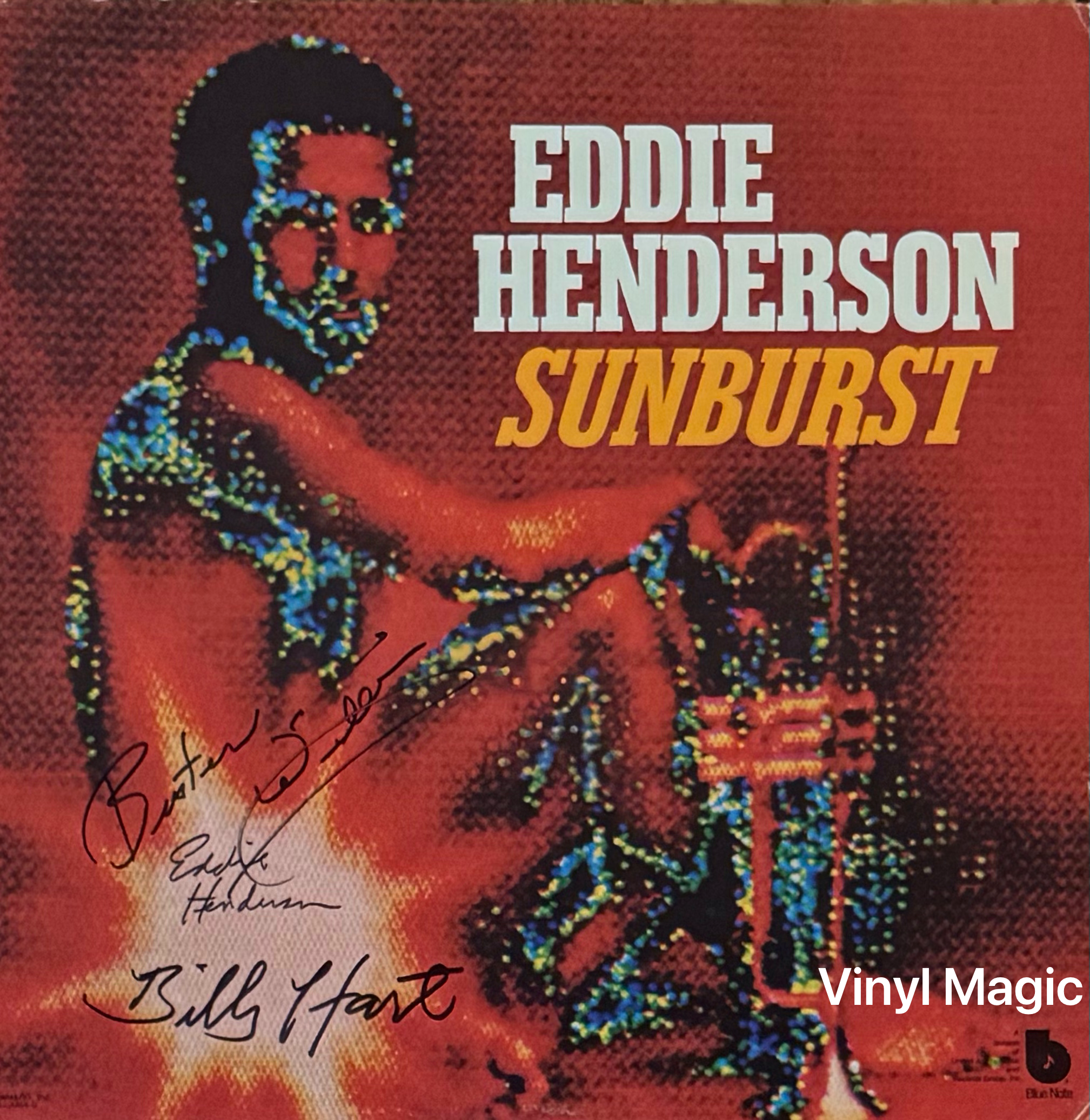
Eddie Henderson, The Trumpet and Me...
Sunburst (1975) signed by Eddie, Billy Hart, Buster Williams
Mwandishi (1971) was the first album I ever did with Herbie Hancock and the first time I recorded. That session was just like a spiritual experience, just looking around and realizing I was playing with these guys, and the music was just divine, and it really changed my whole life. Because up to that point, I was playing local gigs around San Francisco, and I thought that was what I would do for the rest of my life. And it just elevated me to a point: it was undeniable, no doubt in my mind, it's what I wanted to do for the rest of my life. I got that gig just by a fluke accident. Johnny Coles was the original trumpet player with Herbie Hancock before me. He was on a sabbatical with Ray Charles for six months, so Herbie needed a trumpet player for one week. After that one week was over, I was just ecstatic, and they were gonna go back to New York, I was heartbroken. I told (drummer) Billy Hart that I would really like to stay in this band. He said, 'Well, go propose it to Herbie." So I went to Herbie, and he said, "But you're a doctor." I said, "To hell with that. I will always be a doctor. I have my license." So, he thought for about two to three seconds. He just said, "Alright, you're in the band." And that changed everything, the whole trajectory for the rest of my life.
Eddie Henderson
It's a constant movement in terms of evolving from where I was, step by step, as time and events went on. It never stops. I keep meeting new people and I keep getting inspired. For example, I just taught as an artist in residence at the Louis Armstrong Summer Jazz Camp for kids ages ten to eighteen. Those kids are so talented, and I got inspired by these little children playing. There's no juncture where it begins or ends, it's a continuum.
Eddie Henderson
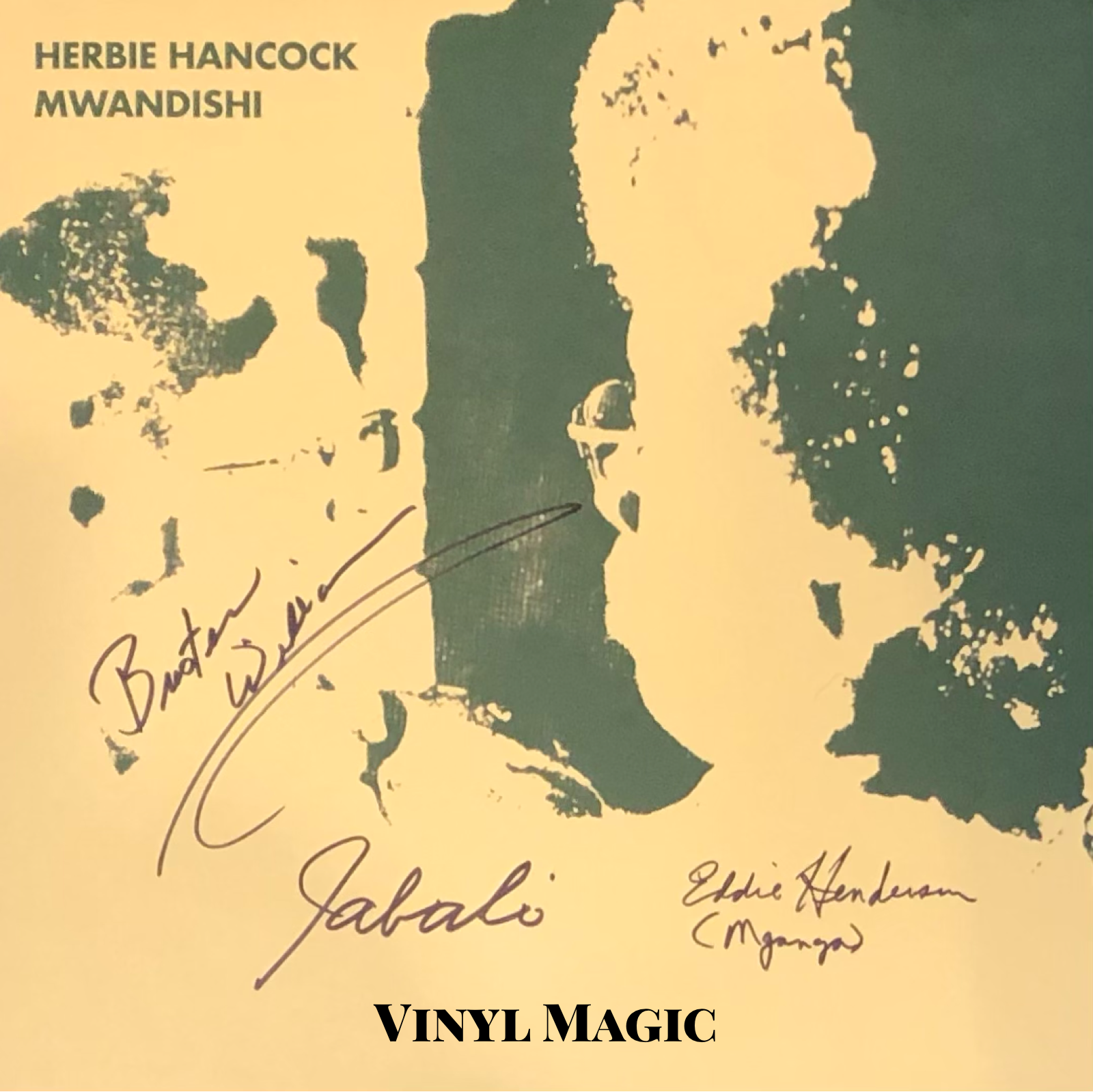
Mwandishi (1971) signed by Eddie, Jabali aka Billy Hart, Buster Williams
I think it’s so important to pass on the things I’ve learned in my career to the upcoming generation of talented musicians who, just like me, want to pursue a career in music. It’s like a relay race. I’m just passing the baton of the knowledge that I got from my predecessors to them so that the tradition can go on into the future. Another joy I get from my students is it keeps me on my toes. A lot of them are very talented—it makes me start practicing! I’ve learned a lot from them, too. It’s a reciprocal process and that’s the beauty of it.
Eddie Henderson
One of the foremost trumpet voices in jazz, Eddie Henderson has had a remarkable life. There is no one quite like him, a skilled ice skater who was an Olympic hopeful, a medical doctor with a successful practice, and, oh yeah, a sprawling and celebrated music career which is still going strong into his 83rd year judging by his recent 2022 album release, Witness To History. In his vast and impressive discography, Eddie has released more than twenty-five albums as a leader and contributed to hundreds of sessions with jazz greats, Kenny Barron, Gary Bartz, Herbie Hancock, Joe Henderson, Pharoah Sanders and McCoy Tyner among many others. In every literal and figurative sense, Eddie has led an exemplary life as a healer as both a physician and musician, and we are so blessed for his considerable work, efforts, and discipline.
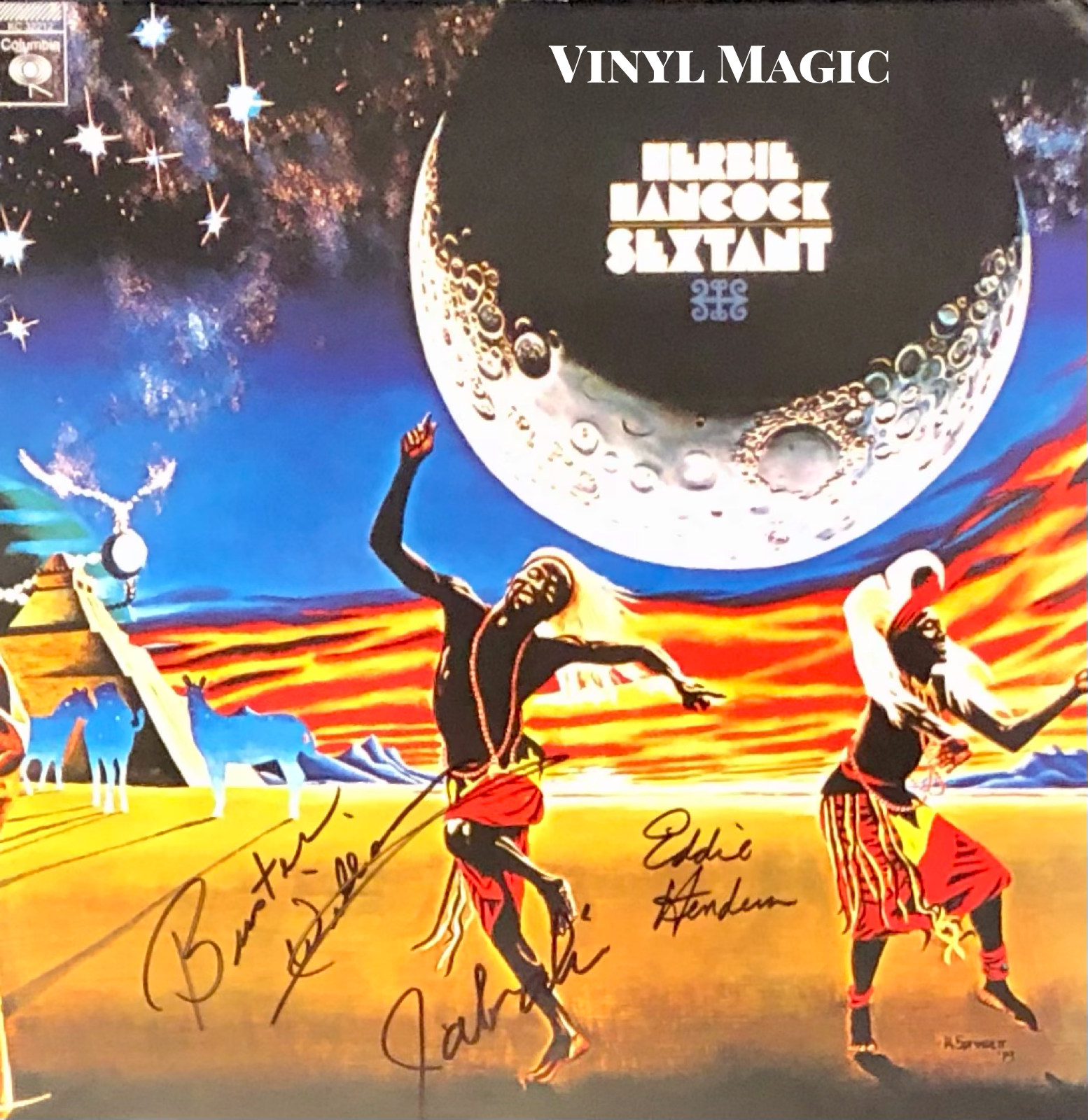
Sextant (1973) signed by Eddie, Jabali aka Billy Hart, Buster Williams
Born in New York City in 1940, Eddie was surrounded by music. His mother was a professional dancer at the famous Harlem boite, The Cotton Club, and his father was a member of the gospel group, The Charioteers, a name derived from the gospel classic "Swing Low, Sweet Chariot," who were one of the most popular vocal groups during the 1940s. In such a milieu, it was not uncommon for all sorts of musicians to visit Eddie's home. In fact, Louis Armstrong gave Eddie an impromptu lesson during a backstage concert visit, "My mom was actually one of the original Cotton Club dancers, so she knew people like Dizzy Gillespie, Duke Ellington, Count Basie, and all the greats in show business. By virtue of that, she knew Louis Armstrong too. When I was nine years old, she took me down to see him play at the Apollo theater. Sarah Vaughn (singer extraordinaire), me and my mother were watching a big band, and I saw Louis behind a curtain warming up along with the band. You could hear his sound cut above the whole band. I remember thinking to myself "Damn, he has a big sound!' My mother took me backstage and introduced me to him. He taught me how to make a sound on his trumpet and mouthpiece. I looked at my mother and said “Who’s this cat mommy?” I had no idea who he was. That was my first lesson."
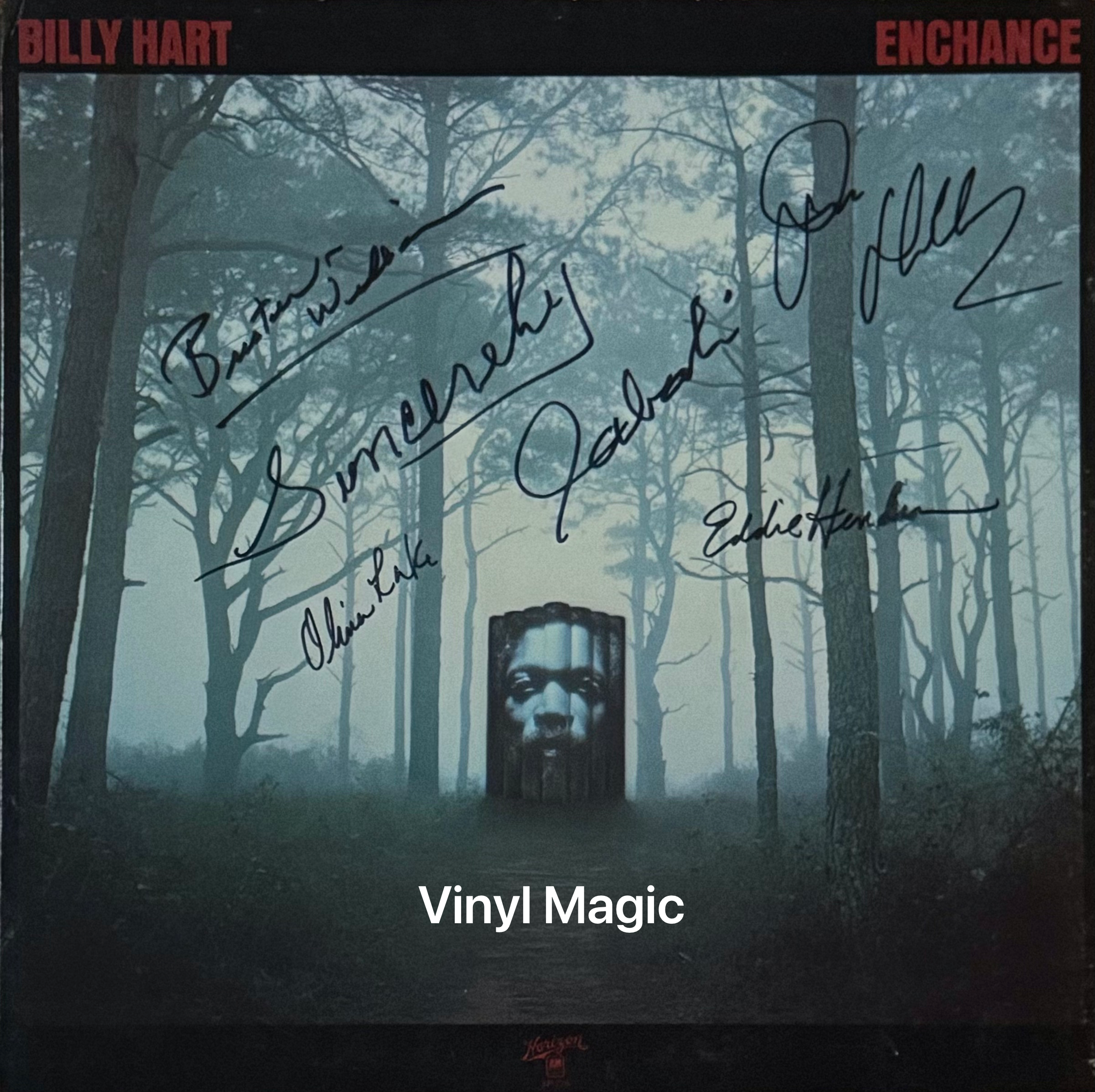
Enchance (1979) signed by Eddie, Dave Holland, Buster Williams, Jabali aka Billy Hart, Oliver Lake
The chance meeting with Louis had a profound effect on Eddie, as he later described, "He inspired me to keep practicing, and by age ten, I was playing "Flight of the Bumblebee." After a few years, my mother took me back to see Louis Armstrong, and he asked me if I was still playing. I said “Yea man, give me your horn.” I didn’t really know who he was at that point. I remember playing "Flight of the Bumblebee" for him, and he screamed and fell off his chair. As he was getting up he said “Damn little Eddie, that’s some of the baddest shit I’ve ever heard!” He told his wife to give me his book of ten of his solos, transcribed. At the top, he wrote “To little Eddie, this is to warm your chops up. Love, Satchmo.” I still have the book today. That’s how it all started." The precocity of youth as Eddie was just starting to get his ferocious chops warm!
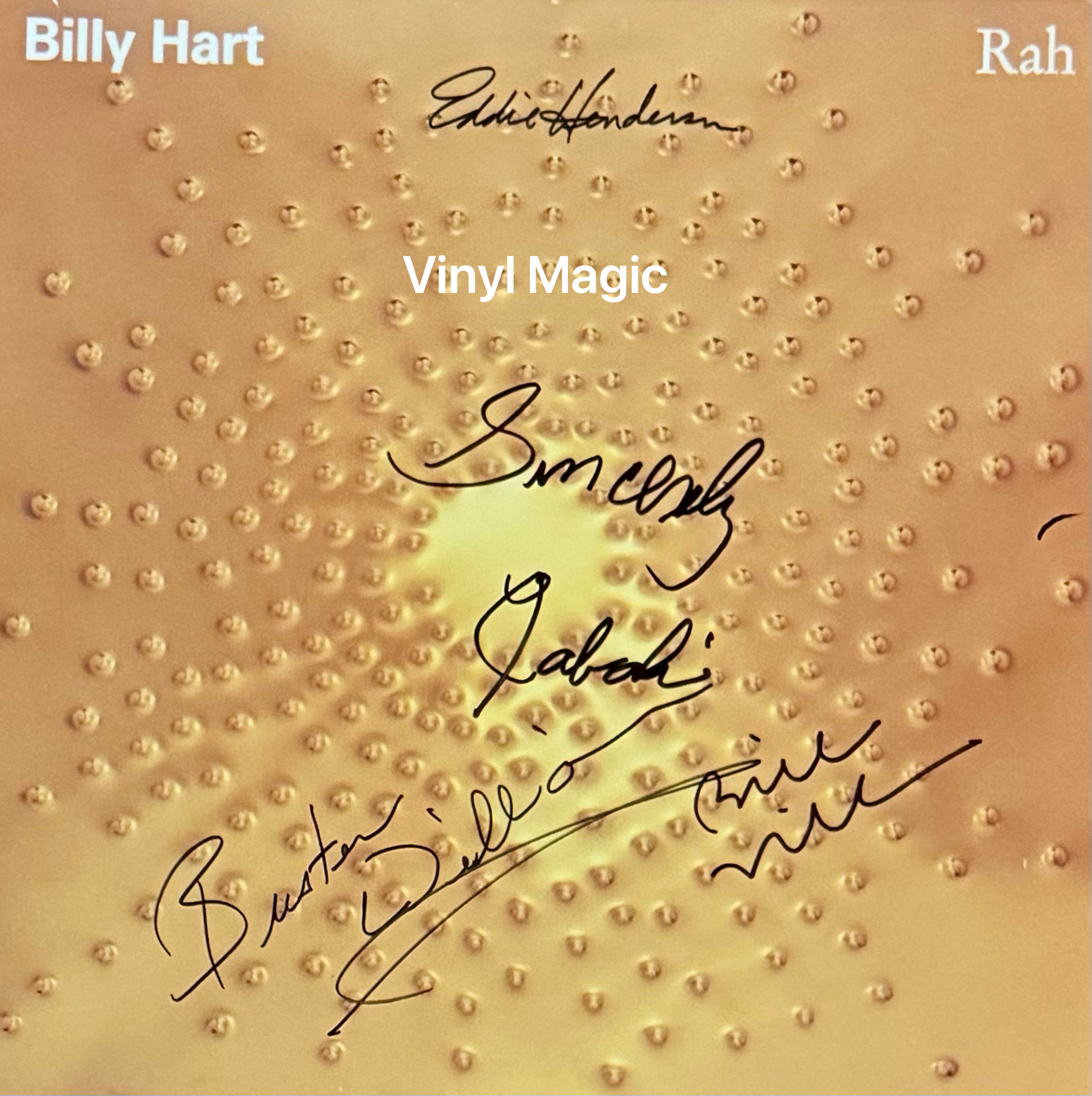
Rah (1988) signed by Eddie, Jabali aka Billy Hart, Buster Williams, Bill Frisell
Unfortunately, Eddie's father passed away unexpectedly, and his mother remarried and uprooted Eddie in 1954, "I moved to San Francisco during the summer when I was fourteen, and I had no friends, so my stepfather—he was a very wealthy doctor—afforded me to go see the Ice Follies. From the first day I saw that, I was mesmerized. The star of the Ice Follies, Richard Dwyer, gave me my first two lessons during that summer." Eddie was smitten with ice skating, as he recalled, "If I tell you the truth, I thought figure skating was my calling in life. I ran into so much racism (this was in the late 50’s). Back then, figure skating was very white, so I was the first black person in the world to compete. Figure skaters usually have to represent a club, like golf clubs nowadays. I tried to join the San Francisco club, but they wouldn’t even give me an application. I had to compete as an individual member of the United States Figure Skating Association. After I joined the Air Force, I moved to Colorado Springs, where the Olympic figure skating champions trained. Their club welcomed me with open arms and wanted me to represent them. I trained in an ice arena in Colorado Springs with the Olympic team, so I really thought that was my calling in life. I really wanted to be in the Ice Follies someday. When I finished medical school, I went back to see them. My hero, Richard Dwyer, was still in the show, but this time, they had one token black skater. He was dressed up in a red white and blue Uncle Sam costume, skating to “Ol’ Man River." I thought to myself, I don’t want to be a part of this shit. That was the end of my ice skating aspirations." Despite the inhospitable environment, Eddie was talented enough to win a bronze medal at the Midwestern Championship, the first African American to ever make the podium and medal in a figure skating championship, becoming the veritable Jackie Robinson of US figure skating! Notwithstanding his disillusion and disappointment, Eddie concentrated on music and his studies: ice skating's loss was medicine's and music's gain.
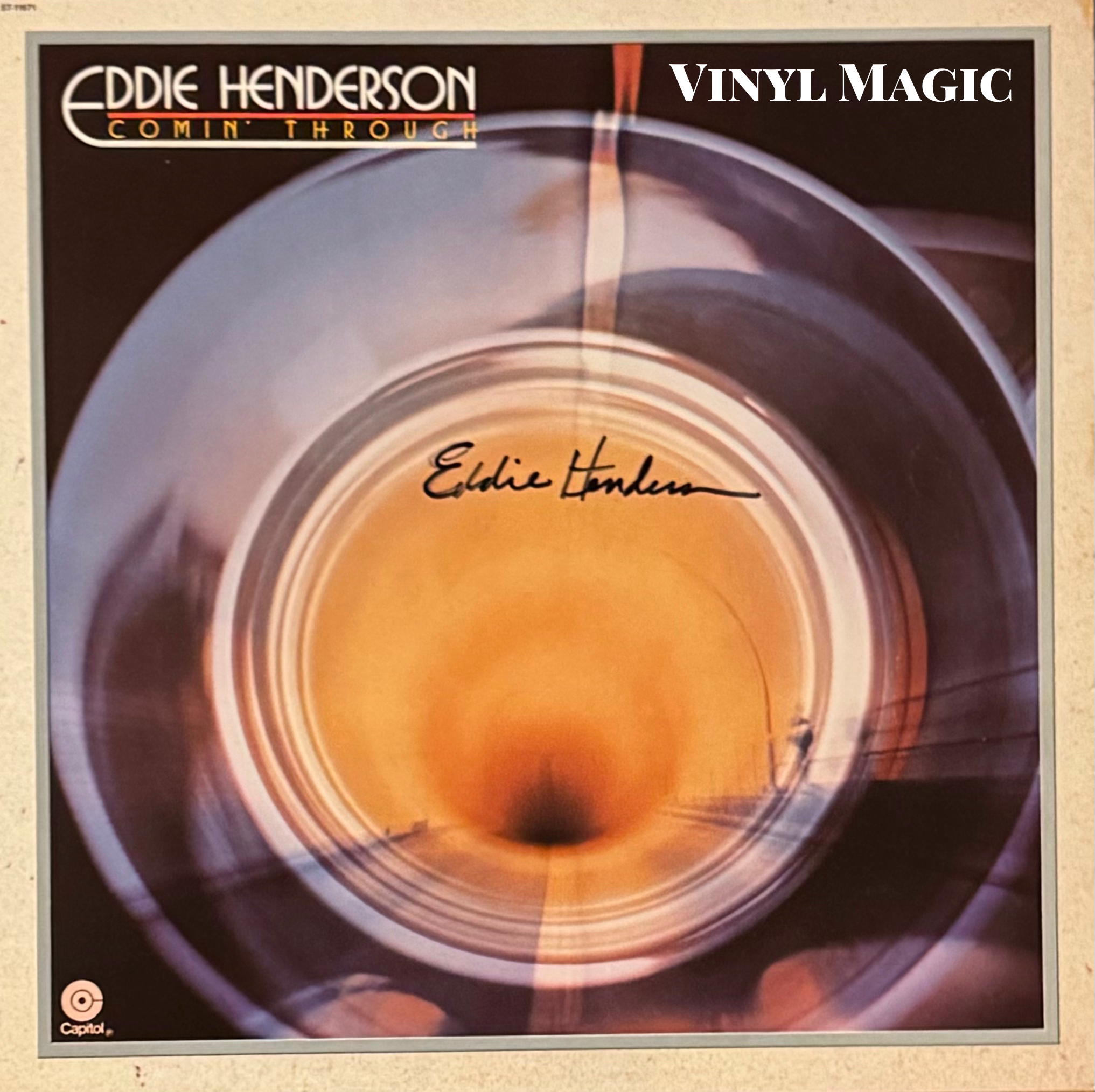
Comin’ Through (1977) signed by Eddie
While Eddier was still in high school, the visits to his new home in San Francisco were equally eventful and inspiring. His stepfather was a noted doctor who treated Cannonball Adderley, John Coltrane and Miles Davis, who was also a frequent visitor, as Eddie remembered, "I tried to emulate or play just like him with the records, and Miles told me I knew his style, concept, sound and everything. He said, why don't I stop trying to imitate him? I said because my parents won't let me. When Miles was there at my parents' house, my parents had me play for him with the records for two weeks. I played along with Miles' Sketches of Spain. Miles told me, "You sound good, but that's me." So, a year later, he returned to town and stayed at my parent's house. But in that interim, I discovered that the guy he copied, his hero, was Freddie Webster who not many people know because he only recorded eight bars of solo on a Dinah Washington album. That was Miles' hero, who he copied and emulated. So when Miles returned a year later and knocked on the door, I answered it. He said, "Are you still trying to sound like me?" I said, "You mean Freddie Webster?" The look on Miles' face... his jaw dropped to the floor. He smiled, chuckled, and whispered in my ear, "Everybody's a thief. I just made a short-term loan." I asked Miles, "How do you play? What do you think about?" He said, "Learn as many licks as possible and then scotch tape them together. When people ask me about my style, I say, "My style? It's just licks I've scotch-taped together or stolen from people who came before me." It's just a reflection of me; that's my style, and that's what Miles Davis' style is. He didn't just drop out of the sky abstractly; he scotch-taped the heroes that came before him."
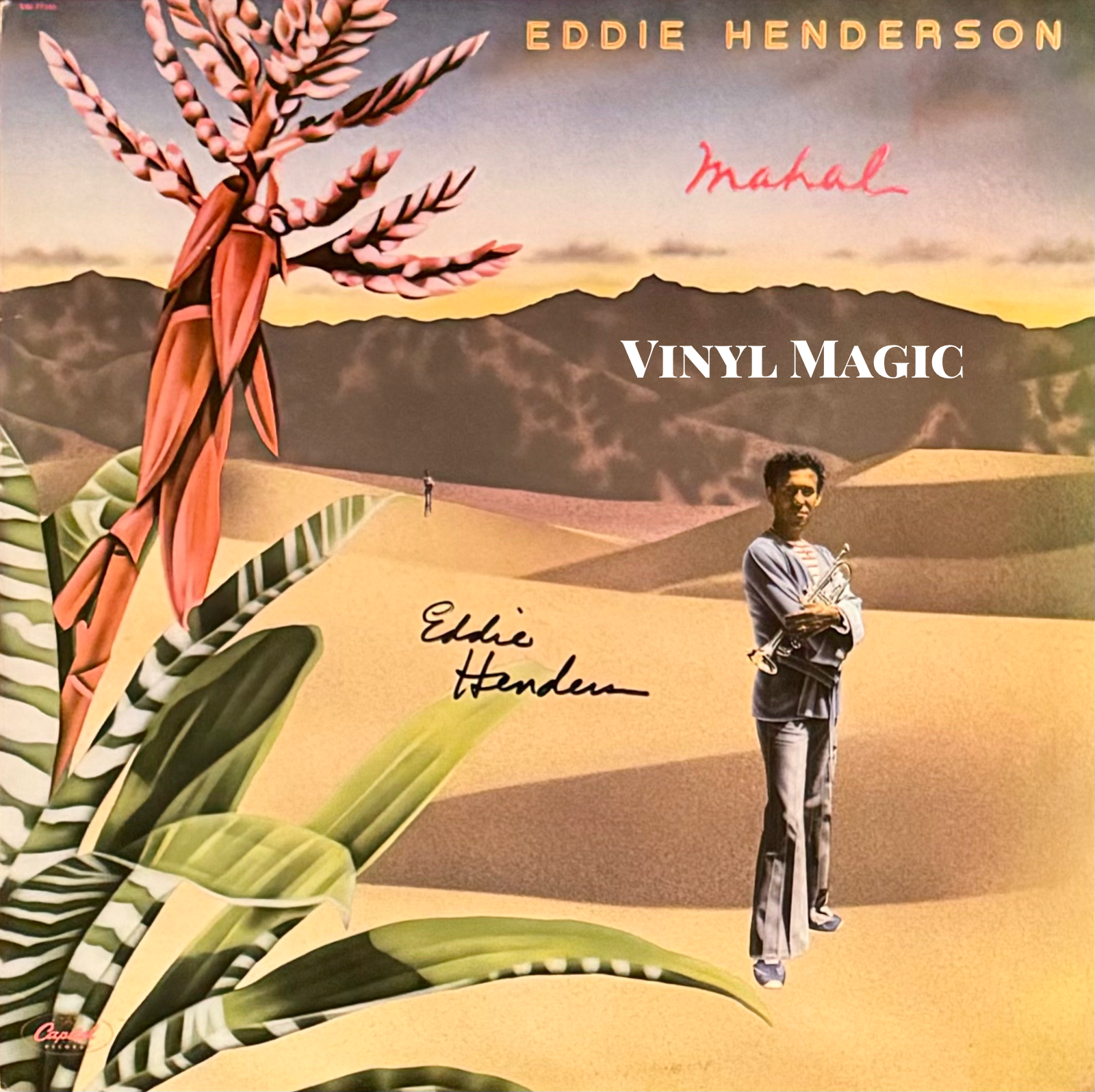
Mahal (1978) signed by Eddie
Developing his chops, Eddie stayed busy, graduating from the University of California, Berkeley before enrolling in medical school at Howard University in Washington, DC. He graduated with a degree in psychiatry but he found the practice of psychiatry less than fulfilling, "That's like doing construction work. It's emotionally and physically depleting, but I did have a residency for a while. I would ask patients, 'What seems to be wrong today?' and they'd say, 'Well, you're the doctor. You tell me.' They played all those mind games. Basically, I just wanted people to come in and say 'ah' and not bother me. I didn't have any time for head trips. Everybody in San Francisco knew I played music. People would come to my office and the nurse's aid would say: 'He's in the back practicing. He's got a gig tonight. Don't bother him. If his chops aren't right he's unhappy.' That's the kind of lifestyle I had." While he was studying at Howard, he did take advantage of the proximity to New York City and soaked in the vibrant music scene, "Every weekend, when I was in medical school, I would drive from DC up to New York. On Saturday, I’d be at Freddie Hubbard’s house, and Sunday, I’d be at Lee Morgan’s house. I would just listen to them practice and go to different clubs, following them around. They let me sit in and play with them. Hopefully, some of their expertise rubbed off! I just watched them and wrote everything down that they played and practiced." It's hard to imagine a finer trumpet lineage than Louis Armstrong to Miles Davis to Freddie Hubbard to Lee Morgan, trumpet demigods each! No wonder Eddie is so talented, it was seemingly preordained, but his work continues.
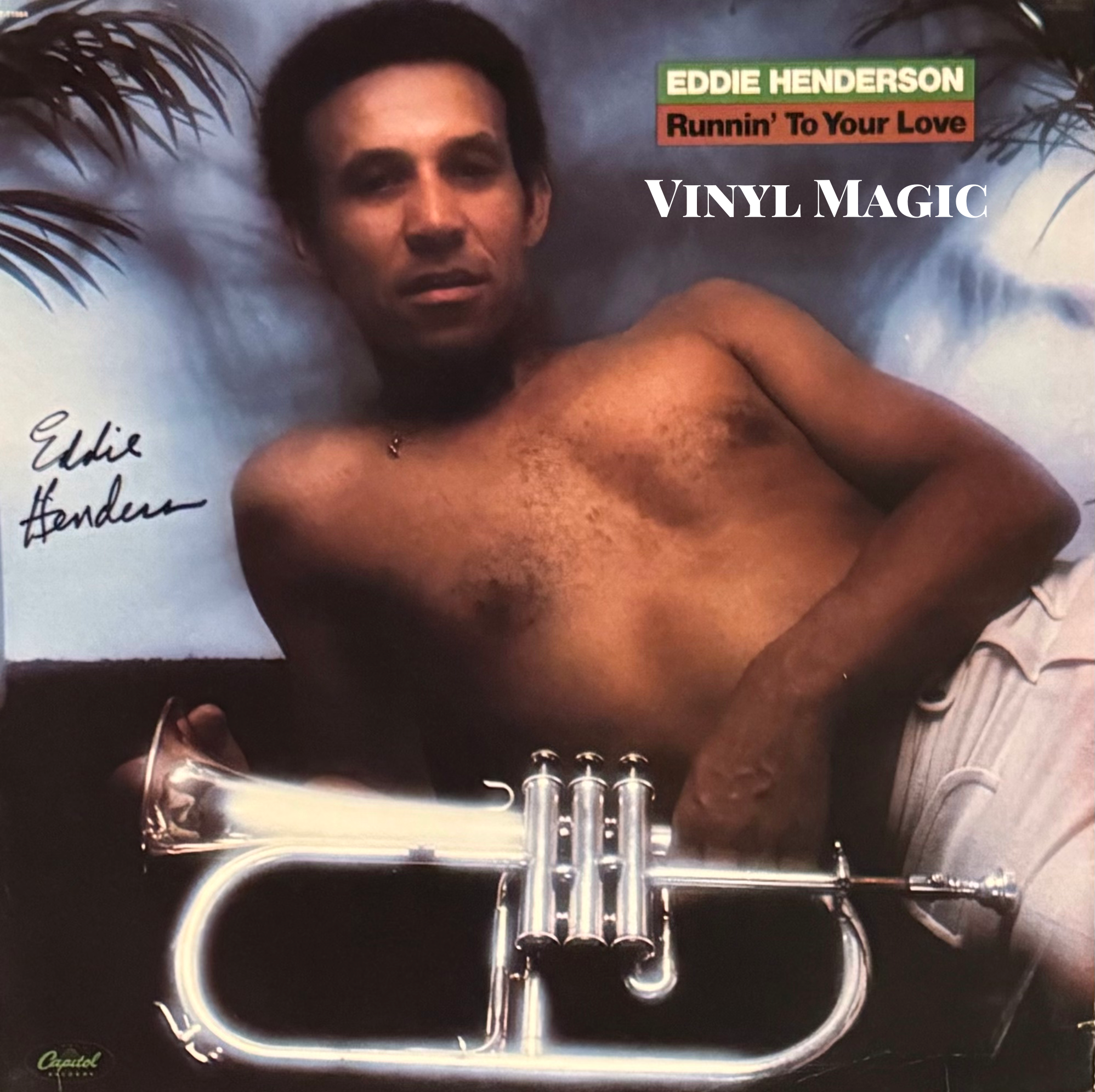
Running’ To Your Love (1979) signed by Eddie
Erin and I have been blessed to see Eddie several times over the years, most recently at Birdland with The Cookers, a jazz supergroup featuring George Cables on piano, Cecil McBee on bass, Billy Harper on tenor saxophone, and Billy Hart on drums. They were showcasing Look Out!, their sixth release since forming in 2010, and it was a sold out show, the club brimming with excitement to see these legends perform, most in their seventies and eighties, a staggering amount of jazz history, experience and talent on the bandstand. They opened with a George Cables' composition "The Mystery Of Mohifa Brown '' and we were off to the races. The front line of Michael Weiss and Eddie on trumpet, Jaleel Shaw and Billy Harper on saxophones made a spirited noise in joyful unison, while the rhythm section of George Cables, Cecil McBee and Billy Hart laid down a melodic and tight groove, especially the eighty seven year old Cecil McBee, as spry as anyone thirty or forty years his junior. Other highlights were "Believe, For It Is True," mournful and plaintive with Billy Harper blowing hard and soft on tenor and Billy Hart snap crackling behind his propulsive drum kit, and a beautiful ballad "If One Could Only See," written by Billy Harper, with an exquisite piano intro by George Cables, Billy Hart on brushes and some gorgeous trumpet flourishes by Eddie. They closed with "The Chief," written by the late great Memphian Harold Mabern, a rollicking burner which certainly showed why the name of the band is The Cookers! A remarkable night of music by equally gifted artists who have an unmatched telepathy while playing, well earned over, in some cases, the more than fifty years they've been playing together. After the show, I visited with Eddie and he was gracious as he signed some vinyl. When he saw Mwandishi, he smiled, "Man, that started everything for me, what a band, Herbie (Hancock) is so great." I told him how much we enjoyed the show and Eddie was so humble and self-effacing, a quiet "Thank you" was all he was able to muster. We thanked him for his time and especially his music.
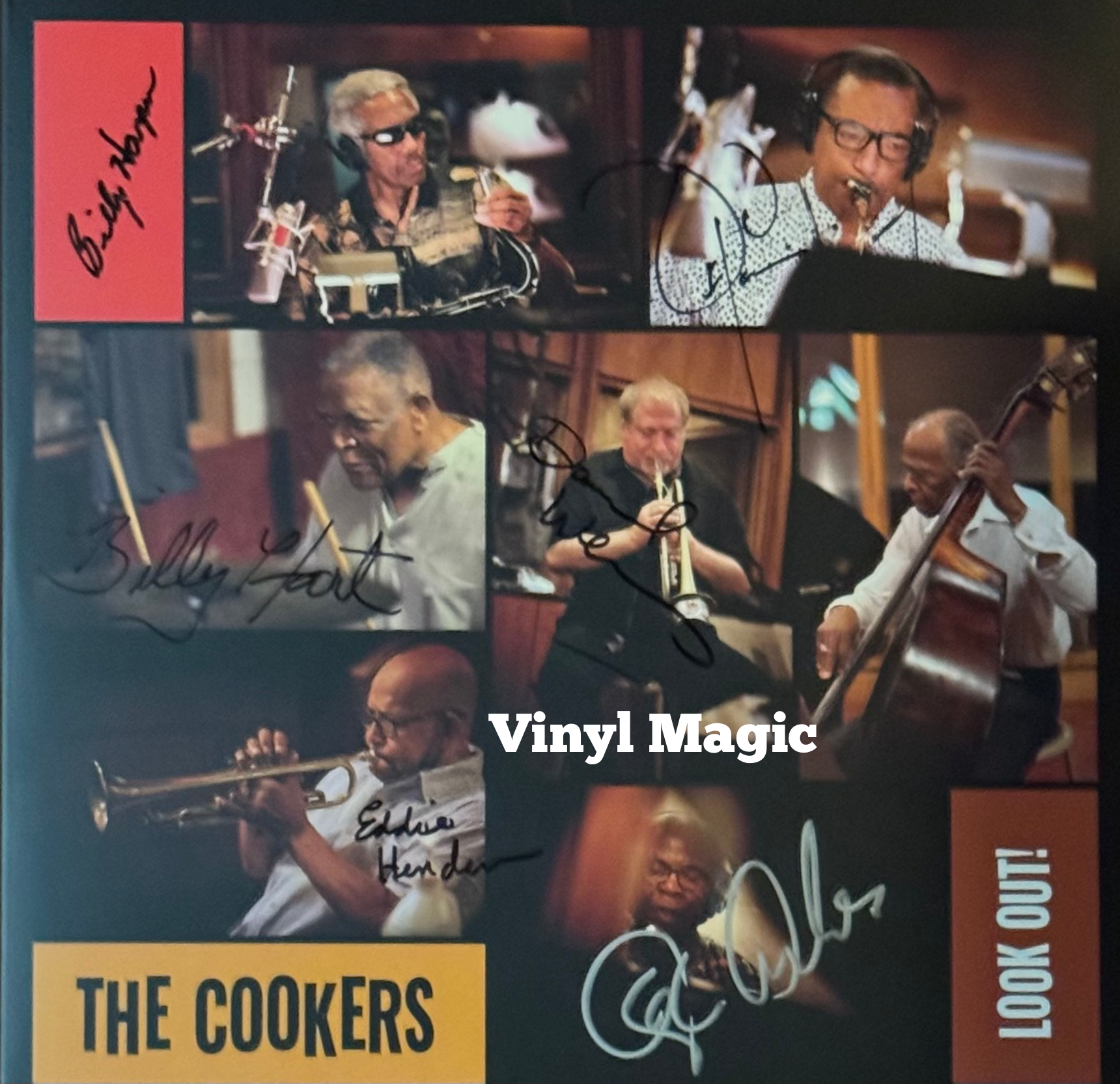
The Cookers (2020) signed by Eddie, George Cables, Billy Hart, Billy Harper, Donald Harrison, David Weiss
A deserving artist of greater renown, Eddie Henderson has an abundance of talents, Many, many thanks for scotch taping all those licks!
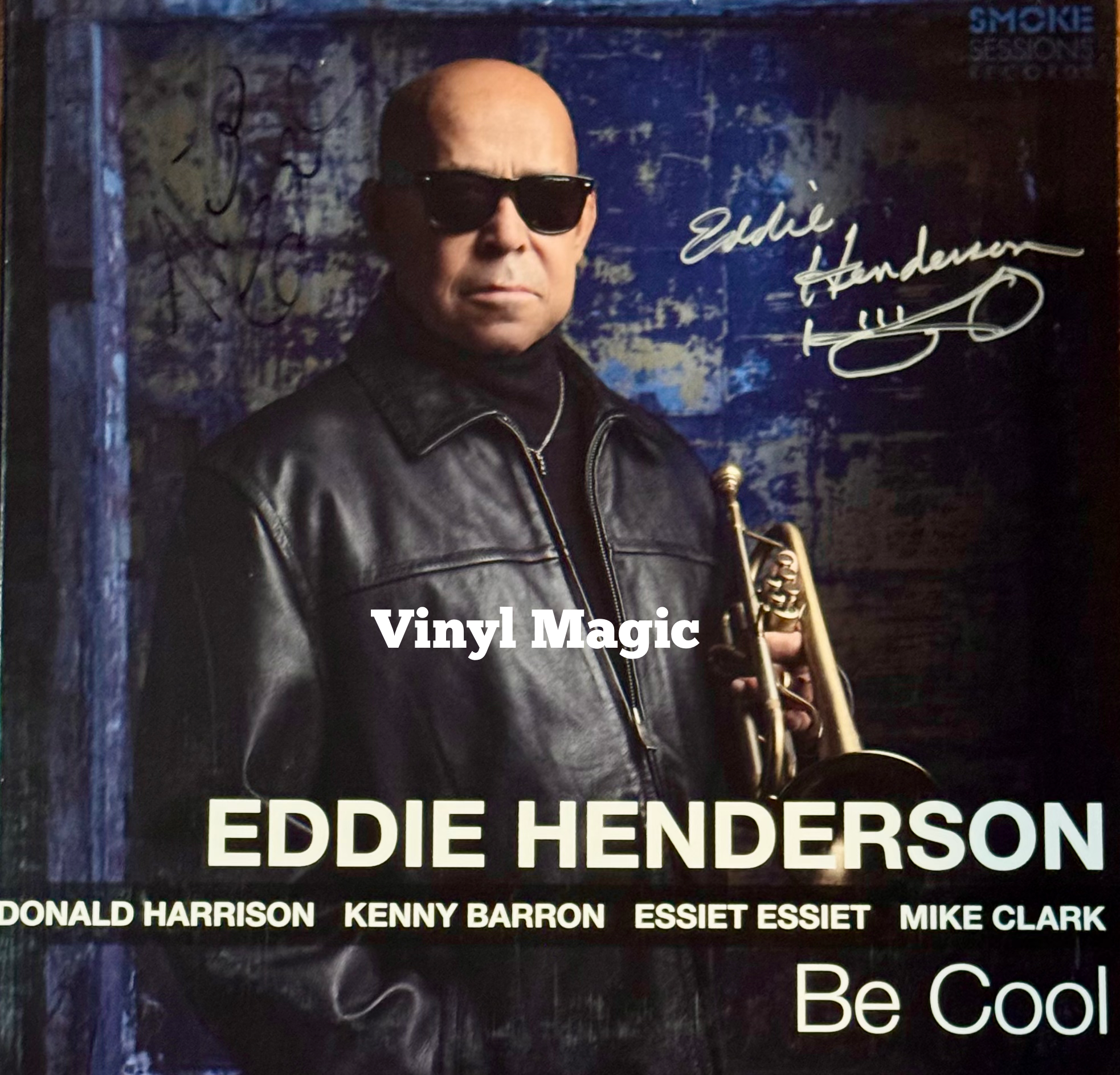
Be Cool (2018) signed by Eddie, Mike Clark
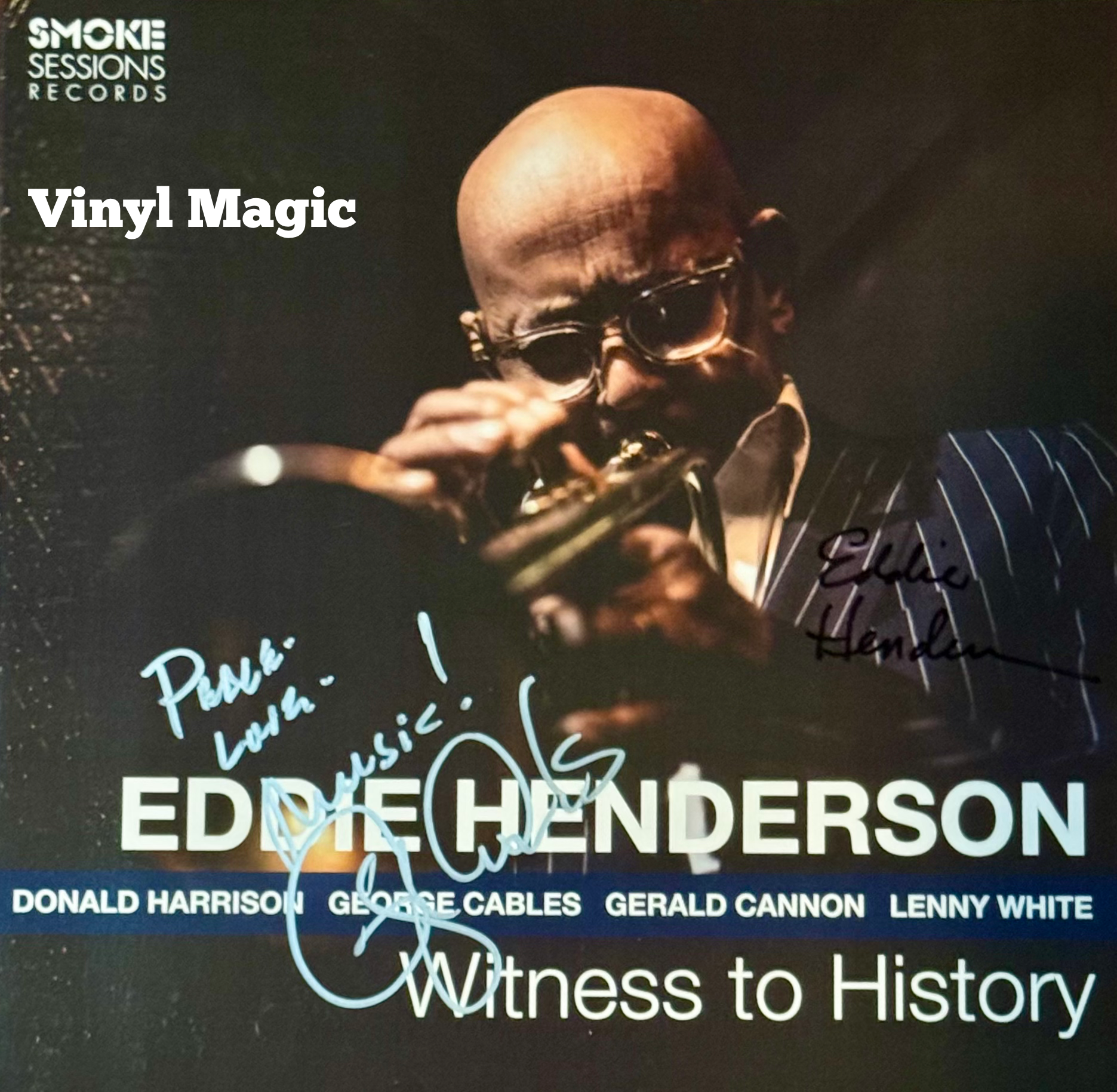
Witness To History (2023) signed by Eddie, George Cables
Choice Eddie Henderson Cuts (per BKs request)
https://www.youtube.com/watch?v=j2CCvAR8ygU
"It Never Entered My Mind" Witness To History 2022
"Yeah, you know I wanted to play that tune all my life. When I first heard Miles Davis do it way back in the '50s, he was my first inspiration. I didn't want to copy him. I just wanted to emulate the mood that he set. It's such a beautiful composition. I remember he told me one time, "Play every tune in the context that the composer wrote it." It's just that haunting melody itself, it's repetitive and it stays with you even after the first listen to it. When I first heard Miles, I heard it on the record (1960's Workin' With The Miles Davis Quintet). I heard it in my teens. He used to stay at my parents' house, and I used to go hear him every night. He'd take me to the gig."
Eddie Henderson
"Over The Rainbow" Shuffle And Deal 2020
https://www.youtube.com/watch?v=1_35v26uOWQ
"Toys > Water Torture > Sleeping Giant" Mwandishi Live in Paris 1972 with Herbie Hancock, Buster Williams, Julian Priester, Bennie Maupin, Billy Harthttps://www.youtube.com/watch?v=8Lpm-hkZCL0
"If One Could Only See" Destiny Is Yourswith Billy Harper 1990
https://www.youtube.com/watch?v=e5YMJUmggeo&list=PL1ZSgJs9UGILRee0WIfmoRw28GsCTs70d&index=3
"Sunburst" Sunburst 1975
https://www.youtube.com/watch?v=222deKZzjdA
"The Mystery Of Monifa Brown" Look Out! with The Cookers 2021
https://www.youtube.com/watch?v=HLKK1jk80VE
"Sextant" Sextant with Mwandishi 1973
https://www.youtube.com/watch?v=oPyZeQCeWcQ
"Prance On" Mahal with Herbie Hancock 1978
https://www.youtube.com/watch?v=hKuoYMbA2Mg
"Believe, For It Is True" The Cookers live Ancona Jazz Festival, Italy 2013
https://www.youtube.com/watch?v=1YxM2CoXmI0
"Dreams" Inside Out 1974
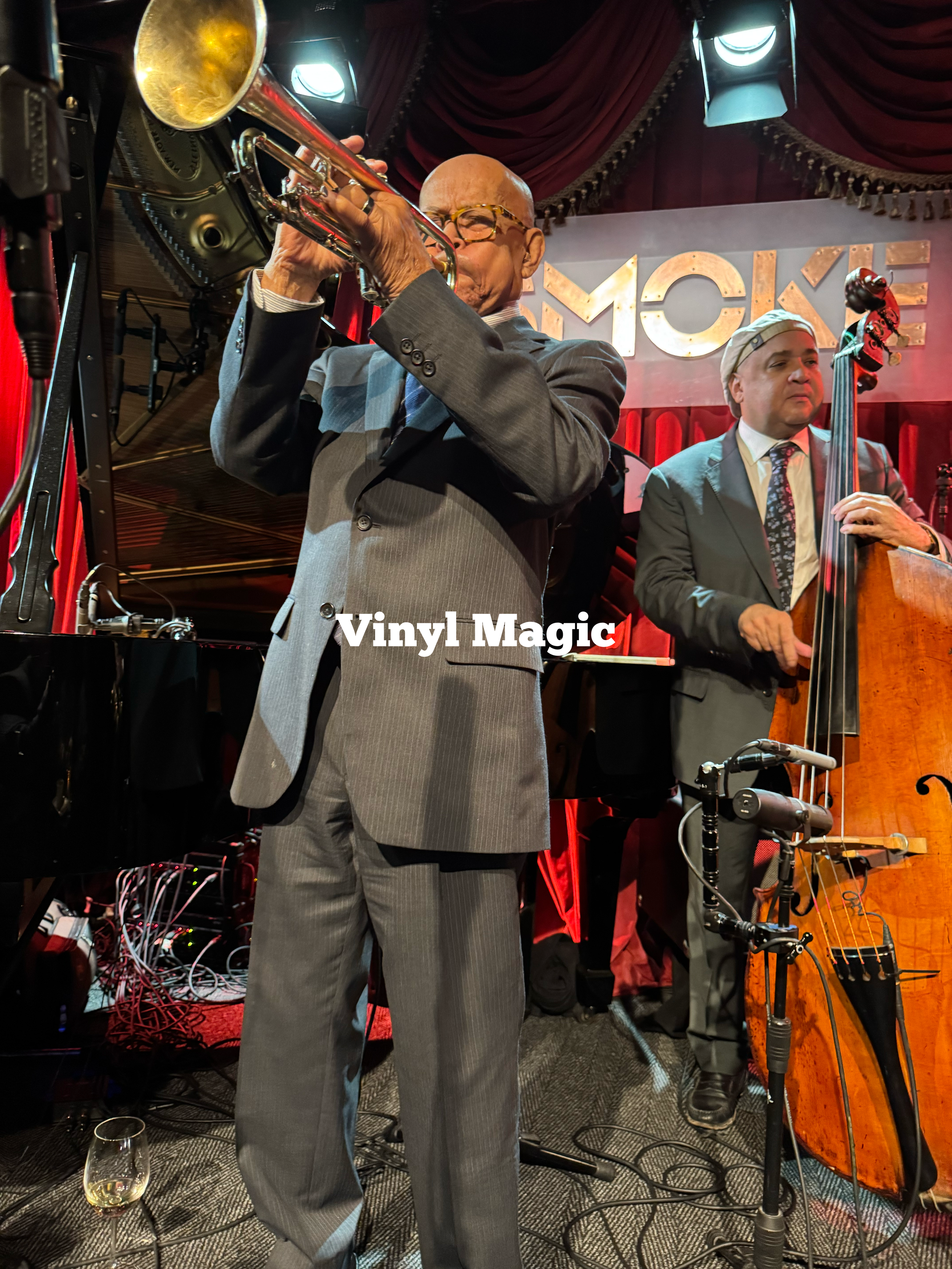
Eddie Henderson, Peter Washington on bass, Smoke, NYC 5.28.2025
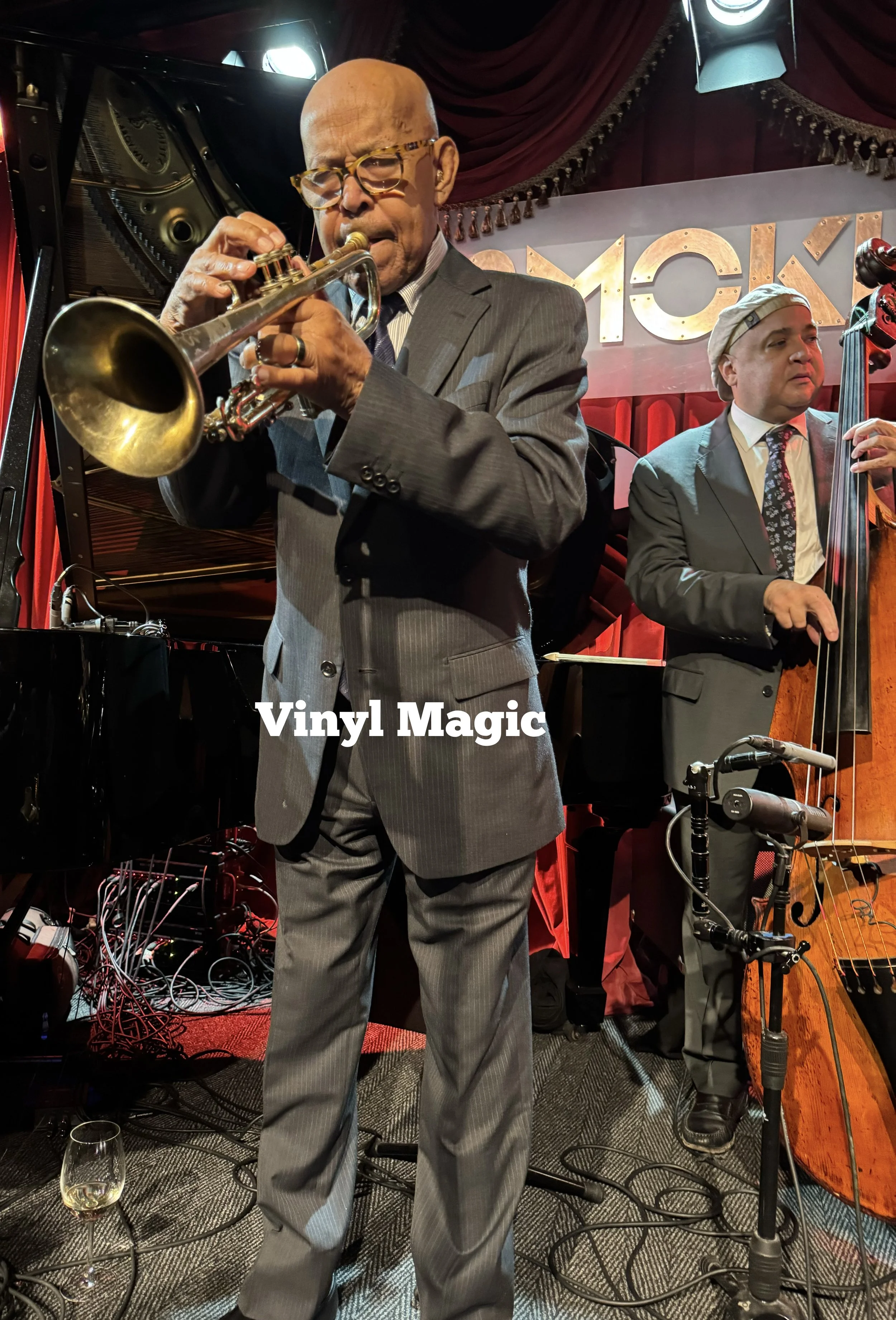
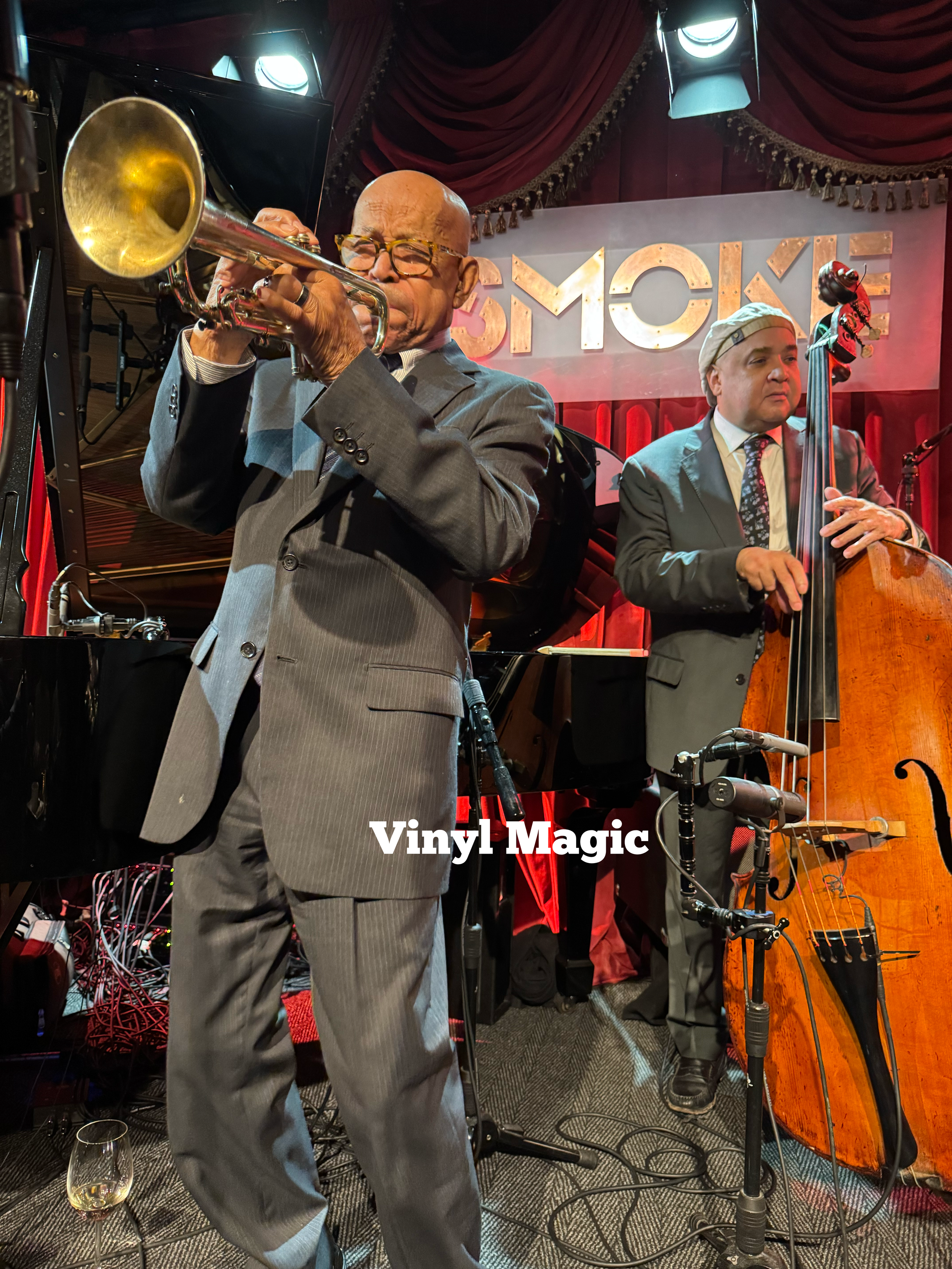
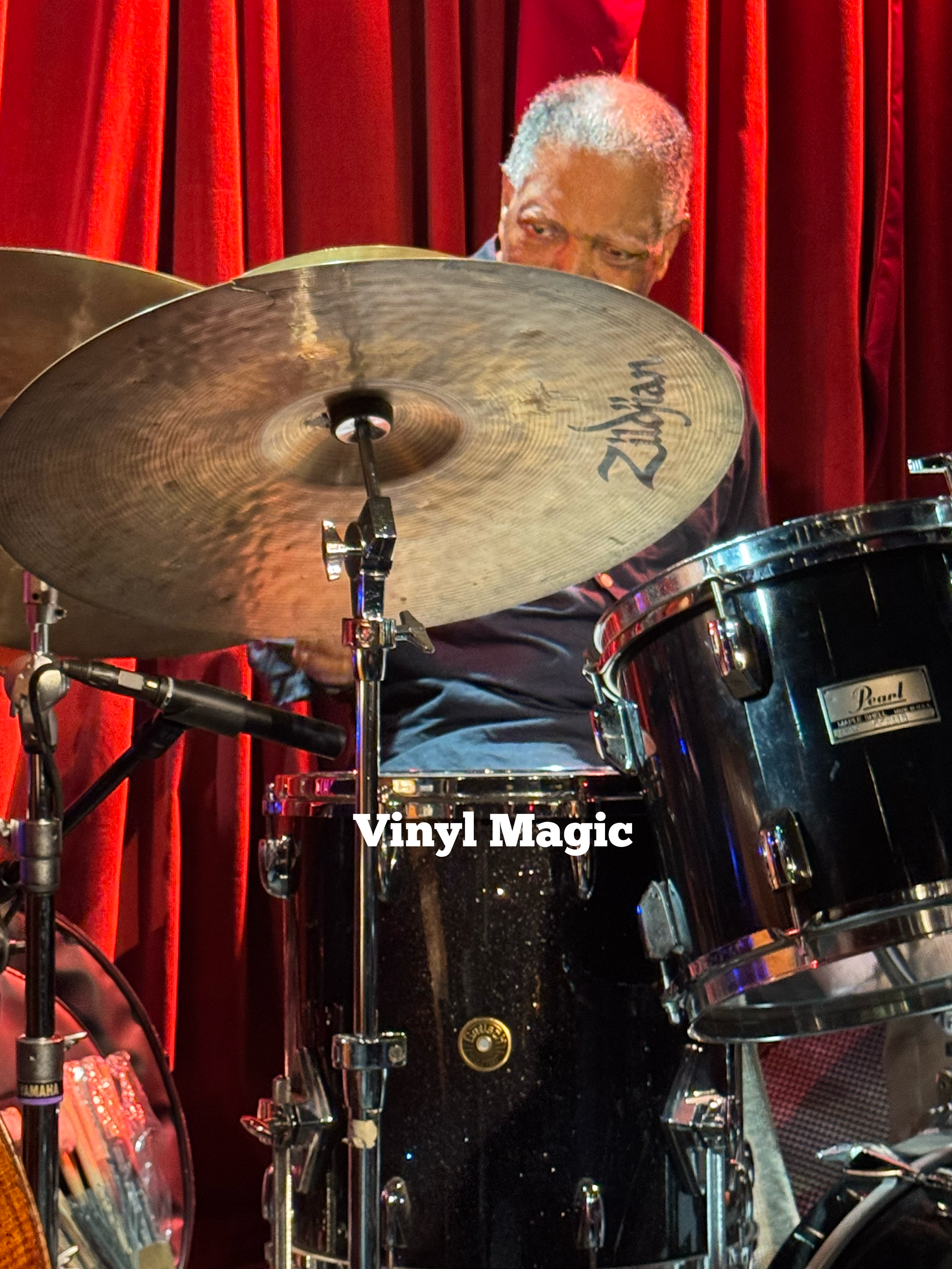
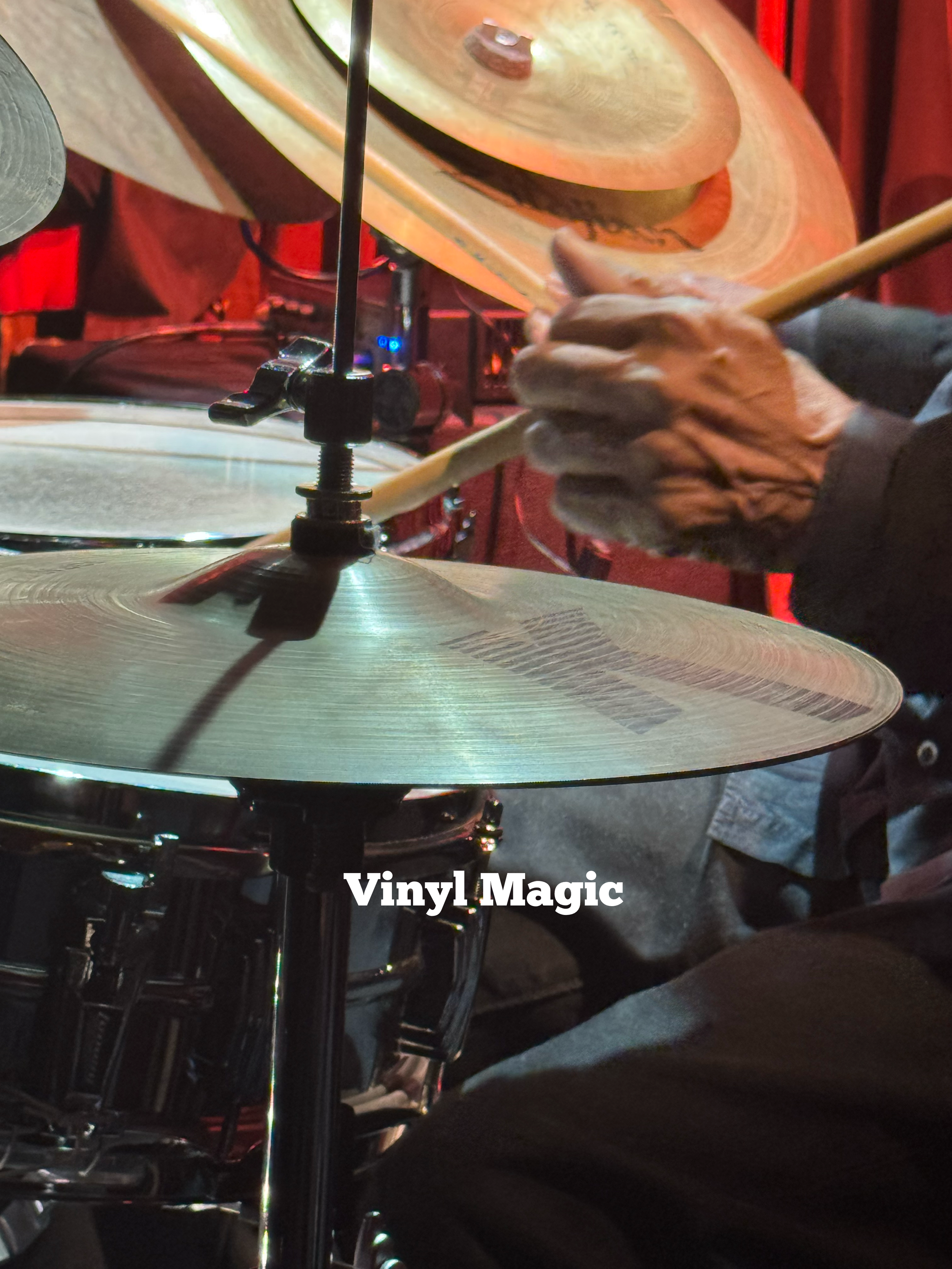
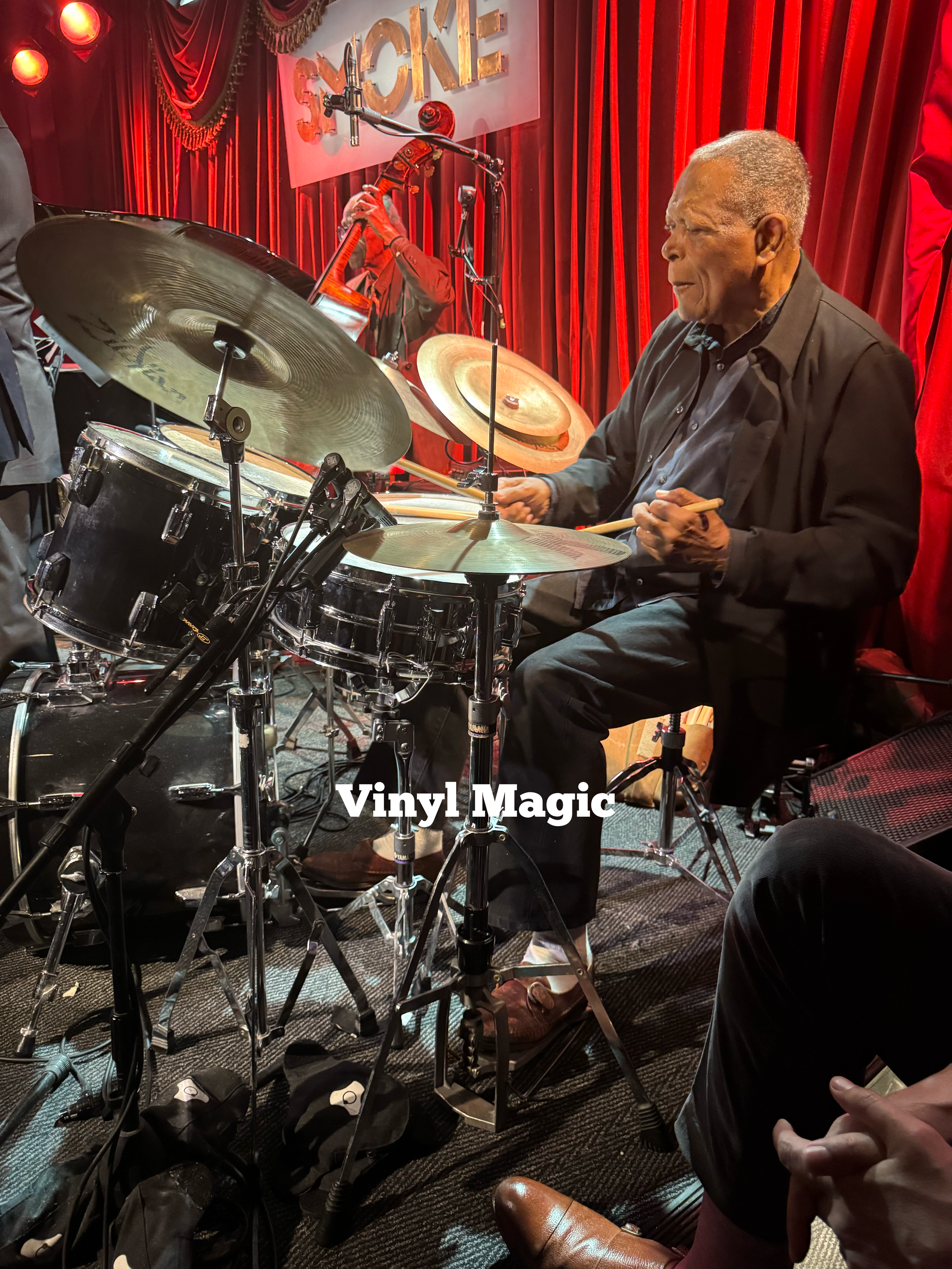
Jabali aka Billy Hart Smoke, NYC 5.28.2025
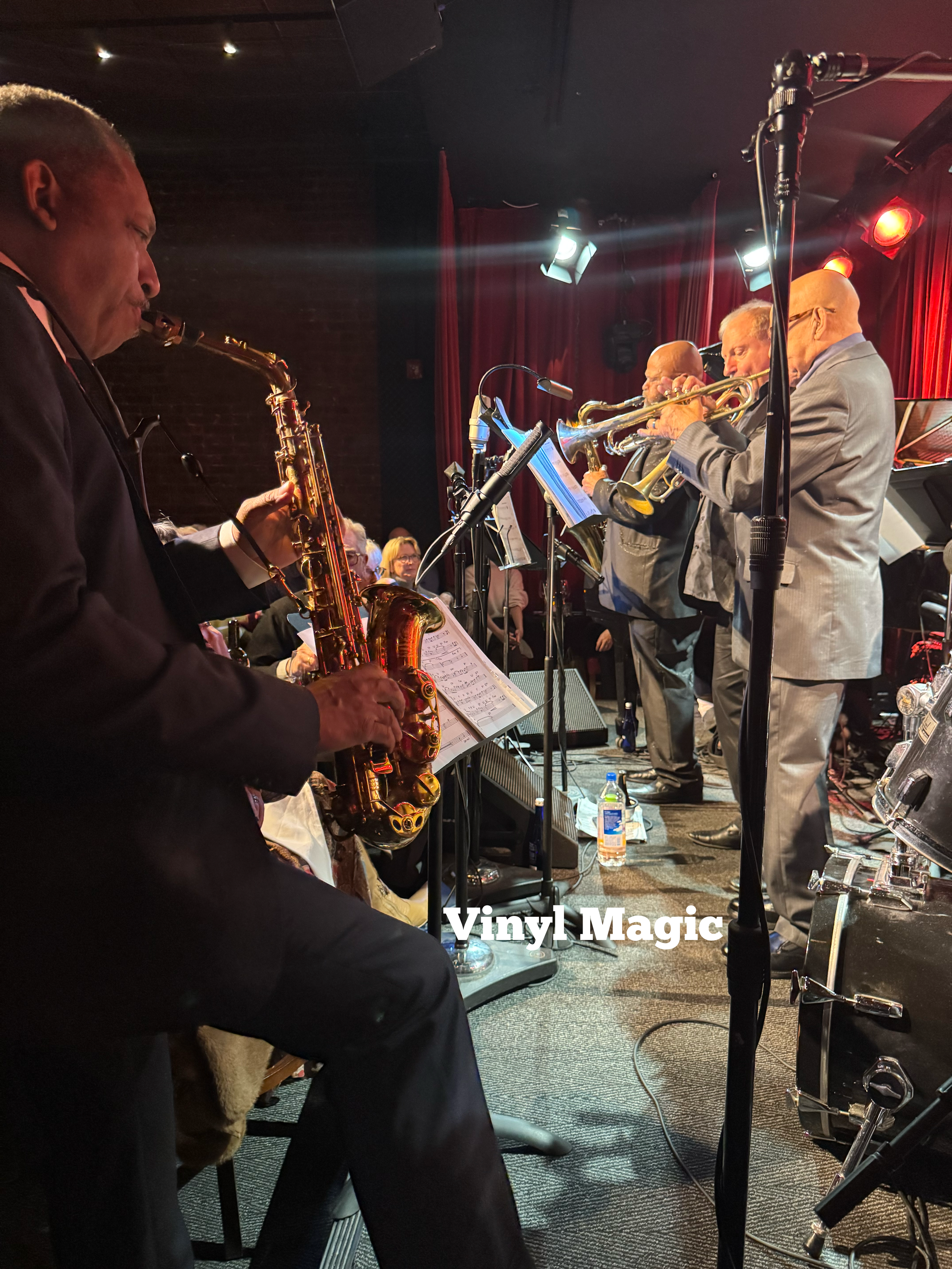
Donald Harrison, Azar Lawrence, David Weiss, Eddie Henderson Smoke, NYC 1.25.2025
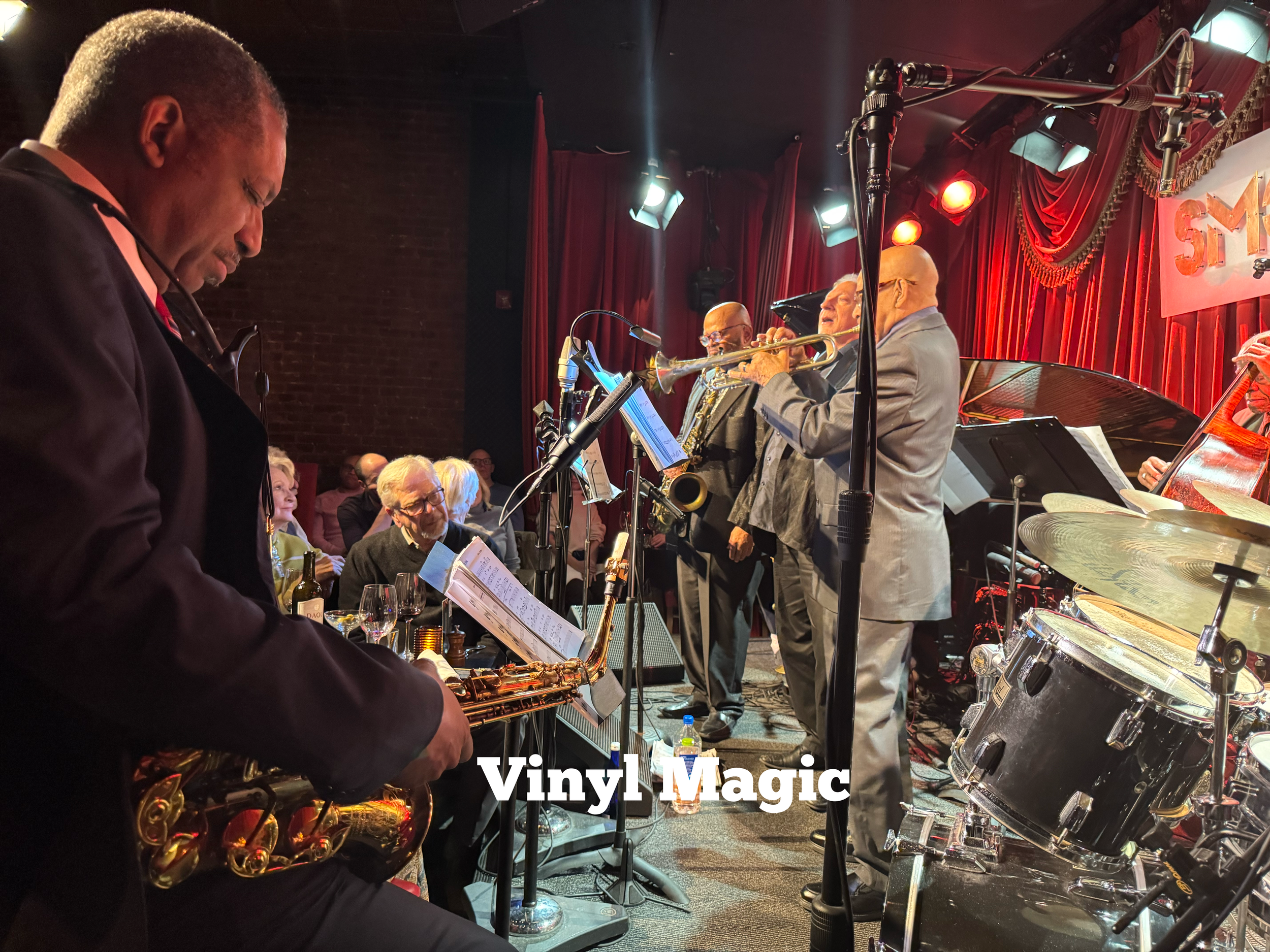
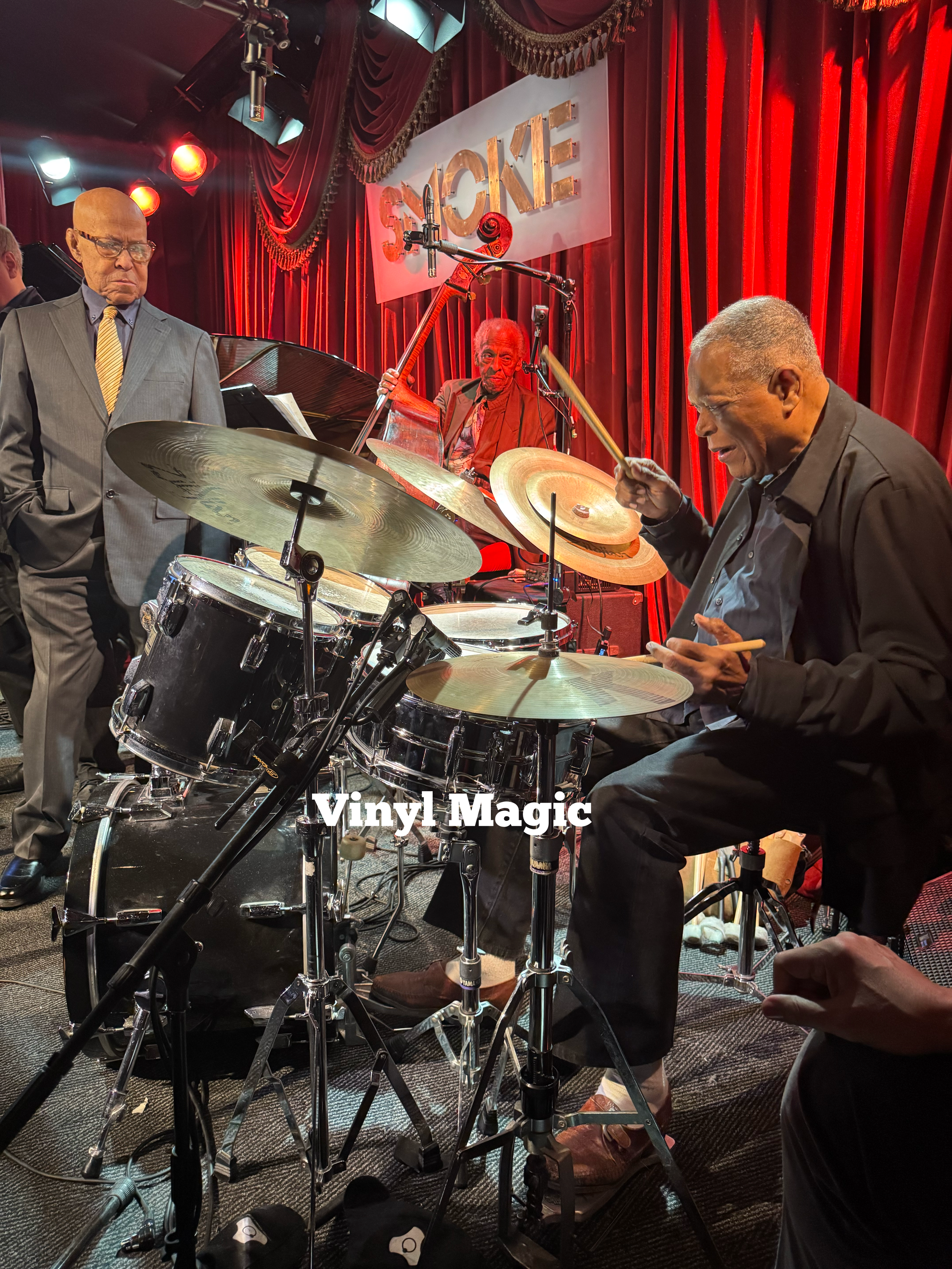
Eddie Henderson, Cecil McBee on bass, Jabali aka Billy Hart
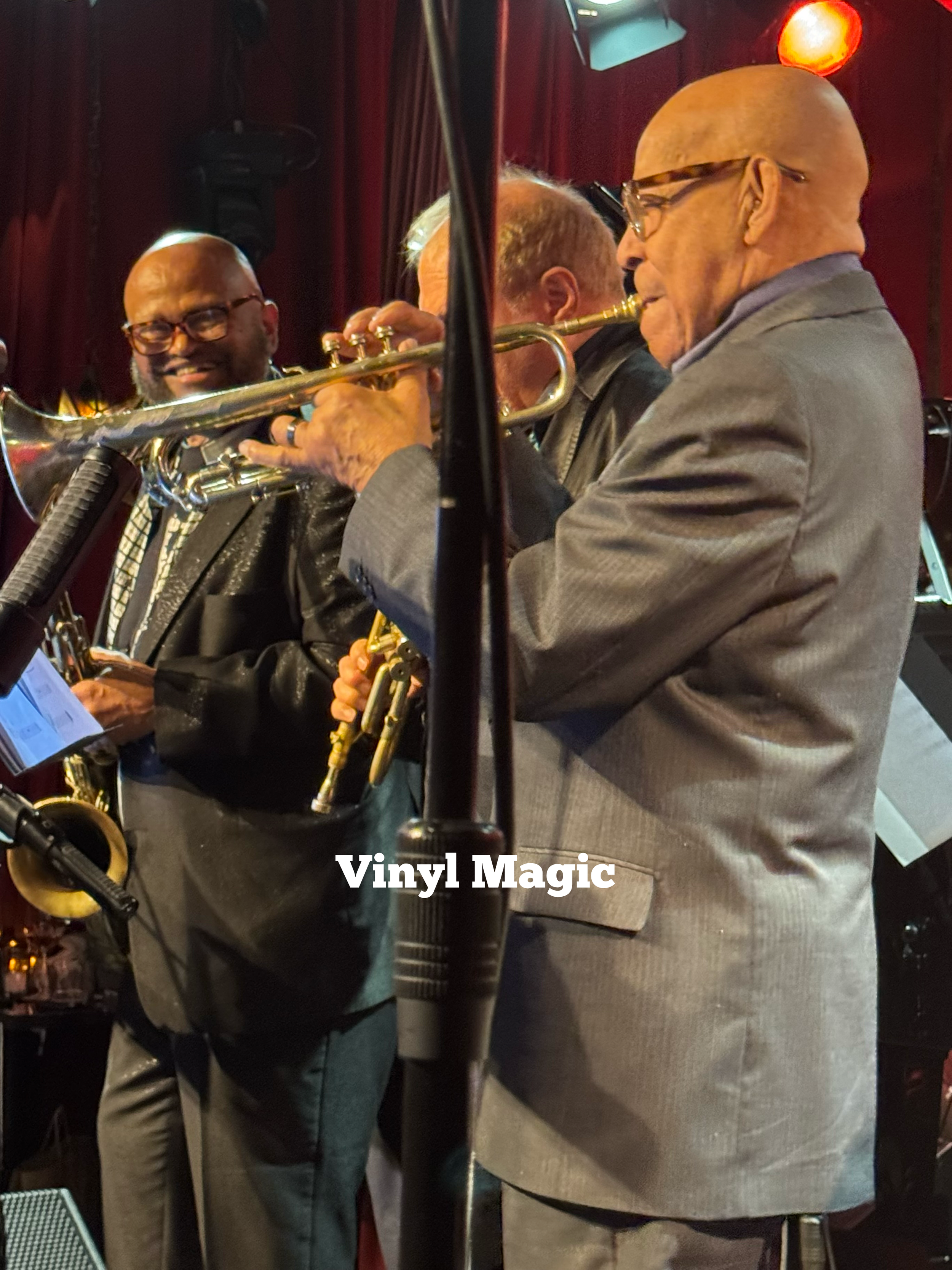
Azar Lawrence, David Weiss, Eddie Henderson Smoke, NYC 1.25.2025