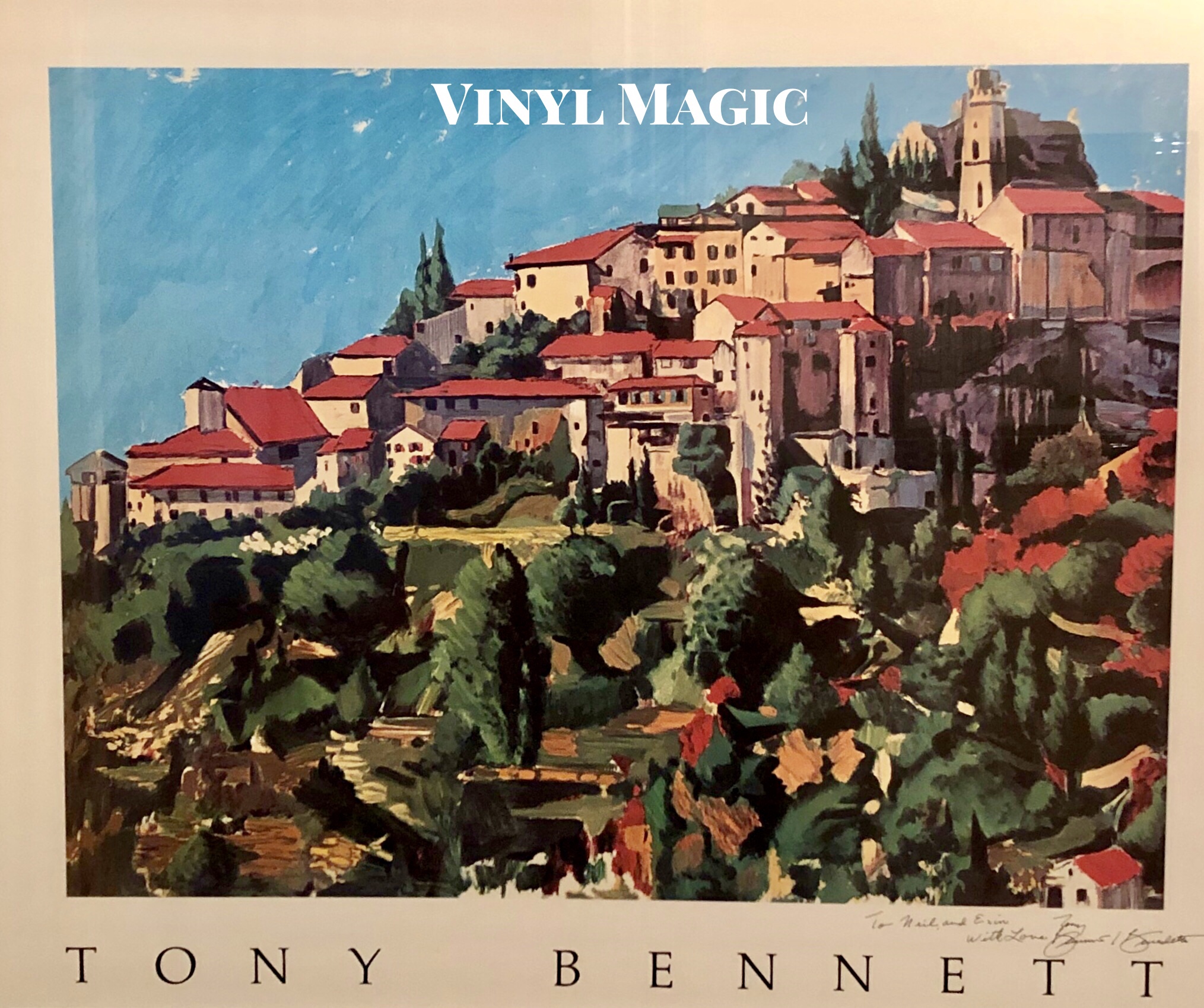
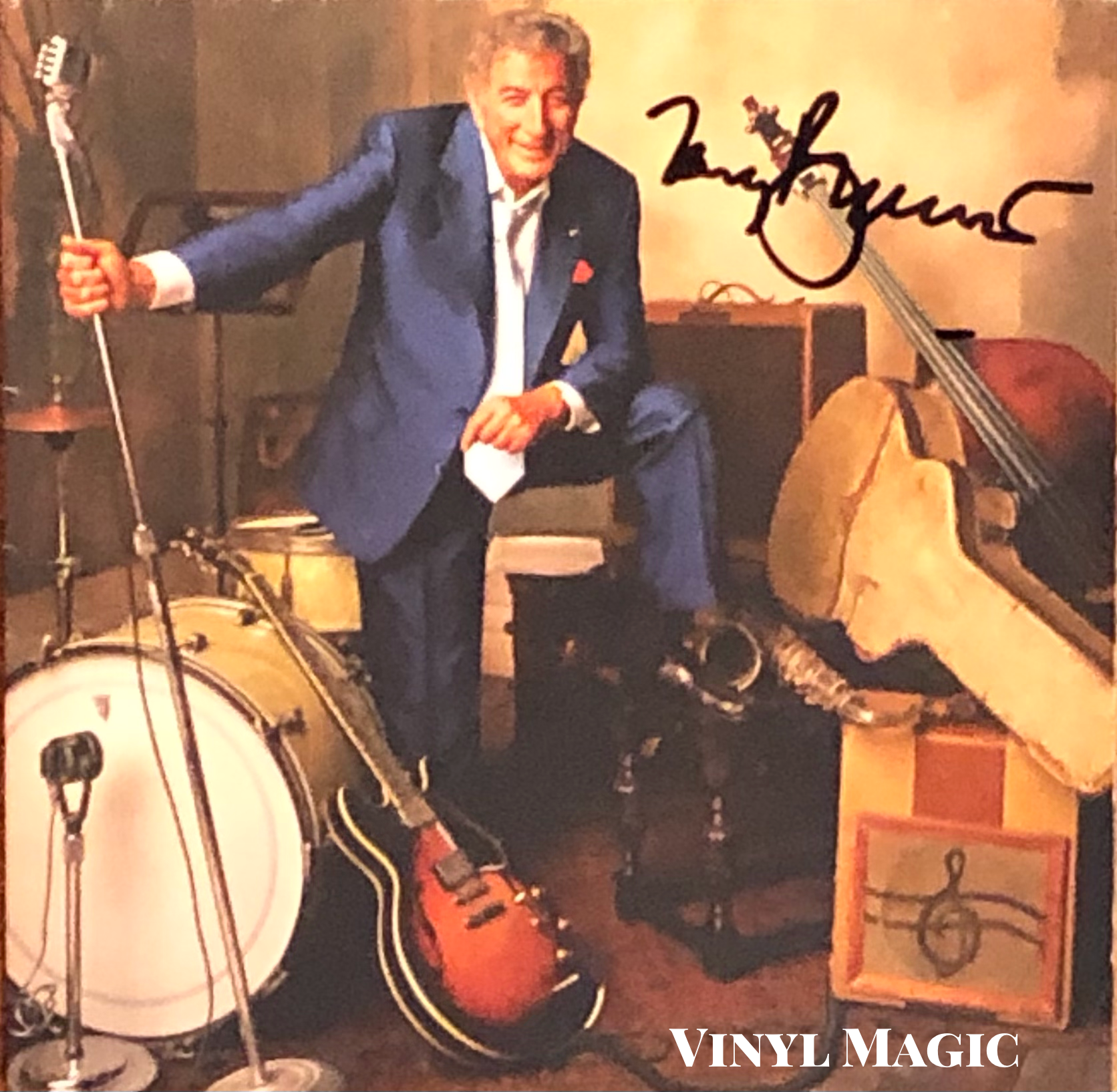
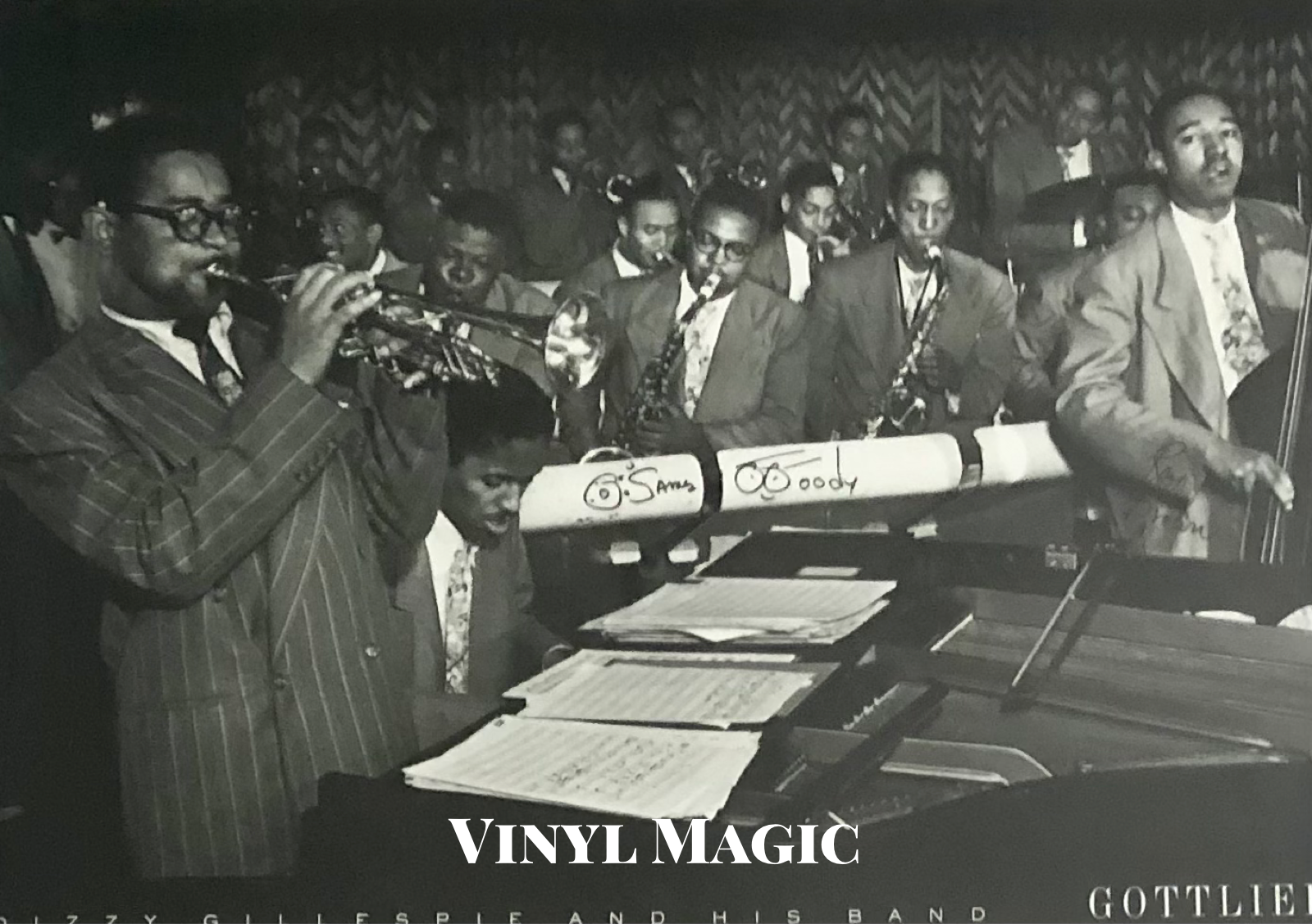
Oscar Peterson and Me…

A jazz phrase to me can’t be a jazz phrase without a certain type of blues feeling to it. If someone tries to play the blues, that’s the quickest way of knowing where they’re at jazz-wise, in my book. I have seen so-called prolific players humbled by the simplest of players who could play the blues… I’m not ashamed of the blues. The blues is a definitive part of jazz history and of my playing, and I want it to stay that way. I don’t want it to ever change, because if it does, then it throws me in with the classical end, and that’s not what I’m doing.

Oscar Peterson 1980
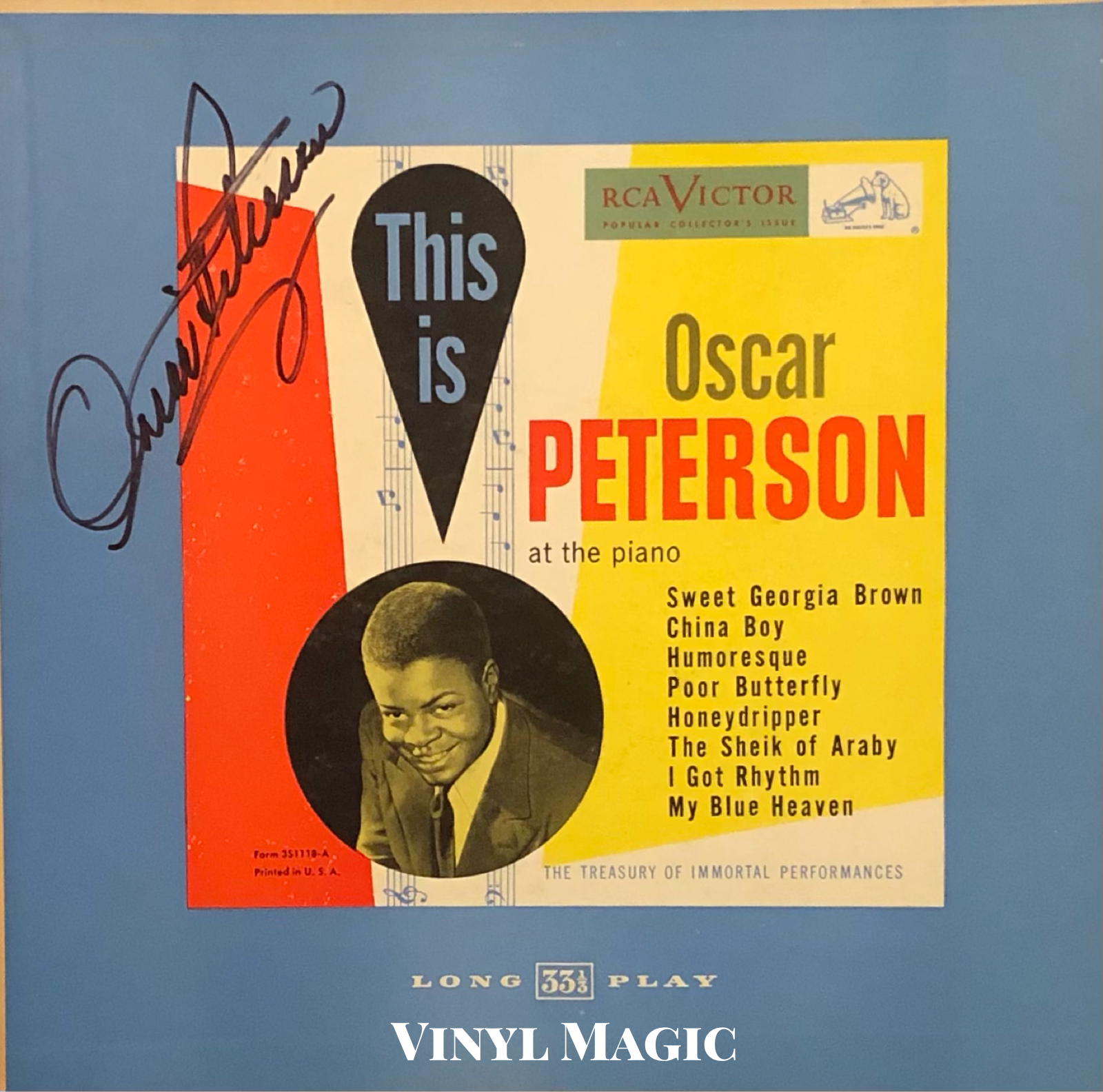
This Is Oscar Peterson (10” vinyl 1945) signed by Oscar

This Is Oscar Peterson (10” vinyl 1945) signed by Oscar

Some people try to get very philosophical and cerebral about what they're trying to say with jazz. You don't need any prologues, you just play. If you have something to say of any worth, then people will listen to you.
               Oscar Peterson

Oscar Peterson Quartet (1952) signed by Oscar

Oscar Peterson Quartet (1952) signed by Oscar

The " 'will to perfection' ...seems especially prevalent in jazz musicians. Creating an uninhibited, off-the-cuff musical composition in front of a large audience is a daredevil enterprise. . . . It requires you to collect all your sense, emotions, physical strength and mental power, and focus them totally onto the performance -- utter dedication, every time you play. And if that is scary, it is also uniquely exciting: Once it's bitten you, you never get rid of it.

 Oscar Peterson

The Duke Ellington Songbook (1960) signed by Oscar, Ray Brown, Ed Thigpen

The Duke Ellington Songbook (1960) signed by Oscar, Ray Brown, Ed Thigpen

Too many jazz pianists limit themselves to a personal style, a trademark, so to speak. They confine themselves to one type of playing. I believe in using the entire piano as a single instrument capable of expressing every possible musical idea. I have no one style. I play as I feel.

Oscar Peterson

Louis Armstrong Meets Oscar Peterson (1957) signed by Oscar

Oscar Peterson is one of the most celebrated jazz pianists, releasing hundreds of recordings and winning eight Grammys in his storied career. Born in Montreal, Oscar was classically trained, studying the etudes of Debussy and Chopin, until he fell in love with the improvisatory stylings of jazz in general, and Art Tatum in particular. He left school at seventeen (with his parents' blessings) to play professionally with the Johnny Holmes Orchestra in Canada. Initially, he spurned offers from bandleaders Coleman Hawkins and Jimmy Lunceford to join their bands. Instead, Oscar made his US debut in 1949 at Carnegie Hall with Norman GranzJazz At The Philharmonic. Oscar caused quite a sensation and the recordings with Charlie ParkerBenny CarterColeman Hawkins and many others were subsequently released. Thus began Oscar's more than thirty year collaboration with the impresario and record label owner Norman Granz

Jam Session #1 (1952) signed by Oscar, Ray Brown, Benny Carter

Jam Session #1 (1952) signed by Oscar, Ray Brown, Benny Carter

Quincy Jones, a close friend and admirer, recalled Oscar's first show, "Back in the day, those 'Jazz at the Philharmonic' shows were like the big stadium shows we have today. In fact, that's what got them started. And one year we heard a rumor that Norman Granz had a piano player that he was getting ready to expose . . . to the audience. Well, the joke from people who had heard him was that Oscar used to drink jet fuel and eat gunpowder every morning, because when he came up, he had everybody listening. He was a genius."

The History Of An Artist (1974) signed by Oscar - no one rocked crushed velour polka dot slacks harder!

The History Of An Artist (1974) signed by Oscar - no one rocked crushed velour polka dot slacks harder!

The first time I saw Oscar Peterson perform he was at Symphony Hall in Boston in the early 1980s. It was a solo performance and his playing was revelatory: ripping off thunderous runs with either hand, at times lyrical and delicate, at others forceful and resounding. It seemed as though there were four hands playing the keyboard, much like his hero, friend and fellow virtuoso, Art Tatum. Oscar was far too modest to accept the comparison and dismissed the linkage. " I don’t know what being the next Art Tatum means. There never was and never will be another Art Tatum. If I’m an extension of his thinking, fine. But I didn’t set out to be that....Musically speaking, he was and is my musical God, and I feel honored to remain one of his humbly devoted disciples." I saw Oscar perform many times through the years but there was nothing like the fury and purpose of that first solo concert.

Canadiana Suite (1964) signed by Oscar, Ed Thigpen

Canadiana Suite (1964) signed by Oscar, Ed Thigpen

In 1993, Oscar suffered a debilitating stroke and rigorous therapy over the next two years helped him recover some, but not all of the facility in his potent left hand. All those years of practicing six or more hours per day put Oscar in good stead. For me, it was hard to tell his infirmity when I saw him play post 1995. Oscar said it was actually a blessing, as he learned to not play as many notes. He admitted, "I still can't do some of the things I used to be able to do, but I've learned to do more things with my right hand. And I've also moved in a direction that has always been important to me, toward concentrating on sound, toward making sure that each note counts." As fellow pianist Benny Green wisely observed in 2001, "Oscar can do more with one hand than many pianists can do with two."

Very Tall (1962) signed by Oscar, Milt Jackson

Very Tall (1962) signed by Oscar, Milt Jackson

In November 1998, I took a colleague (and musician) from work to see Oscar perform with the Very Tall band at the Blue Note in New York City. Milt Jackson and Oscar had released a 1962 Very Tall recording to critical acclaim and they reconstituted the band thirty six years later to revisit a live recording.  We got to the club early and before the show, I met with Milt, Oscar and Ray Brown as I had many times through the years and secured their signatures. Oscar, as always, was warm and genial. He was a big man, 6'3", well over two hundred fifty pounds, and my hand disappeared in his bear claw. When I returned to our table, Joel admired my cache. He said, "You know, my dad's favorite pianist is Oscar Peterson. I wish I had an album I could get signed for him." I knew Joel's dad was battling cancer at his home in Louisville, Kentucky and I thought this would be a nice gift. "Joel, there's a record store across the street. Let's see if they have any Oscar for sale?" So we left the Blue Note and ran across the street to Bleecker Bob's, a Greenwich Village landmark. 

Swinging Brass (1959) signed by Oscar, Ray Brown, Ed Thigpen

Swinging Brass (1959) signed by Oscar, Ray Brown, Ed Thigpen

Bleecker Bob's was a dour, musty record store with creaky wooden floors that specialized in imports, bootlegs, and punk rock. It started as Village Oldies in 1967 at 133 Bleecker Streetbefore moving in 1981 to the West 3rd Street location across from the Blue Note. It was particularly notable as the store where guitarist Lenny Kaye worked and Patti Smith hung out in the early 1970s. As Lenny remembered, "She came up to the counter and said, 'Listen, I'm doing a poetry reading at St, Mark's Church in a few weeks. I hear you play a little guitar, and I'd like to shake it up, so why don't you accompany me on a couple of poems?' And from that little acorn, a beautiful towering oak was born." And the course of punk rock was undeniably altered. Bleecker Bob's also had club hours, staying open until 3am on weekends, perfect for some late night browsing after nocturnal carousing. Their jazz selection was modest but adequate, and Joel purchased two Oscar Peterson albums.

Oscar Peterson Trio + One (1964) signed by Oscar, Ray Brown, Ed Thigpen, Clark Terry

Oscar Peterson Trio + One (1964) signed by Oscar, Ray Brown, Ed Thigpen, Clark Terry

We returned to the club and I escorted Joel to the dressing room. The door was closed. Joel was hesitant, "I don't know if I should knock on the door." I looked him straight in his eyes and grabbed his shoulders, "Listen, Joel. You are a salesman and a partner in a Wall Street firm. You have no trouble asking a bank CEO to restructure his balance sheet and portfolio. You want Oscar's signature, go in there and sell it. You can do this." I stepped aside, Joel knocked on the door, he went in and ten minutes later, he emerged with the signed albums and the biggest smile. Ever. It was one of my best trades on Wall Street! 

We Get Requests (1964) signed by Oscar, Ray Brown, Ed Thigpen

We Get Requests (1964) signed by Oscar, Ray Brown, Ed Thigpen

The show was recorded and the performances of Milt JacksonRay BrownOscar Petersonand Karriem Riggins were remarkable. They played Benny Golson's elegiac ode to Clifford Brown, "I Remember Clifford", a jaunty "Nature Boy" from the Nat King Cole songbook featuring Milt Jackson stretching out on vibraphone, and the sublime solo piano on Oscar's "When Summer Comes." The encore was a percussive-fueled "Caravan" from the pen of Duke Ellington, fulfilling Oscar's dictum (from a 1979 interview), "I always try to include some Ellington in every concert that I do. I think it’s almost mandatory." It was a memorable show and I am thankful that the tapes were rolling and a CD was released in 1999 which commemorates the festive and swinging occasion. 

A Jazz Portrait Of Frank Sinatra (1959) signed by Oscar

A Jazz Portrait Of Frank Sinatra (1959) signed by Oscar

Near the end of his career, Oscar said, "When I sit down to the piano, I don’t want any scuffling. I want it to be a love affair." 

Beauty, elegance and love radiated in the music of Oscar Peterson and it was shared freely with his fans, especially fathers, mothers, sons and daughters. There was never any scuffling.

This Is Ray Brown (1958) signed by Oscar, Ray Brown

This Is Ray Brown (1958) signed by Oscar, Ray Brown

Soul Espanol (1966) signed by Oscar

Soul Espanol (1966) signed by Oscar

Reunion Blues (1971) signed by Oscar, Ray Brown, Louis Hayes, Milt Jackson

Reunion Blues (1971) signed by Oscar, Ray Brown, Louis Hayes, Milt Jackson

Choice Oscar Peterson cuts (per BK's request)

https://www.youtube.com/watch?v=tCrrZ1NnCuM 
"Hymn To Freedom"   Oscar Takes Us To Church  1964

https://www.youtube.com/watch?v=NTJhHn-TuDY 
"C Jam Blues"   Oscar Plays Duke Ellington 1964

https://www.youtube.com/watch?v=2AfvRGOCvpU 
"Someday My Prince Will Come"   Oscar and Milt  1971

https://www.youtube.com/watch?v=6fehMmwL138 
"I Remember Clifford"   Oscar, Milt, Ray at The Blue Note 1998

https://www.youtube.com/watch?v=wECMGQ8eDKM 
"Satisfaction"   Oscar and Milt Play The Rolling Stones  1971

https://www.youtube.com/watch?v=ALOHcDE4mdk
"Love Ballade"  Oscar 1987

https://www.youtube.com/watch?v=q2qifGhYBUw
"When Summer Comes"  Oscar Live
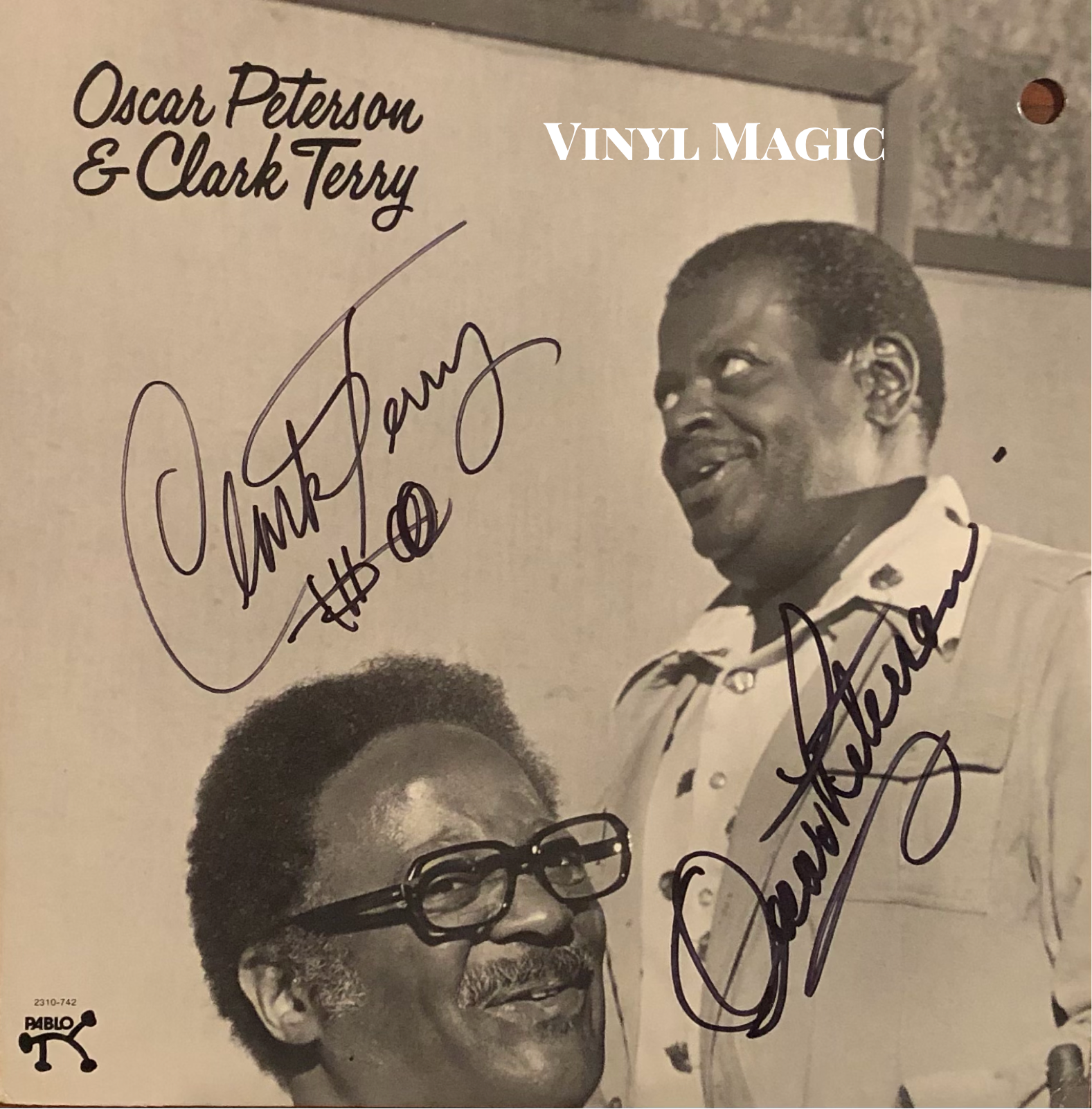
Oscar Peterson & Clark Terry (1975) signed by Oscar, Clark Terry

Oscar Peterson & Clark Terry (1975) signed by Oscar, Clark Terry

Oscar Peterson & Jon Faddis (1975) signed by Oscar, Jon Faddis

Oscar Peterson & Jon Faddis (1975) signed by Oscar, Jon Faddis

Watch And Josh…Again (1975) signed by Oscar
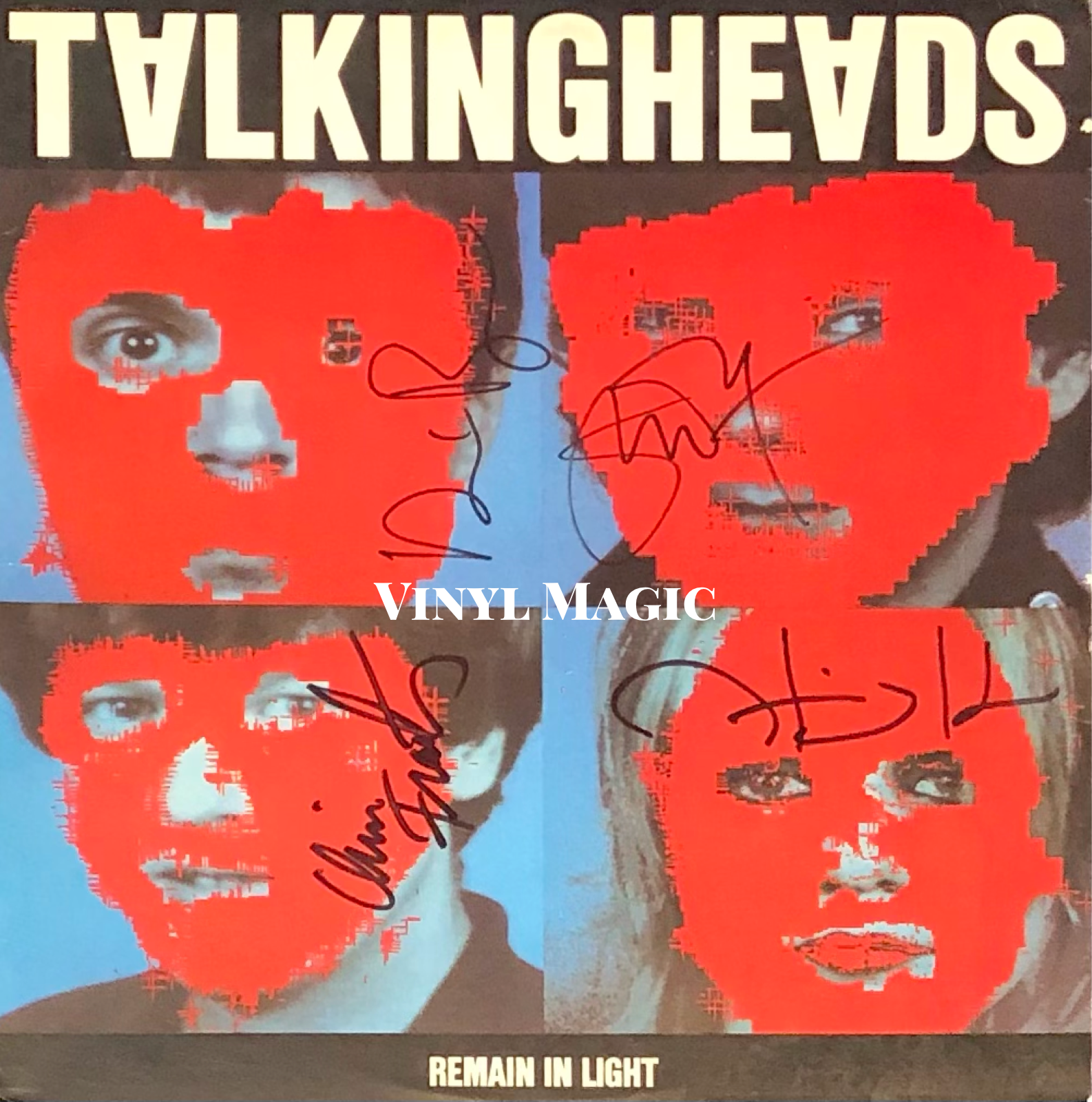
Watch And Josh…Again (1975) signed by Oscar

Talking Heads, David Byrne and Me…

Our weird take on it was a long way round to rediscovering American folk, but coming at it from a fresh angle and in a more herky-jerky way that suits us. That way of making music, with those rhythms and big ensemble of musicians that make up an Afro-funk band, was a way out of the psychological paranoia and personal torment of the stuff I'd been writing - and feeling - the paranoia of New York in the 70s, my age, my personal stuff, fitting in and not fitting in. I felt I had that pretty bad for a while.

               David Byrne on Remain In Light

Remain In Light (1980) signed by David Byrne, Chris Frantz, Tina Weymouth, Jerry Harrison

Talking Heads formed when three of their principals (David Byrne, Chris Frantz and Tina Weymouth) met while they were attending the Rhode Island School of Design (RISD) in the early 1970s. My older brother told me about the band when he saw them open for the Pousette Dart Band in early 1977 in Salem, Massachusetts, an inauspicious and humble start. The Talking Heads were playing songs from their first album ('77) which featured "Psycho Killer", an unlikely radio hit with an equally unappealing subject matter. Fortunately, Talking Heads' career fared considerably better in the ensuing years, and they were inducted into the Rock 'n' Roll Hall of Fame in 2002.

More Songs About Buildings And Food (1978) signed by David Byrne, Chris Frantz, Tina Weymouth, Jerry Harrison

A great live band, I saw Talking Heads perform many times over the years, including two shows at the Orpheum Theater in Boston in 1980, when they were touring in support of Remain In Light, their recent record and a very influential album. The genesis of the album began In London when John Cale and Brian Eno saw the Talking Heads open for The Ramones in May, 1977. After the show, Eno invited Cale and Byrne back to his flat to listen to some records, including Fela Kuti's afro-beat masterpiece, Afrodisiac (1973). Eno remembered, "I was very excited about this music at the time and they were pretty excited too, which was thrilling, because no one in England was at all interested." Three years later, Brian Eno produced Remain In Light which Byrne described as, “Besides not being all that melodic, the music had something to say that at the time seemed new, transcendent, and maybe even revolutionary, at least for funk rock songs." 

For this tour, Talking Heads added some outstanding musicians including Adrian Belew (King Crimson) on guitar, Bernie Worrell (Parliament Funkadelic) on keyboards, Busta 'Cherry' Jones (Parliament Funkadelic) on bass, and Nona Hendryx (Labelle) on backing vocals. To begin the Orpheum shows, the original quartet played a couple of Heads songs, then the band swelled to nine members and their poly-rthymic approach created a pulsating wall of sound. It was rock music that you could dance to, and at the center, was a frenetic David Byrne.

Speaking In Tongues (1983) signed by David Byrne, Chris Frantz, Tina Weymouth, Jerry Harrison

Talking Heads officially broke up in 1991 and David Byrne, their charismatic front man, has forged an interesting solo career. He has released eight albums, while collaborating with Latin stars Celia Cruz and Johnny Pacheco, ballet choreographer Twyla Tharp, avant garde playwright and visionary Robert Wilson, DJ and dance maven Fat Boy Slim, and many others. The breadth and eclecticism reflect Byrne's peripatetic nature, and that doesn't include his art collaborations, from the acclaimed Robert Rauschenberg to the outsider Howard Finster. He is an artistic and music omnivore.

True Stories (1986) signed by David Byrne, Chris Frantz, Tina Weymouth, Jerry Harrison

The last time I saw David Byrne was at the Knitting Factory in downtown New York City in the late 1990s. The Balenscu String Quartet opened for him. This was not your father's string quartet, as the traditional violin, viola, and cello were augmented by a DJ in the balcony dropping massive beats. The sound was startling and fresh. Then, David Byrne came out with his band and played an invigorating mix of his solo work. For the encore, he had the Balenscu Quartet join him in a resounding version of the Talking Heads' "Life During Wartime." Indeed, 'This ain't no party, this ain't no disco, this ain't no foolin' around.' Byrne introduced his final song, with a wry "This is a really old song written by someone else", then launched into a cover of "I Wanna Dance With Somebody." The crowd went nuts and the groove was uplifting and infectious. A young, downtown hipster, bearded and tatted, asked me "Who sings this song?" 'Whitney Houston' was my reply. "He's a mad genius" was hipster's response with a big smile. Only David Byrne could marry Whitney Houston’s pure pablum pop with a Romanian string quartet underneath a percolating, poly-rhythmic dance beat. He's just that good. And talented.

After the show, I met with David and he was very gracious as he signed some albums. An extrovert onstage, I found him shy and withdrawn offstage. I could barely elicit a response and I tried every angle, asking him about his humble start opening for Poussette Dart at Salem State, growing up near Baltimore, the Orpheum big band concerts, collaborations with Brian Eno, etc. I got one word responses with a genial, cautious indifference. I guess there are prices to be paid for being the President of Mensa.
Downtown hipster was right. David Byrne is a mad genius.

Sounds From True Stories (1986) signed by David Byrne

Sounds From True Stories (1986) signed by David Byrne

Choice David Byrne Cuts (per BKs request)

https://www.youtube.com/watch?v=K-liFDbtt5w
“I Wanna Dance With Somebody"  Live At The Union Chapel, 2002

https://www.youtube.com/watch?v=HLiERCiJH6A
"Once In A Lifetime" Talking Heads, Dortmund, GER  1980

https://www.youtube.com/watch?v=25E0ACkA6uo
"Take Me To The River"  Talking Heads rock Al Green!  Rome 1980

https://www.youtube.com/watch?v=ZoqLCFd8oNs
"Once In A Lifetime"  Live At The Union Chapel, 2002

https://www.youtube.com/watch?v=YI617dTYwFk
"Asa Branca"  with Forro In The Dark, Joe's Pub 2006

https://www.youtube.com/watch?v=qCfC5yVlvj4
"Psycho Killer" with Adrian Belew, 1980

https://www.youtube.com/watch?v=HldHtBxNK6k
"Naive Melody (This Must Be The Place)"  Talking Heads  Live 1983

https://www.youtube.com/watch?v=jelUxJiXH_g
"Life During Wartime"  Talking Heads, Dortmund, GER  1980

https://www.youtube.com/watch?v=Kmp8BhW-YMQ
"Cross Eyed And Painless"  Remain In Light  1980

Bonus cut:

https://www.youtube.com/watch?v=V0IuZYu6B_Q
"Eko Ile"  Afrodisiac  Fela Kuti  1973

Illinois Jacquet, Lionel Hampton and Me...

People like to hear songs that they can dance to. Even if they're sitting, they like being made to want to dance and move. By me being a dancer, I know how I'd dance at certain tempos. I was always good at it. Hamp would ask me about tempos in the band. 'Jacquet," he'd say, 'knock off that tempo.' A lot of jazz musicians didn't prefer to play for dancers, which was their loss, really. But good jazz has always had that dance feel.

Illinois Jacquet

Swing’s The Thing (1956) signed by Illinois Jacquet

Swing’s The Thing (1956) signed by Illinois Jacquet

Jazz music is deeper than people think. It is a spiritual form of art. It's like a Picasso painting. There's no such thing as art going out of style.

Illinois Jacquet

King Jacquet (1947-1950 recordings, 1977 release) signed by Illinois

King Jacquet (1947-1950 recordings, 1977 release) signed by Illinois


He was a great balladeer -- I would say one of the greatest. He just never got the credit he deserved.

saxophonist Houston Person

Illinois Jacquet Flies Again (1966) signed by Illinois

Illinois Jacquet Flies Again (1966) signed by Illinois

The ballad is the most demanding test of jazz performers. Musicians playing ballads require an exceptional ear. The instrumentalist must possess a full, rich tonal quality that comes only after long training. When I play a ballad, I approach it the way a singer would. I read the lyrics over and over and then I try to interpret their meaning through my instrument... the ballad soothes the heart when properly played. It is supposed to induce romance. And there is a great need for peace in our world, and for love.

Illinois Jacquet, liner notes, Bosses Of The Ballad (1964)

Bosses Of The Ballad (1964) signed by Illinois, Benny Golson

Bosses Of The Ballad (1964) signed by Illinois, Benny Golson

Although most people have never heard of him, Jean-Baptiste "Illinois" Jacquet is one of the founding fathers of rhythm and blues and rock and roll. His honking and braying tenor saxophone solo recorded in 1942 as a nineteen year old on Lionel Hampton's "Flying Home" is considered by many musicologists to be the advent of rhythm and blues and a harbinger of rock and roll. Written by Lionel Hampton and Benny Goodman, "Flying Home" became a tour de force at Hampton's concerts and usually concluded with an extended blowing and honking session. Illinois Jacquet, Arnett Cobb, and Dexter Gordon were among those honking and blowing through the years while performing with Hampton's big bands, but Illinois was the first soloist and the most widely copied. As he once said, "We were born with the rhythm and raised on the blues. If you can't play the blues, you're not a jazz musician."

Viberations (1944 recordings) signed by Illinois, Lionel Hampton

Viberations (1944 recordings) signed by Illinois, Lionel Hampton

Though born in Louisiana, Illinois was raised in Houston, Texas. He became a proponent of the 'Texas Tenor' sound: brawny, muscular, rough-hewn, and drenched in the blues. Not the later avant garde screeching of Albert Ayler or the musings of Ornette Coleman, but the deep, raw, robust sounds of Arnett Cobb, David "Fathead" Newman and King Curtis, all Texans singularly influenced by Illinois Jacquet. After leaving Lionel Hampton in 1943, Illinois joined Cab Calloway, appeared in the movie Stormy Weather, and then joined Count Basie's orchestra where he recorded "The King" and "Mutton Leg", two enduring hits.

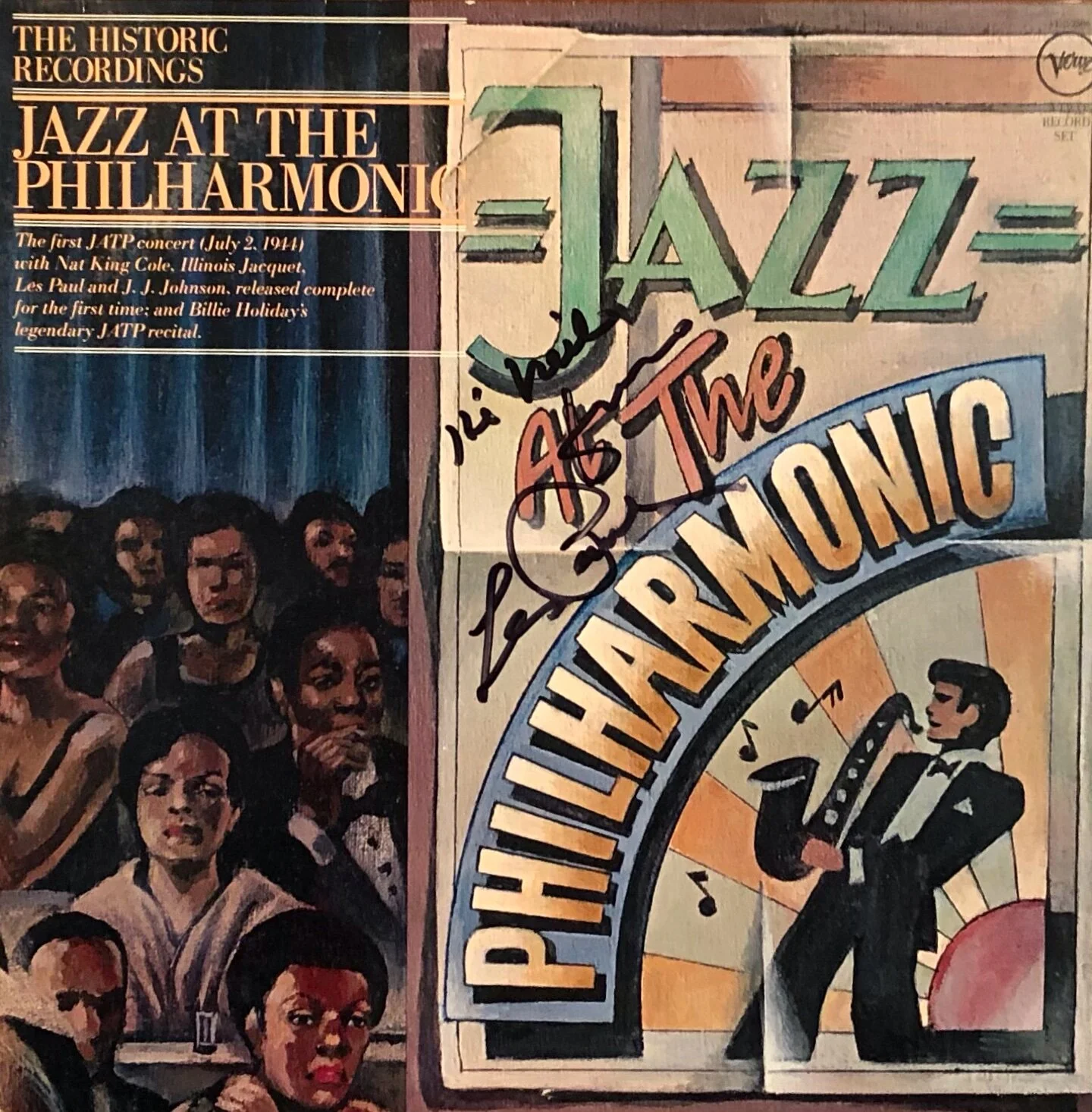
Jazz At The Philharmonic (1944 recordings) signed by Les Paul

Jazz At The Philharmonic (1944 recordings) signed by Les Paul

In 1944, Illinois participated in the first Jazz At The Philharmonic (JATP) concert at the Philharmonic Auditorium in Los Angeles. JATP was the brainchild of jazz impresario Norman Granz, and many tours and concerts followed in the ensuing years (1944-1983) when JATP was (intermittently) active. At the first JATP, Illinois was one of the strongest performers along with Les Paul and Nat King Cole. It is revelatory to listen to "Blues", a ten minute jam where Les Paul and Nat King Cole trade riffs, J.J. Johnson supplies gut bucket bottom swirls on trombone, and Illinois comes over the top with his blazing tenor saxophone. The recording is more than seventy years old and still sounds as fresh and vital as ever. As bassist Keter Betts wisely observed about Illinois, "He was Mr. Excitement. You didn't sit back in your chair, you sat on the edge." JATP sessions evolved into cutting duels through the years between artists as revered as Benny Carter, Charlie Parker, Lester Young, Dizzy Gillespie, and Harry "Sweets" Edison, and many records were released under the imprimatur of Norman Granz who helped to burnish the reputations of these great jazz masters. As the cost of touring with a big band became too prohibitive, Illinois recorded some great sides with smaller quintets in the 1950s and 1960s.

Bottoms Up (1968) signed by Illinois, Barry Harris

Bottoms Up (1968) signed by Illinois, Barry Harris

A composer of three hundred songs, "Black Velvet", "Bottoms Up", "Port Of Rico" and "Robbins Nest" among his most well known, Illinois was a musician's musician, an arranger and big band leader who also re-introduced the bassoon into Jazz. A difficult woodwind, mostly relegated to the concertos of Bach, Mozart and Vivaldi, Illinois studied privately with Manuel Ziegler of the New York Philharmonic and practiced for nearly five years before performing "Bassoon Blues" on The Message (released in 1963). It was the first Jazz recording to feature a bassoon since Frankie Trumbauer in 1928. Most of Illinois' later recordings featured a bassoon track and one highlight was his soulful and haunting rendition of Thelonious Monk's "Round Midnight" on his 1969 album, The Blues, That's Me! And Illinois is unquestionably the only jazz artist to play at The White House for Presidents Carter, Reagan and Clinton, even performing alongside President Clinton in 1993 on a bluesy rendition of Duke Ellington's classic "C Jam Blues."

The Message (1963) signed by Illinois

The Message (1963) signed by Illinois

Erin and I saw Illinois and his big band several times, including a show at The Tavern On The Green in New York City's Central Park which was a memorable if short lived jazz venue. Built originally in 1870 to house the sheep that grazed in a more bucolic and pastoral 19th century Central Park, The Tavern On The Green was transformed in 1934 under Robert Moses' leadership and became one of the largest and most successful restaurants in the country. It was a sprawling space which sat over 800 patrons in several banquet rooms and it became a cultural film icon when Bud Fox sauntered through the dining room after a clandestine meeting with Gordon Gekko in Wall Street in 1987. The Tavern took one of their spacious rooms and turned it into a jazz supper club and we went to see Illinois in the mid-1990s when he was playing a month long residency.

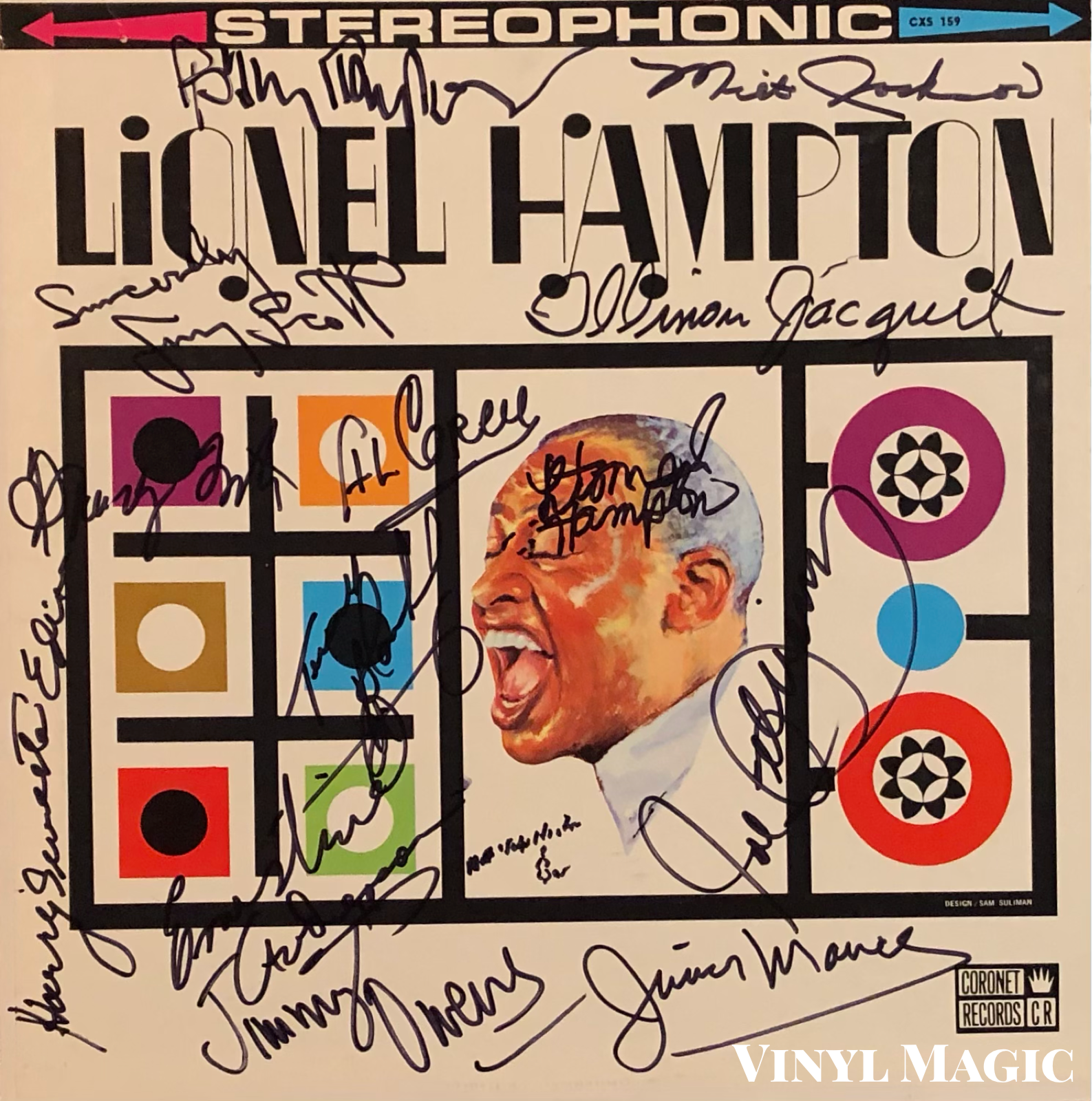
Lionel Hampton (1961) signed by Illinois, Lionel, Jimmy Owens, Junior Mance, Harry “Sweets” Edison, Al Grey, Joe Williams, Milt Jackson, Billy Taylor, Jimmy Scott, Ernestine Anderson, Milt Hinton, Terrence. Blanchard, Grady Tate

Lionel Hampton (1961) signed by Illinois, Lionel, Jimmy Owens, Junior Mance, Harry “Sweets” Edison, Al Grey, Joe Williams, Milt Jackson, Billy Taylor, Jimmy Scott, Ernestine Anderson, Milt Hinton, Terrence. Blanchard, Grady Tate

The consummate show man, Illinois possessed infinite talent and an abundance of good cheer. His band was sixteen pieces: piano, drums, bass, five saxophones, four trombones, and four trumpets. It was a wall of sound and wonder. The arrangements were tight, the soloing crisp and adventurous, and the ringmaster was Illinois Jacquet, leading the band through the changes, directing soloists, and stepping up to deliver his warm, impassioned tenor sax solos with reckless enthusiasm. As he said so presciently, "The patterns of big-band music are smooth and classical. It's got to be fresh. The brass section should crackle, like the sound of eggs being dropped into hot grease." And those horns were fresh, cracklin' and greasy!

Birthday Party (1976) signed by Illinois

Birthday Party (1976) signed by Illinois

He was happy to sign albums after each show. As powerful as his sound was on stage, Illinois was diminutive off stage, impish with a forever twinkle in his eyes and nattily attired. He was so full of joy and wonderment and he seemed particularly enamored with Erin, not the first musician, nor the last. At least he didn't ask her to sit in his lap like Les McCann or Solomon Burke! And I still don't know what happened in James Brown's dressing room....

Illinois used to introduce Milt Buckner, the venerable jazz organist and fellow bandmate, at his concerts as "the man who made Lionel Hampton rich - after I made him wealthy." We were the lucky ones to witness Illinois' musicality, joy and artistry, seeing him was a rich and wealthy experience for sure.

Illinois Jacquet, such fresh sounds and how those horns crackle!

The Blues, That’s Me (1969) front cover signed by Buster Williams

The Blues, That’s Me (1969) front cover signed by Buster Williams

Back Cover signed by Illinois

Back Cover signed by Illinois

Choice Illinois Jacquet Cuts (per BK's request)

“Blues” Illinois on tenor saxophone, Les Paul on guitar, Nat King Cole on piano, JJ Johnson on trombone

https://www.youtube.com/watch?v=dMOL454T4Gg

"Flying Home" - Budd Johnson, Dexter Gordon, Illinois Jacquet - in order of tenor sax solos

https://www.youtube.com/watch?v=xtbzCXbLv6Q&ebc=ANyPxKp37-Uqi9I5dlYoWy4mNC9lsjHLuKhq-WnSLLwybHPpLxKMYKuNn36JvI70K5OMvEy4jixwb6jv0UuaZAO7K9BMo4OAeA
"Round Midnight" - The Blues That's Me!

https://www.youtube.com/watch?v=Ixc2BNuTURM

"Take The 'A' Train" - Illinois Jacquet Big Band

https://www.youtube.com/watch?v=pcbOH9EheZI

"I Wish I Knew How It Would Feel To Be Free" - The King


https://www.youtube.com/watch?v=V_AGgG-mAv4

"Flying Home"

https://www.youtube.com/watch?v=J4J-Tywm_Jg

Robert Hunter and Me...

Walking down Madrone Canyon in Larkspur in 1969, you said some pretty mind-blowing stuff, how we were creating a universe and I was responsible for the verbal half of it. I said maybe, but it was your way with music and a guitar that was pulling it off. You said "That's for now. This is your time in the shadow, but it won't always be that way. I'm not going to live a long time, it's not in the cards. Then it'll be your turn." I may be alive and kicking, but no pencil pusher is going to inherit the stratosphere that so gladly opened to you. Recalling your statement, though, often helped keep me oriented as my own star murked below the horizon while you streaked across the sky of our generation like a goddamned comet!

Robert Hunter, letter written upon the one year anniversary of Jerry Garcia's death, 1996

Robert Hunter and Me City Winery New York City July 2014

Robert Hunter and Me City Winery New York City July 2014

I met Robert Hunter, lyricist nonpareil for the Grateful Dead, during a soundcheck before his show at the City Winery in New York City in July 2014. I had last seen Robert perform many years ago in Boston during college. While his literary and lyrical talents abound, his music and singing is more of an acquired taste. One that I have not yet acquired. What I remember from seeing him then, was Hunter shouting “Promontory Rider” at the top of his coarse lungs. Over and over. Seeing him once was more than enough for me.

The soundcheck last night revealed a kinder, gentler Robert Hunter. He played “Loser”, “Sugaree” and “Touch Of Grey” from the Grateful Dead songbook. While his voice is not melodic, it was not as harsh and his finger picked guitar playing was interesting. After the brief set, I had the chance to visit with him, and I brought a couple albums – Workingman’s Dead and Skull and Roses – which I had the Dead sign more than twenty years ago ( another story for another time).

Skull and Roses (1971) signed by Robert Hunter, Jerry Garcia, Bob Weir, Bill Kreutzman, Phil Lesh

 Robert was quite intrigued when I showed him the signed Workingman’s Dead album. I asked him where the photo was taken. He said he wasn’t sure, but the shabby clothes were supplied by Warner Brothers to reflect a workingman's vibe. I was surprised, I assumed the clothes were their own, as the Dead were never known for their sartorial choices. He said he loved the photo, but he hated the fake smokestacks that were painted on one of the buildings by an artist (see below Mickey Hart’s signature). I hadn’t noticed them before, but Robert was annoyed that Warner Brothers decided to mar an otherwise authentic photo.

Workingman’s Dead (1970) signed by Jerry Garcia, Robert Hunter, Bob Weir, Phil Lesh , Mickey Hart, Bill Kreutzman

 I told Robert that he was an amazing and prolific writer. Who were your influences? “Bob Dylan”, he immediately replied. Yes, I knew he had collaborated with Dylan on "Duquesne Whistle" and the entire Together Through Life album. But what about before Dylan? 'I’m an old english major', I explained, 'TS Eliot? Keats?' “Well,” he replied, “I am very well read. I’d like to say (William Butler) Yeats (the great Irish bard) but that would be untrue, I didn’t start reading Yeats until a couple of decades ago.” He mused, “I have always enjoyed T.S. Eliot. In fact, I’d say “Dark Star” was very much influenced by Eliot.”

Interesting. The Dead’s great LSD magnum opus “Dark Star”  influenced by T.S. Eliot?

A closer look at two excerpts reveals:

Dark Star (1968)

Dark star crashes, pouring its light into ashes

Reason tatters, the forces tear loose from the axis

Searchlight casting, for faults in the clouds of delusion

Shall we go, you and I while we can
Through the transitive nightfalls of diamonds.

The Lovesong of J. Alfred Prufrock (1915)

Let us go then you and I, when the evening is spread against the sky
Like a patient etherised uopn a table.
Let us go, through half deserted streets, the muttering retreats
Of restless nights in one night cheap hotels
And sawdust restaurants with oyster shells.

I’ll take Hunter at his word: there are some similarities. As Oscar Wilde reminds us, “Talent borrows, genius steals.” It was an enlightening visit with Robert Hunter, one of the foremost lyricists in the ever widening Great American Songbook.

Choice Robert Hunter Cuts (per BKs request)


https://m.youtube.com/watch?v=WptefFjahMk

“Box Of Rain” Jack o’ Roses 1980

https://m.youtube.com/watch?v=LSI_s4iwqY8

”Mountains Of The Moon” live at City Winery, NYC 7.21.14

https://www.youtube.com/watch?v=DLAd1HHzJzM&list=RDDLAd1HHzJzM&start_radio=1

”Promontory Rider” live with Jerry Garcia Band, Capitol Theater, 3.01.80

https://www.youtube.com/watch?v=0z6eZ4LFFkw

”Ripple” live at Ryman Auditorium, 2013 Americana Awards

https://m.youtube.com/watch?v=tA--gq6iI94

”Brown Eyed Women” Newport Folk Festival 7.24.14


https://m.youtube.com/watch?v=KLUTbnGwGt
”Reuben And Cherise” live 1980

https://m.youtube.com/watch?v=vDUnIb7-9fI

”Stella Blue” live at City Winery NYC 7.23.14

https://m.youtube.com/watch?v=xiCpRAiIIH4

”Promontory Rider” Alligator Moon 1978

Bonus Round:


https://www.youtube.com/watch?v=zhL03mLfu2I

”Dark Star” Live Dead 1969

https://m.youtube.com/watch?v=3oaodK8zdtI&list=RD3oaodK8zdtI&start_radio=1

”Sugar Magnolia” Grateful Dead with Duane Allman Fillmore East 4.26.71

https://m.youtube.com/watch?v=5EoQ3GkH4Zc

”Uncle John’s Band” Grateful Dead 10.31.80 Radio City Music Hall

https://m.youtube.com/watch?v=bpIs3d1N_6o

Ripple” Grateful Dead Fillmore East, NYC April 1971


https://m.youtube.com/watch?v=WgPV9DFkQFs

”It Hurts Me Too” Grateful Dead with Duane Allman Fillmore East 4.26.71

Jimmy McGriff, Erin, 9 Ball and Me…

People are always classifying me as a jazz organist, but I'm more of a blues organ player. That's really what I feel.

               Jimmy McGriff

I’ve Got. A Woman (1962) signed by Jimmy

I’ve Got. A Woman (1962) signed by Jimmy

I’ve Got A Woman (1962) signed by Jimmy

We'd see the people and feel them out. Playing for an audience is like trying to romance a woman. You listen to her first so you'll have a better idea of what to say.

               Jimmy McGriff

One Of Mine (1964) signed by Jimmy

One Of Mine (1964) signed by Jimmy

One Of Mine (1963) signed by Jimmy

They talk about who taught me this and who taught me that, but the basic idea of what I’m doing on the organ came from the church, That’s how I got it, and I just never dropped it.

Jimmy McGriff

Jimmy McGriff At The Organ (1965) signed by Jimmy

Jimmy McGriff At The Organ (1965) signed by Jimmy

At The Organ (1964) signed by Jimmy

My father was the one. He turned me around from playing the piano to the organ. I don't know. He was hearing something I wasn't hearing. He told me to play the organ, because I had that gospel thing.
Jimmy McGriff

Blues For Mister Jimmy (1965) signed by Jimmy

Blues For Mister Jimmy (1965) signed by Jimmy

Blues For Mister Jimmy (1965) signed by Jimmy

He has the sound I was trying to get on the organ. He had it on the horn so I was able to get it more with him. He's not the easiest person to get along with, but I like him. He has his own playing, just like everybody has their own way. I have mine and he has his. It was easy for me because I would play something and then I would ask him, "how do ya like that? And he said, "That's alright.

 Jimmy McGriff on Hank Crawford

The Big Band (1966) signed by Jimmy

The Big Band (1966) signed by Jimmy

The Big Band - Trbute To Basie (1966) signed by Jimmy

Jimmy McGriff is a master of the Hammond B3, an organ which uses a Leslie woofer (usually housed in a beautiful wood cabinet) that makes a distinctive whooshing flutter. There is no finer sound in Jazz, Soul or Blues. The great Jimmy Smith (from Philadelphia) is acknowledged as the father of the Hammond B3 in jazz, and he influenced many players including McGriff,  Shirley ScottCharles Earland, and Richard “Groove’ Holmes, all hailing from Philadelphia, the capitol of the Hammond B3 for sure.

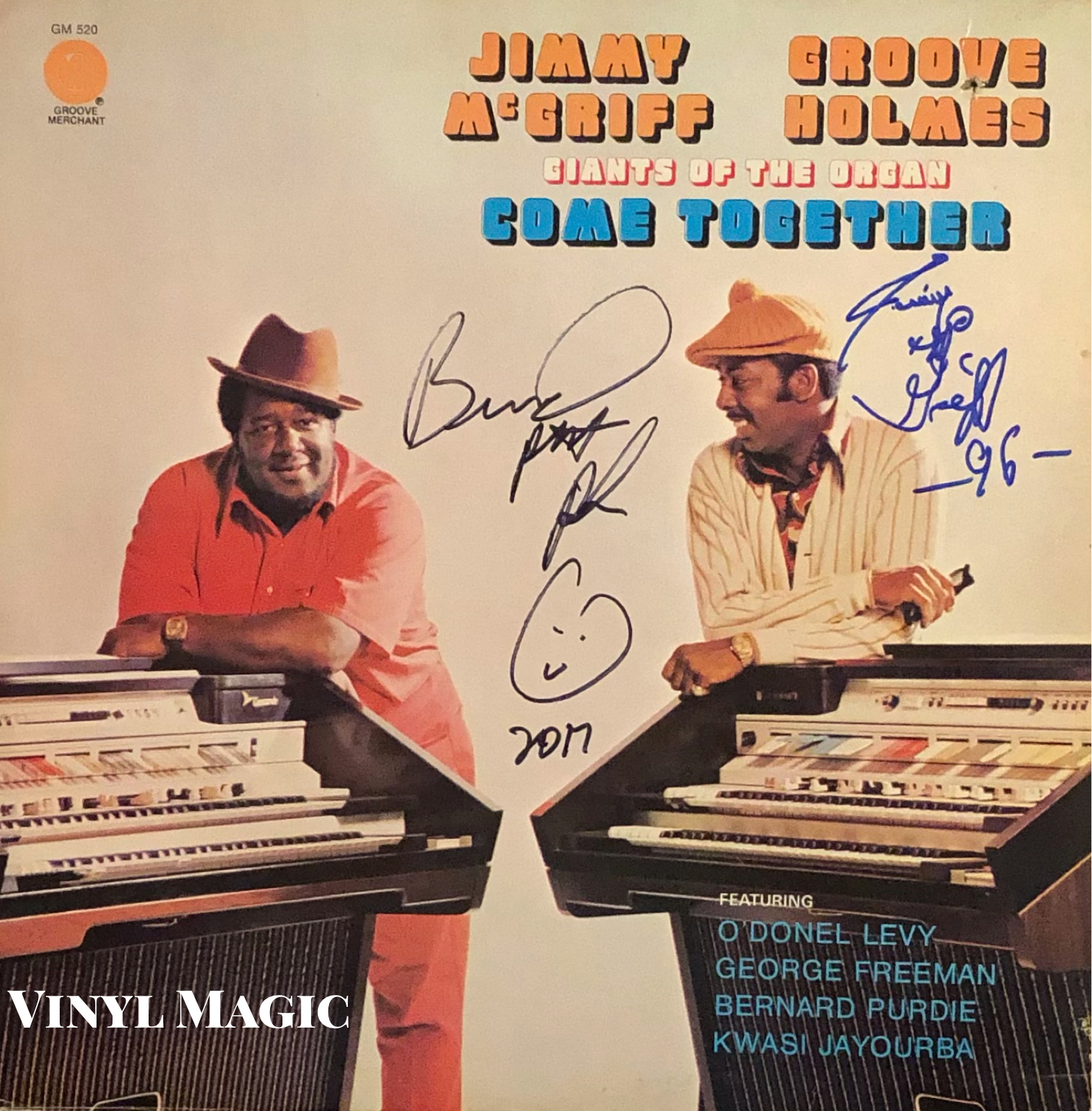
Come Together (1973) signed by Jimmy, Bernard Purdie

Come Together (1973) signed by Jimmy, Bernard Purdie

Giants Of The Organ (1973) signed by Jimmy, Bernard Pretty Purdie

A Bag Full Of Soul (1966) signed by Jimmy

A Bag Full Of Soul (1966) signed by Jimmy

A Bag Full Of Soul (1967) signed by Jimmy

I saw Jimmy McGriff perform in all sorts of incarnations: traditional trio (organ, guitar, drums), quartet (organ, guitar, drums, sax), and big band. Most Hammond B3 players use the pedals to supply the bass lines, so an electric Fender bass, or acoustic upright bass is unnecessary. There is no thicker, greasier, soulful sound than a Hammond B3 cranked up, Leslie whirring away in the hands of a master like Jimmy McGriff or Jimmy Smith.

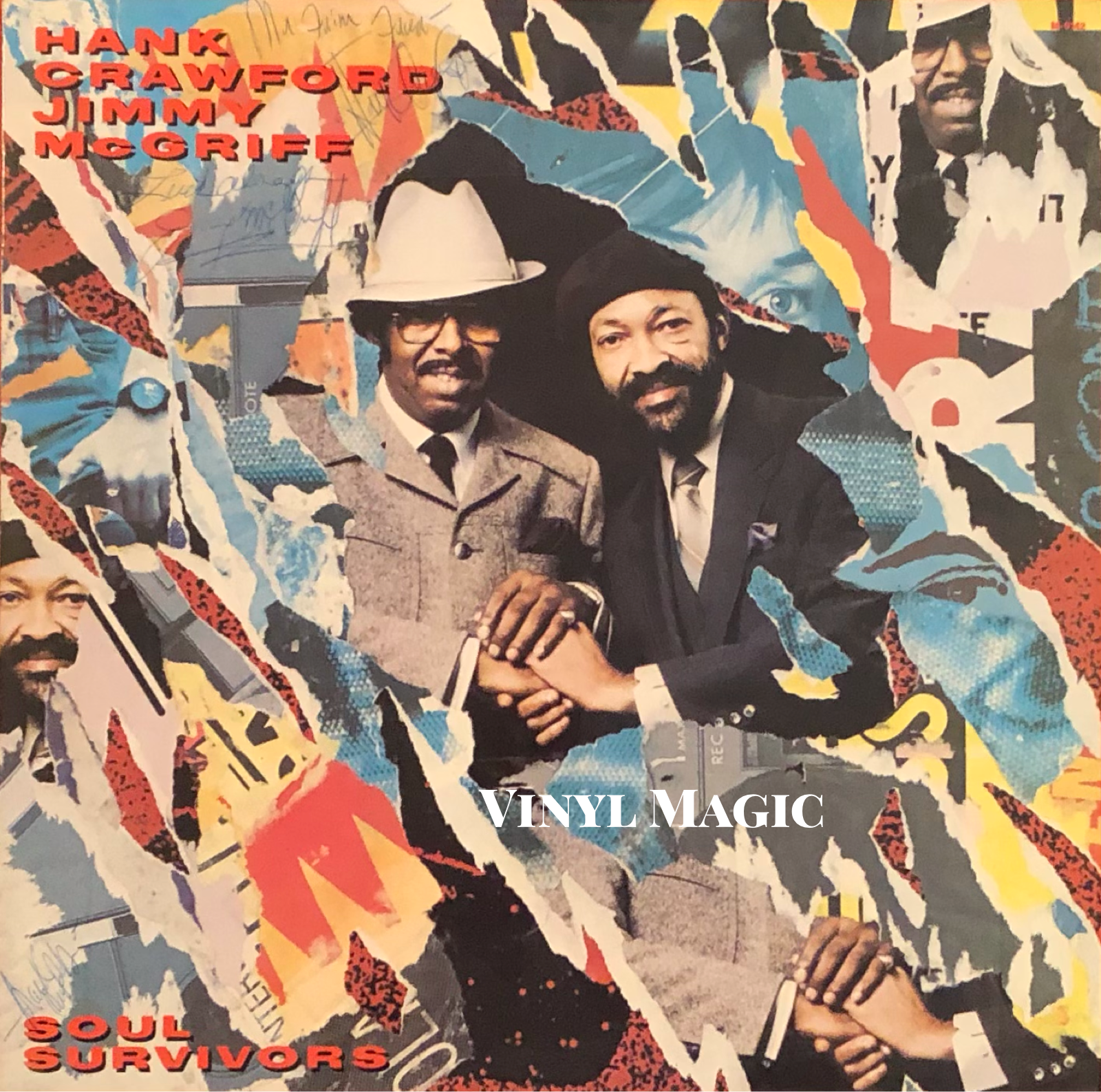
Soul Survivors (1986) signed by Jimmy, Hank Crawford “Mr. Frim Fram”

Soul Survivors (1986) signed by Jimmy, Hank Crawford “Mr. Frim Fram”

Soul Survivors (1986) signed by Jimmy, Hank Crawford “Mr Frim Fram”

One of the first times I saw Jimmy was in New York City with Hank Crawford. Hank was Ray Charles’ music director before leaving in 1963 for a solo career, and he is a skilled alto saxophonist, composer and arranger. Jimmy and Hank had recently released Soul Survivors(1986), their first release as co-leaders, and they were playing in a (now defunct) club. They were showcasing tunes off their new release, including “Frim Fram Sauce”, a forgotten hit (at least for me) by Nat King Cole. After the show, I had Jimmy and Hank sign the album. I told Hank that I really liked their version of” Frim Fram Sauce”, and a friend of mine’s dad (Joe Ricardel) had written the song. Hank looked at me incredulously, then grumbled “I don’t know about that. Nat King Cole wrote that song.” Yes, Nat sang it but a white dude wrote it, I replied. Hank laughed and signed the album, “Mr. Frim Fram”. Over the ensuing years, I was lucky to see Jimmy and Hank play many more times.

Outside Looking In (1978) signed by Jimmy, Hank Crawford

Outside Looking In (1978) signed by Jimmy, Hank Crawford

Outside Looking In (1978) signed by Jimmy, Hank Crawford

Steppin’ Up (1990) signed by Jimmy, Hank Crawford

Steppin’ Up (1990) signed by Jimmy, Hank Crawford

Steppin’ Up (1987) signed by Jimmy, Hank Crawford

Finally, Erin and I set a date to get married on September 21, 1996. We both have eclectic tastes so a wedding band was going to be the centerpiece; I mean very important. First, we thought of Joe Williams, the great Count Basie vocalist. Joe was stately, regal, urbane and incredibly smooth. And expensive. I saw him at a show. We talked. He wanted $50,000. He was out. Jerry Jeff Walker was another option we considered. He wanted $10,000 (more than we wanted to spend but workable). Jerry Jeff wanted to squeeze us in while he was on tour, so a Tuesday or Wednesday night would work for him. Not for us. Jerry Jeff was also out. Harold Melvin and The Bluenotes? Their hits - “The Love I Lost”, “Bad Luck” “Don’t Leave Me This Way” “I Miss You” - while potent on the dance floor, were not exactly the best wedding content.

Electric Funk (1969) signed by Jimmy

Electric Funk (1969) signed by Jimmy

Electric Funk (1970) signed by Jimmy

In late 1995, I saw Hank and Jimmy play again, and they were promoting their new release, Blues Groove, which featured “All Blues” by Miles Davis and Joe Zawinul’s “Mercy, Mercy, Mercy”. I thought they would be great. I talked it over with Erin, and she said go for it. So I called Tel Arc, Jimmy’s record label based in Ohio . They referred me to his agent In Phoenix, and I spoke with her. She said she didn’t think Jimmy had ever done a wedding, but might be interested. She gave me a price with Hank and without. Hank Crawford was expensive. Hank was out. I had to pay for the Hammond B3 rental, the hotel room for Jimmy and his band, a sound guy with equipment, and Jimmy's fee. The venue was to be in our back yard, a black tie swank affair for two hundred-fifty guests. Contracts signed, this is gonna be great.

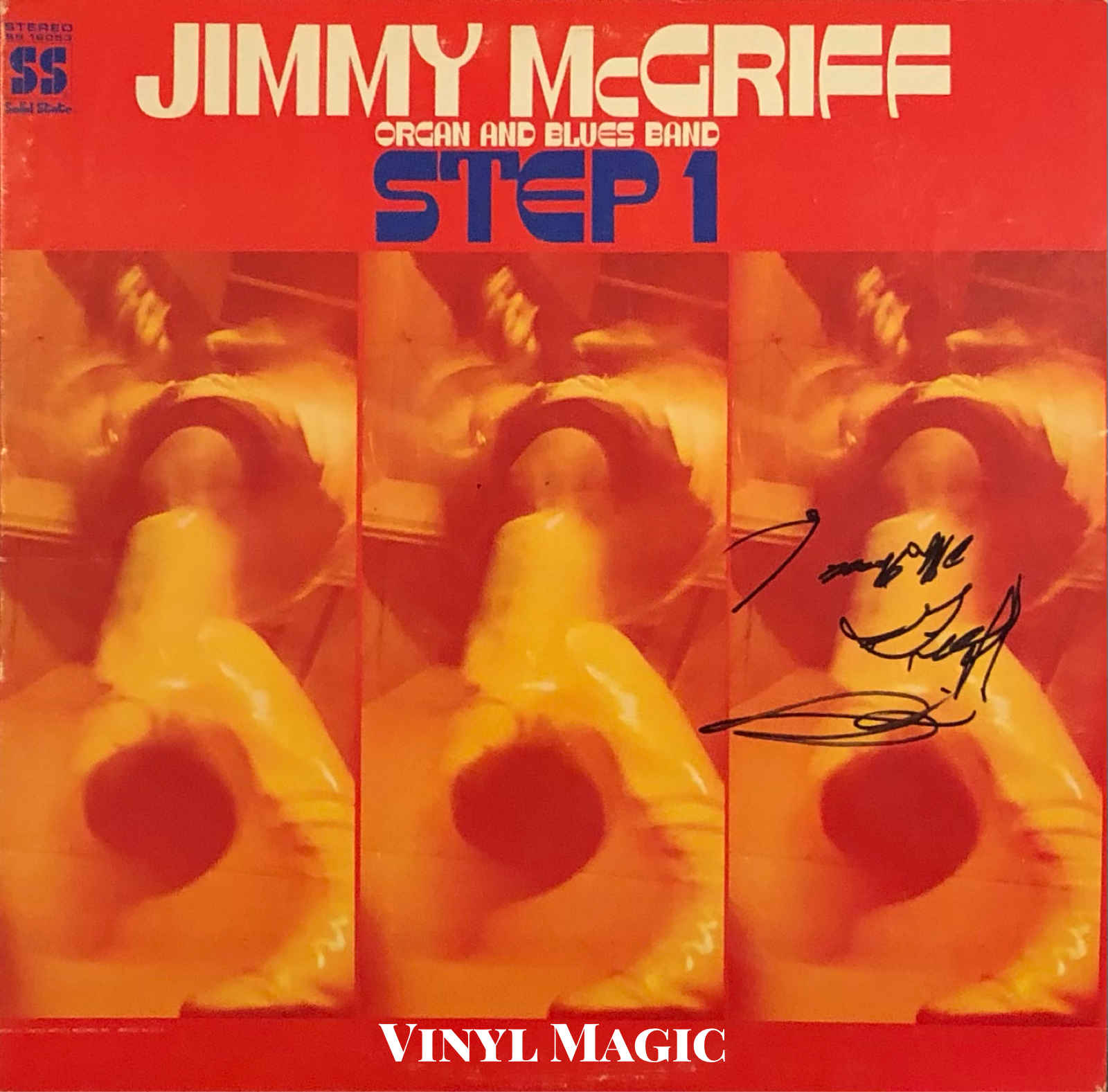
Step 1 (1969) signed by Jimmy

Step 1 (1969) signed by Jimmy

Step 1 (1969) signed by Jimmy

The day of the wedding, Jimmy had his band set up by the pool. It is a beautiful night. Jimmy wants cash in full before he performs. I count out the cash and hand it to him. I ask, ‘Have you ever played a wedding before?’ “Yes. Three. My best friend from the police academy (hard to believe, but Jimmy was a policeman for two years in Philly!), my sister’s, and yours.” We talked about the playlist his agent had sent me. I only had three requests: “Let’s Stay Together” – the Al Green soul classic which was our first dance, “My Way” – written by Paul Anka for Frank Sinatra which Jimmy transformed into a ten minute simmering sanctified soul burner, and “Lil’ Darlin” – the great Neal Hefti composition from the Count Basie canon. Whatever else you want to play, just keep the folks groovin’, I suggested. Jimmy's done this before, we are in the hands of a master.

A Thing To Come By (1969) signed by Jimmy

A Thing To Come By (1969) signed by Jimmy

A Thing To Come By (1969) signed by Jimmy

The guests begin to arrive, and we start with an hour long cocktail party with light hors d’oeuvres before the wedding begins. My friend, Chief Judge Loren Smith, US Court of Federal Claims, officiates. My beautiful bride appears, and there has never been anyone more beautiful. Before Erin begins her walk, Jimmy and his band (Wayne Boyd on guitar, Don Williams on drums, and Marshall Keys on sax) break into a grooving, sensuous, slow burn version of the "Wedding March." It was so good. The guests start swaying, I am on the steps under the pergola, where we are about to marry, smiling and grooving. Jimmy doesn’t want to stop, the guests feel the same way, Marshall Keys starts blowing his second solo, I give the sign (reluctantly) to stop.

Black Pearl (1971) signed by Jimmy

Black Pearl (1971) signed by Jimmy

Black Pearl (1971) signed by Jimmy

We are now married, nuptial bliss ensues. The band starts to raise the temperature. “Mercy, Mercy, Mercy”, Harold Mevin’s “Hope That We Can Be Together Soon”, a scorching “My Way”, “a bluesy “Lil’ Darlin”, and a scintillating “Let’s Stay Together”, our first dance, get everyone hopped up and (hopefully) making bad decisions. After the second set, Jimmy and the band take a brief intermission and go for a tour of my basement and music collection, which I am proud to host.

Jimmy sees the pool table, says he loves to play. A game of chance?, I suggest. "9 Ball" comes the reply from Jimmy, "The only game." We lag for break, I win. A crowd gathers. The 4 ball goes in off the break, then I sink the one ball. I make a ridiculous 2-9 combination. Game over. Jimmy rolls his cue. No reason for a rematch, it’s your day, he says as he moves away from the table. I retire from the competition. Undefeated. 

Jimmy McGriff and Me - September 21, 1996

Jimmy McGriff and Me - September 21, 1996

Jimmy McGriff and Me…

Marshall, Jimmy and Me…

Marshall, Jimmy and Me…

Marshall Keys, Jimmy McGriff and Me…

Don Williams notices a signed Arthur Prysock album framed on the wall next to the McGriff and Crawford Soul Survivors album. Don tells me that he played with Arthur for years, and Arthur bought him his first real drum set. Don seemed wistful, as he said that Arthur was really sick, suffering from dementia. Where is he now? I ask. “He is in the islands talking to the coconuts in the trees.” We finish the tour. Jimmy and the band decide to play a third set, even though it wasn’t in the contract. They were having so much fun, they didn’t want to stop. And neither did any of our guests.

Jimmy, Don Williams and Wayne Boyd checking out the archives

Jimmy, Don Williams and Wayne Boyd checking out the archives

Jimmy McGriff, Don Williams, Wayne Boyd and Me…

Erin and Me…nuptial bliss

Erin and Me…nuptial bliss

The prettiest girl in the whole world…

Jimmy and I stayed in contact over the years and I saw him many times after our wedding. I showed him pictures of our growing family (now three kids), and he was so enthusiastic and gracious.Despite his declining health, due to diabetes and MS, he was playing almost until the end. I told Jimmy that our kids loved music, and they were happy and healthy because of the great start they got from his amazing performance at our wedding on September 21, 1996.

First dance, Jimmy and Marshall Keys cooking “Let’s Stay Together.”

First dance, Jimmy and Marshall Keys cooking “Let’s Stay Together.”

Jimmy and Marshall

Jimmy and Marshall

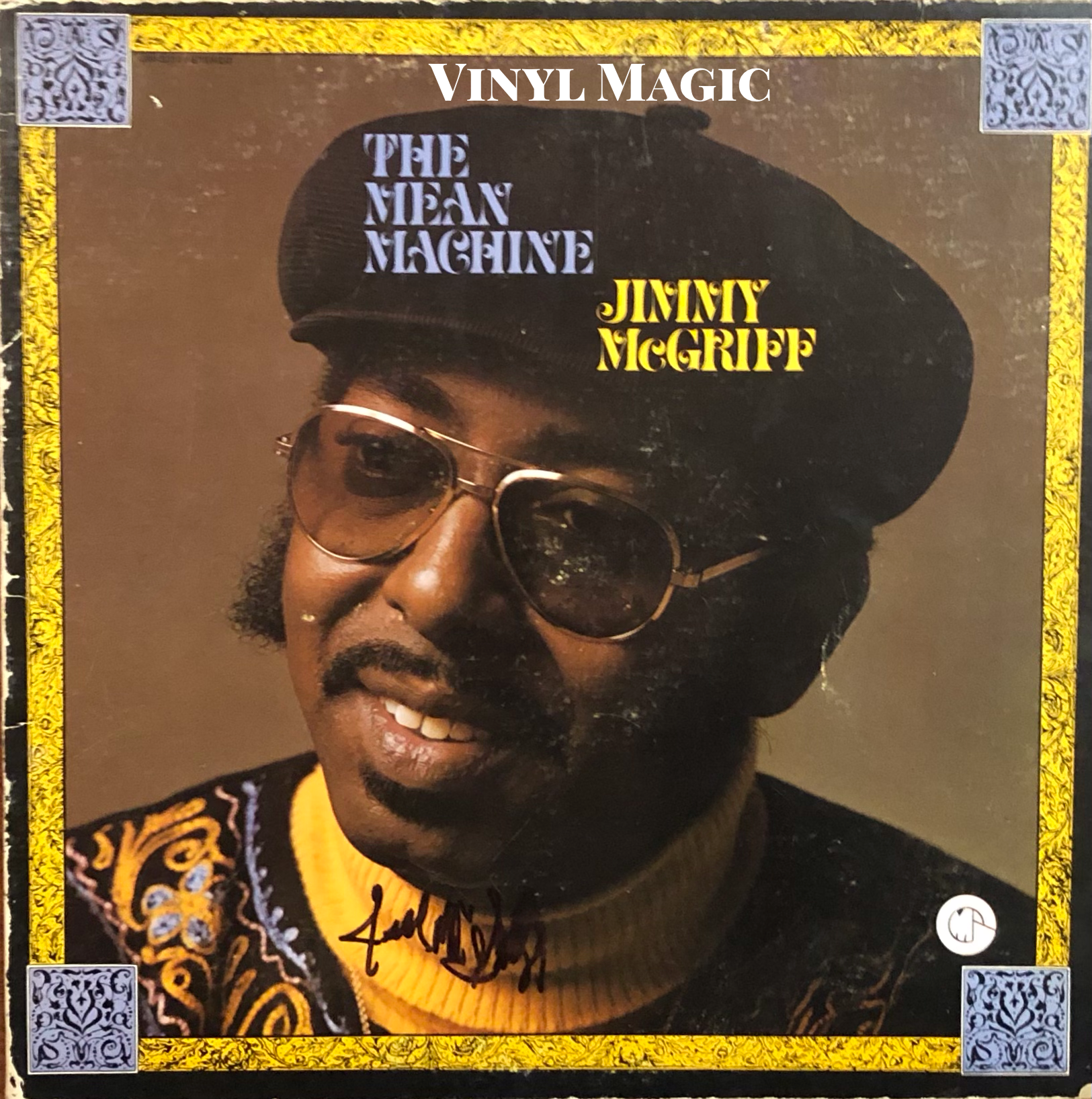
The Mean Machine (1976) signed by Jimmy

The Mean Machine (1976) signed by Jimmy

The Mean Machine (1976) signed by Jimmy

Groove Grease (1971) signed by Jimmy

Groove Grease (1971) signed by Jimmy

Groove Grease (1971) signed by Jimmy

Christmas With McGriff (1964) signed by Jimmy

Christmas With McGriff (1964) signed by Jimmy

Christmas With McGriff (1963) signed by Jimmy

Christmas With McGriff (1973 reissue with  Jimmy’s niece!

Christmas With McGriff (1973 reissue with Jimmy’s niece!

Christmas With McGriff (1972 reissue with Jimmy’s niece!) signed by Jimmy

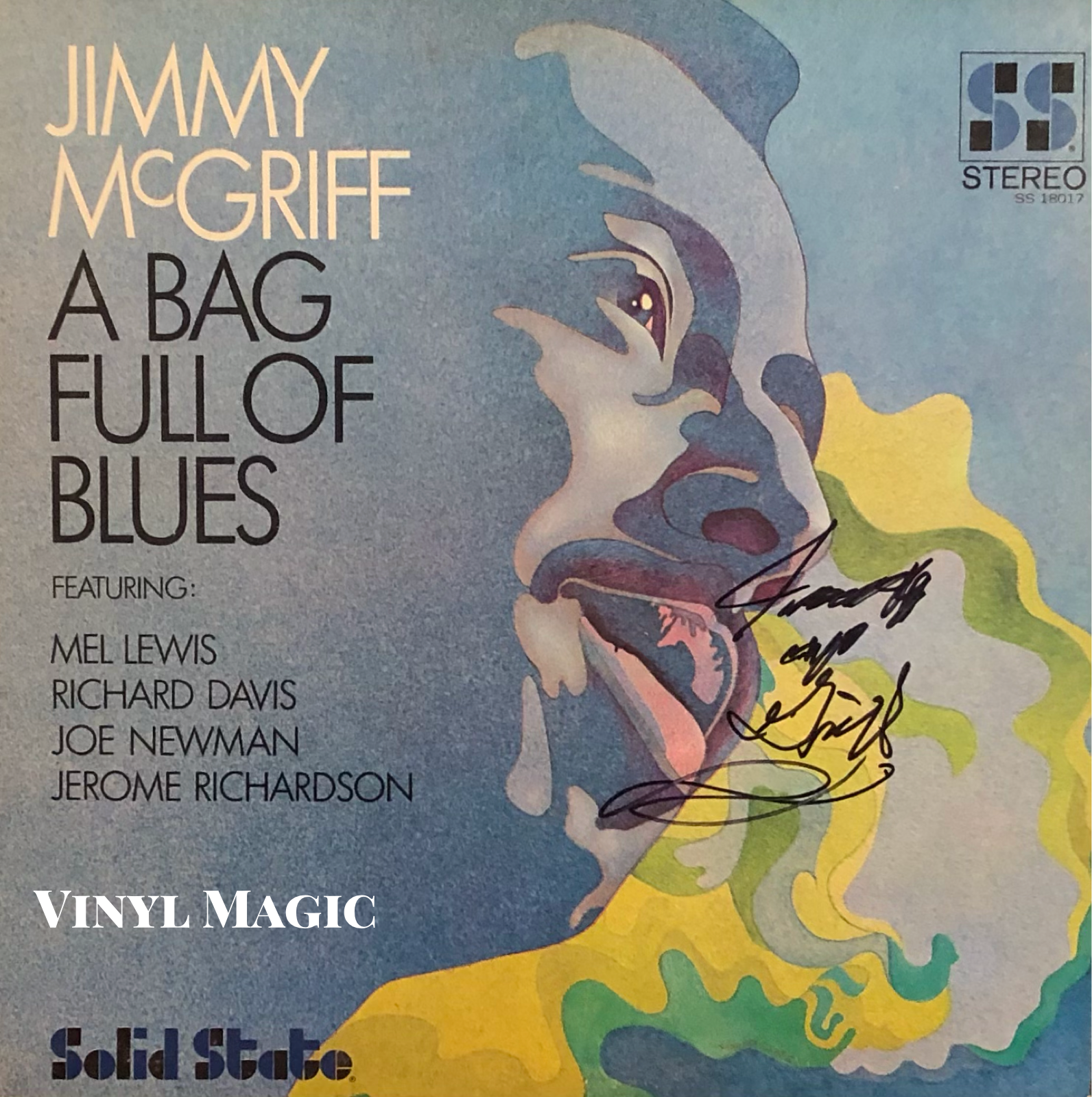
A Bag Full Of Blues (1967) signed by Jimmy

A Bag Full Of Blues (1967) signed by Jimmy

A Bag Full Of Blues (1967) signed by Jimmy

City Lights (1981) signed by Jimmy

City Lights (1981) signed by Jimmy

City Lights (1981) signed by Jimmy

Tailgunner (1977) signed by Jimmy

Tailgunner (1977) signed by Jimmy, Randy Brecker

Choice Jimmy McGriff Cuts (per BKs request)

https://www.youtube.com/watch?v=umAVOKVmNg0

“Let’s Stay Together” Sky Walk 1984

https://www.youtube.com/watch?v=xjCpGl1jU5I

“My Way” City Lights 1981

https://www.youtube.com/watch?v=1hUux41Fe1g

“Frim Fram Sauce” Soul Survivors 1986

https://www.youtube.com/watch?v=DqLYEr9yW8Q

“I’ve Got A Woman” I’ve Got A Woman 1962

https://www.youtube.com/watch?v=nO-O8si8pA4

“Things Ain’t What They Used To Be” with Groove Holmes 1974

https://www.youtube.com/watch?v=bEJQ4XUkfEo

“Signed, Sealed, Delivered” Soul Sugar 1971

https://www.youtube.com/watch?v=6qlH3tKTgv8

“Hope That We Can Be Together Soon” Road Tested 1997

https://www.youtube.com/watch?v=zwr6sNdnou4&list=PL83GhjNrLsgW4i1amLDnED5vgaFkDzjiN&index=3

“Oh Happy Day” A Thing To Come By 1969

https://www.youtube.com/watch?v=aiq6GXalqxc

“Mercy, Mercy, Mercy” Blues Groove 1995

https://www.youtube.com/watch?v=HY1LmlGbgH4

“Honky Tonk” Montreux 1992 with Jimmy Smith

https://www.youtube.com/watch?v=THK5FVuptp0

“Everyday I Have The Blues” live with Hank Crawford, 1989

https://www.youtube.com/watch?v=SNnaFKZuBtg

“Keep Loose” live late ‘60s

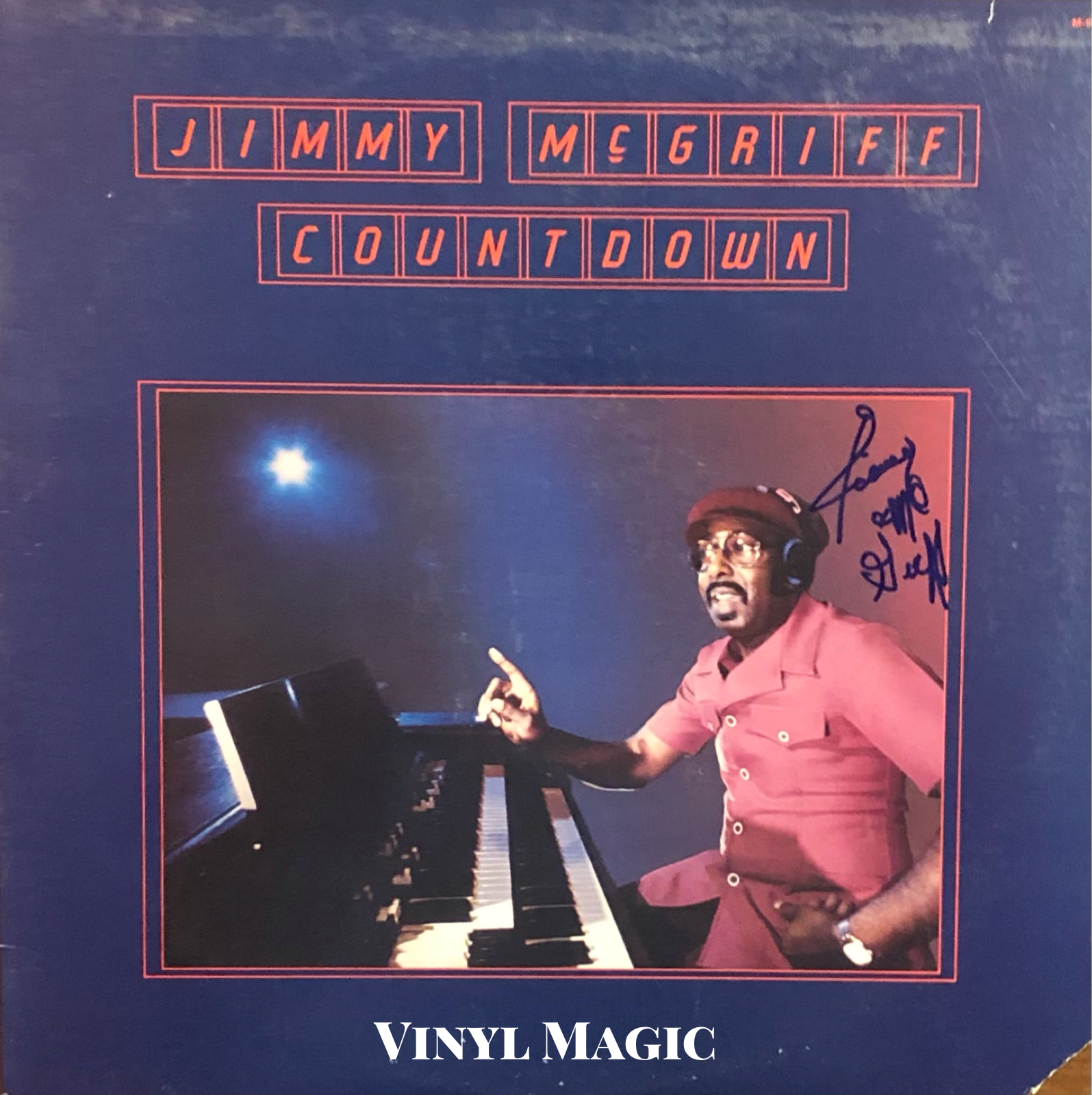
Countdown (1983) signed by Jimmy

Countdown (1983) signed by Jimmy

Countdown (1983) signed by Jimmy

The Groover (1982) signed by Jimmy

The Groover (1982) signed by Jimmy

The Groover (1982) signed by Jimmy

Skywalk (1984) signed by Jimmy

Skywalk (1984) signed by Jimmy

Skywalk (1984) signed by Jimmy

State Of The Art (1985) signed by Jimmy, Dr. Lonnie Smith

State Of The Art (1985) signed by Jimmy, Dr. Lonnie Smith

State Of The Art (1985) signed by Jimmy, Dr Lonnie Smith

Blue To The ‘Bone (1988) signed by Jimmy, Al Grey, Bernard Purdie

Blue To The ‘Bone (1988) signed by Jimmy, Al Grey, Bernard Purdie

Blue To The Bone (1988) signed by Jimmy, Al Grey, Bernard Pretty Purdie

Soul Survivors (1986) signed by Jimmy, Hank Crawford, Bernard Pretty Purdie

Soul Survivors (1986) signed by Jimmy, Hank Crawford, Bernard Pretty Purdie

Soul Survivors (1986) signed by Jimmy, Hank Crawford, Bernard Pretty Purdie

Donald Byrd and Me…

I skipped school one day to see Dizzy Gillespie, and that's where I met (John) Coltrane. Coltrane and Jimmy Heath just joined the band, and I brought my trumpet, and he was sitting at the piano downstairs waiting to join Dizzy's band. He had his saxophone across his lap, and he looked at me and he said, 'You want to play? So he played piano, and I soloed. I never thought that six years later we would be recording together, and that we would be doing all of this stuff. The point is that you never know what happens in life. 

                Donald Byrd

2 Trumpets (1956) signed by Donald Byrd, Art Farmer, Barry Harris, Jackie McLean

2 Trumpets (1956) signed by Donald Byrd, Art Farmer, Barry Harris, Jackie McLean

He was the first person to let me be a permanent member of an internationally known band. He has always nurtured and encouraged young musicians. He's a born educator, it seems to be in his blood, and he really tried to encourage the development of creativity.

              Herbie Hancock on Donald Byrd

Born in Detroit in 1932, Donald Byrd could do it all. A true Renaissance man, he was a trumpeter, composer, teacher, lawyer, mentor, producer, pilot, and influential band leader across many genres. A brilliant and devoted educator, Donald received a Masters at the Manhattan School Of Music, a PH.D in Music Education from Columbia University and a law degree. He taught at Rutgers, New York University, Howard University, Cornell and he helped countless students and musicians.

The Young Bloods (1956) signed by Donald, Phil Woods

The Young Bloods (1956) signed by Donald, Phil Woods

Donald started out playing hard bop trumpet and joined Art Blakey's Jazz Messengers in 1955, a fertile and potent training ground. Blakey had some incredible trumpet players in his band through the decades, including Kenny DorhamFreddie HubbardLee Morgan, and Wynton Marsalis. In 1955 and 1956, Donald recorded some early solo work for Savoy and Prestige Records and he was the leader on over fifty albums in his distinguished career (especially for Blue Note records), and a sideman on hundreds of other sessions. Like Art Blakey, Donald was very adept at hiring and nurturing talent. A twenty-one year old Herbie Hancock made his recording debut on Royal Flush in 1961. In the liner notes, Donald presciently writes, " Herbie is very learned, very studious, and sounds almost like a combination of Bill EvansAhmad Jamal and Hank Jones... I'm sure he's going to be very important." Indeed, he was!

Royal Flush (1961) signed by Donald

Royal Flush (1961) signed by Donald

Blessed with a curious and wildly inventive mind, Donald broke new ground with many of his recordings. After study in Paris with French composer and conductor Nadia Boulanger, Donald returned to the studio and recorded A New Perspective (1963) where he melded an eight voice gospel choir with the tenor sax of Hank Mobley, the guitar of Kenny Burrell, the piano of Herbie Hancock, and the crystal, clarion call of his trumpet. For this record, Donald wrote three compositions, and pianist/arranger Duke Pearson composed two, including "Cristo Redentor", a haunting melody inspired by a 1961 trip to Brazil while Pearson accompanied singer Nancy Wilson. It is easily one of my favorite songs, part ruminative funeral dirge, part elegiac gospel affirmation.

4, 5, and 6 (1956) signed by Donald, Mal Waldron, Jackie McLean

4, 5, and 6 (1956) signed by Donald, Mal Waldron, Jackie McLean

In the ensuing years, much of Donald Byrd's catalog has been sampled by hip hop artists whom he fully embraced like Guru, Nas, Public Enemy, A Tribe Called Quest, and Tupac Shakur. "Cristo Redentor" is exceptional with more than fourteen samples cited by various artists. For me, the most dazzling use of this song was in Dave Chappelle's 2004 skit "WacArnold's", a cautionary tale of the adventures of 'Calvin' as he joins the fast food industry in the ghetto and succeeds. Until he doesn't. The song becomes an elegy for the abject misery that befalls 'Calvin' and his family under the toxic spell of "WacArnold's", leavened with the Chappelle Show comic genius. It is extraordinary.

Pairing Off (1956) signed by Donald, Phil Woods, Tommy Flanagan

Pairing Off (1956) signed by Donald, Phil Woods, Tommy Flanagan

In 1974, Donald produced The Blackbyrds, a group of students whom he was teaching while a Professor of Music at Howard University in Washington, DC. Flying Start (1974), The Blackbyrds’ second album was hit, spawning the top five R&B track, "Walking In Rhythm." They would go on to release seven albums over an eight year career, not bad for some college kids who hooked up with the coolest college professor ever.

Not all jazz purists were happy with Donald Byrd’s progression into funk and jazz fusion as tenor sax colleague Gary Bartz explained: "We got a lot of flack for all of that. You know, 'They're selling out, they're selling out.' We're not selling out. First of all, when you make a record you want to sell it. There are no genres. There are no different types of music. You can't have different types of water. You can have dirty water, you can have clean water, you can have Perrier, you can have Evian, but when it boils down, it's water. ... It's just music."

All Day Long (1956) signed by Donald, Kenny Burrell, Tommy Flanagan, Frank Foster

All Day Long (1956) signed by Donald, Kenny Burrell, Tommy Flanagan, Frank Foster

Regrettably, I only saw Donald Byrd once. In the mid 1990s, noted pianist and fellow educator Dr. Billy Taylor was doing a series of interviews and performances with jazz artists at the Kennedy Center Theater Lab in Washington, DC. The Theater Lab was small, maybe 150 folding seats. The format was Billy Taylor would host and interview the guest, then the artist would perform selections with Billy and his trio. The series was recorded and broadcast through the sponsorship of NPR. I was thrilled to hear both Dr. Taylor and Dr. Byrd discuss music, as they were both as articulate as they were erudite. About two gorgeous songs in, they had a break and discussed "Cristo Redentor", the origins, meaning, etc. The song began as Billy comped an intro with his trio and then Donald started to play. His trumpet was so magisterial and pure, I was tinglin' and had goose bumps. About ninety seconds in, Donald abruptly stopped and left the stage. There was complete shock, as Dr. Taylor explained there would be a short break. The crowd grew restless in their absence.

Sonny Rollins Vol. 1 (1957) signed by Donald, Sonny, Max Roach

Sonny Rollins Vol. 1 (1957) signed by Donald, Sonny, Max Roach

Twenty minutes later, Dr. Taylor returned to the stage, and he explained that Dr. Byrd was a diabetic and had undergone a bit of a shock. He was going to return to the stage for an interview, but they would not be playing any more music. The two old friends then reunited on stage and completed their genial and fascinating conversation.

After the show, I stalked Donald and waited for him in the labyrinthine hallways deep in the bowels of the Kennedy Center. I found him as he was leaving with his trumpet in his hand. I told Donald how worried the audience was and we were glad he was all right. He was sheepish but happy to sign some albums. His signature was more like a first grader's doodle. I have a lot of signatures in my collection and Donald's might be the most illegible. It was similar to Jose Feliciano signature (see below) who gets a pass because he is blind (although vastly talented). I remember pianist Tommy Flanagan laughing when he saw the All Day Long album, "Who signed that?" pointing to Donald's scrawl. I told him it was Donald Byrd. Tommy's brow furrowed, he shook his head and shrugged, "Ain't that some shit." 

Yes Tommy, Donald Byrd was the shit. Yes, he was.

Bluebird (1955 recordings) signed by Donald, Hank Jones, Jerome Richardson

Bluebird (1955 recordings) signed by Donald, Hank Jones, Jerome Richardson

Nice People (1988) signed by Donald, Jimmy, Percy, and Albert Tootie Heath, Kenny Burrell, Curtis Fuller, Clark Terry, Cedar Walton

Nice People (1988) signed by Donald, Jimmy, Percy, and Albert Tootie Heath, Kenny Burrell, Curtis Fuller, Clark Terry, Cedar Walton

Choice Donald Byrd Cuts (per BKs request)


https://m.youtube.com/watch?v=Lha6cjo5Cis

“Cristo Redentor” A New Perspective 1963

https://m.youtube.com/watch?v=AfGygKe38-w

“Moon River” Jazz at Antibes 1965

https://m.youtube.com/watch?v=Qyq6jSmeXKo

“I’m A Fool To Want You” Royal Flush 1962

https://m.youtube.com/watch?v=F_EZ17KOLfk

“Witchcraft” Byrd In Hand 1959

https://m.youtube.com/watch?v=9kp44ubIieg

“Witch Hunt” Street Lady 1973

https://m.youtube.com/watch?v=LCMmdMH94kE

“Lover Come Back To Me” Off To The Races 1958

https://www.youtube.com/watch?v=Ofa8VEkCnFQ

“The Emperor” Ethiopian Knights 1971

https://m.youtube.com/watch?v=oeyL1yVY_6Q&list=PLG9jLl6Ldd_iWIXOeesJb0-ORq23w8maQ&index=25

“Walking In Rhythm” Flying Start 1973

https://m.youtube.com/watch?v=lp7X5DdkDps

“Mustang!” Mustang 1967

https://m.youtube.com/watch?v=pdNOgfGiDpo

“House Of The Rising Sun” Up With Donald Byrd 1965

Jose Feliciano! (1968) signed by Jose (or Donald?!}

Jose Feliciano! (1968) signed by Jose (or Donald?!}

10 To 23 (1969) signed by Jose (or Donald?,)

10 To 23 (1969) signed by Jose (or Donald?,)

Shirley Horn and Me…

What I remember first in my life is playing the piano. That's when I was four years old. I'd go to my grandmother's home. She had a parlor with a great big piano. The parlor was for company, and it was closed off with French doors. It was always cold, but I didn't want to do anything but just go in there and sit on the piano stool. I wasn't interested in playing with the kids outside. After several years of this my grandmother told my mother to get me lessons.

Shirley Horn

Travelin’ Light (1965) signed by Shirley Horn

Travelin’ Light (1965) signed by Shirley Horn

My family loved music and there was always music around from the greatest singers and bands. Usually, I just learned the songs my mother used to sing around the home. I would ask her, 'What's the name of this one, what's the name of that one?' because I'd have the melody in my mind. I remember hearing Peggy Lee singing 'Why Don't You Do Right.' In fact, probably 75 percent of the songs I do are ones I heard at home.

Shirley Horn

Live At Vine Street (1987) signed by Shirley Horn

Live At Vine Street (1987) signed by Shirley Horn

Born in Washington, DC in 1934, Shirley Horn was classically trained as a pianist and, after graduating from Howard University, she settled in the Washington DC area. Miles Davis heard her debut Embers And Ashes (1961), was smitten, and had her open for him at the Village Vanguard which garnered critical acclaim. That led to four albums released from 1961-1965 which were largely forgotten and Shirley's career stalled. By her own volition, Shirley spent the next fifteen years raising her daughter in Washington DC and playing in small, local clubs, far from the madding crowd.

Shirley, an incredibly gifted pianist and ballad singer, combined Bill Evans’ elegant lyricism with Nat King Cole’s exquisite phrasing. Her rebirth started when she signed with Verve Records in 1987 which began a resurgence in her recording output. She received seven straight Grammy nominations and won a Grammy in 1998 for I Remember Miles, her tribute to Miles Davis. Three of her albums went to Number One on the Billboard jazz charts and she released fourteen albums from 1987-2005. Quite a remarkable renaissance indeed.

I saw Shirley Horn many times and I was always struck by how prodigious her talent was and, despite selling out concert halls in Japan and Europe, she was playing small clubs in the United States. For many years, Shirley was a regular at One Step Down, 2517 Pennsylvania Avenue NW in Washington DC’s West End at the edge of Georgetown. Shirley called it "the best little jazz joint." I called it a dive. One Step Down was small, maybe a capacity of sixty, and when you entered off Pennsylvania Avenue, you would take one step down and walk into the club. The piano was set up to the left, a quartet at most could fit on what passed for a bandstand, and then a long mahogany bar, probably forty feet to the end of the narrow, rectangle room with restrooms in the back.

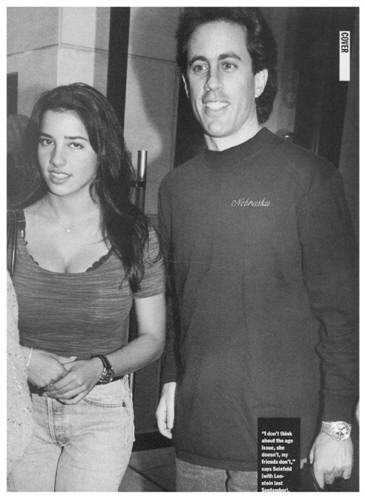
Cloaked in anonymity, One Step Down was a windowless, smoke filled drinkers hideaway. Far from prying eyes, it was the perfect place for a rendezvous, an assignation or a dalliance. It was the kind of place where a thirty nine year old Jerry Seinfeld might take an eighteen year old Shoshanna Lonstein (who had just enrolled in nearby George Washington University) for a quiet afternoon drink in 1993. And he did, I just missed them. I was there on a research project or something, but I also saw great jazz artists perform there over the years including Herb Ellis, James Moody, David "Fathead" Newman, Lee Konitz and Phil Woods.

The halcyon days of Jerry and Shoshanna (circa 1993)

The halcyon days of Jerry and Shoshanna (circa 1993)

Shirley performed there many times in the 1980s and 1990s, and Erin and I saw a New Years Eve show in 1990. It was a wonderful performance, and Shirley was riveting as she played flawlessly with Charles Ables on bass and Steve Williams on drums, her accompanists for twenty plus years. She was gracious when she signed the albums but so shy and self effacing. Shirley's magnetism onstage belied her reticence offstage. She wore dark tinted glasses and seemed to want to be invisible.

A couple of years later, I saw the magnificent jazz vocalist Carmen McRae perform at Blues Alley. At the table next to me sat Shirley. Carmen was an old friend, and despite Carmen's entreaties from the stage, coaxing Shirley to perform with her, Shirley remained unmoved. After the show, Carmen visited with Shirley at her table and they laughed like the close friends they were.

The Great American Songbook (1972) signed by Carmen

The Great American Songbook (1972) signed by Carmen

Near the end of Shirley's brilliant career, she garnered some well deserved praise and performed at Carnegie Hall in New York City among other celebrated venues. The critical and commercial success was a just reward for an artist of incomparable beauty and taste.

Here's to Shirley's Life!


Choice Shirley Horn Cuts (per BKs request)


https://www.youtube.com/watch?v=UTv3TONfTTQ

“Here’s To Life” Here’s To Life 1992

https://www.youtube.com/watch?v=cm25D0ri-c0&list=RDcm25D0ri-c0&start_radio=1

“You Won’t Forget Me” with Miles Davis 1990

https://www.youtube.com/watch?v=XOrfO6K27eA

“Yesterday” May The Music Never End 2003

https://www.youtube.com/watch?v=to_fMpf5G6o

“Fever” Marciac Festival 1998

https://www.youtube.com/watch?v=pYoICbB3HZs&list=PLi7_TX572Ipj7VEhW2QitDS4MpXry2f37

“Come In From The Rain” The Main Ingredient 1995

https://www.youtube.com/watch?v=8ZrThSgH_n4&list=PLlQgCRO_WDLkZBoJuNhYfiOVKyNVZ8qik&index=2

“Never Let Me Go” May The Music Never End 2003

https://www.youtube.com/watch?v=Qh2GNqWgyRU

“Once I Loved” live in São Paulo 1993

https://www.youtube.com/watch?v=jn51v_cMHCw

“Blue In Green” I Remember Miles 1998

https://www.youtube.com/watch?v=ur-lNeq4pQM&list=PLlQgCRO_WDLkZBoJuNhYfiOVKyNVZ8qik&index=7

“Quietly There” Here’s To Life 1992

https://www.youtube.com/watch?v=czxBXlPI9IA

“Loads Of Love” Loads Of Love 1963

Patti Smith and Me…

To me, punk rock is the freedom to create, freedom to be successful, freedom to not be successful, freedom to be who you are. It's freedom.

Patti Smith

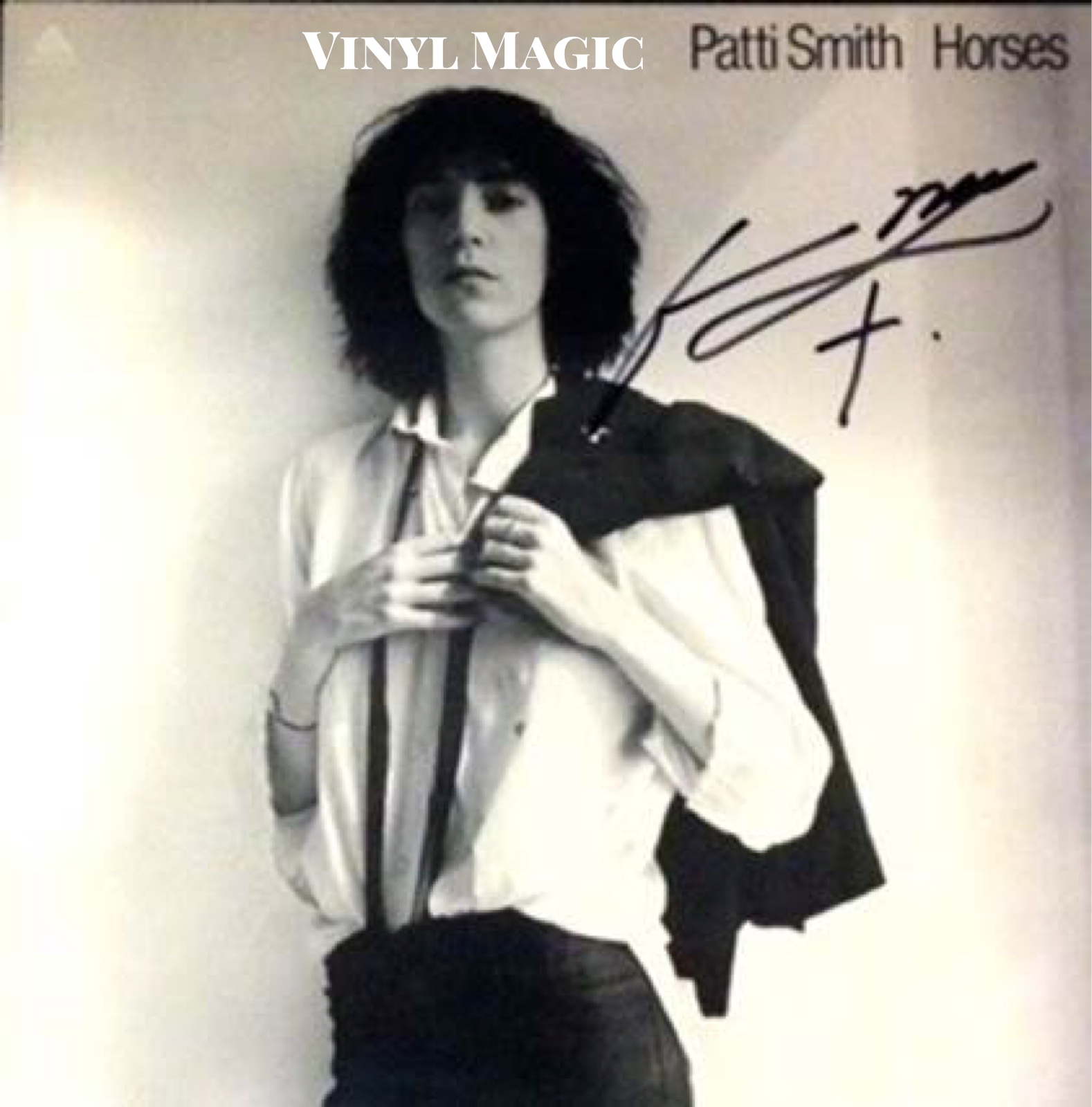
Horses (1975) signed by Patti

Horses (1975) signed by Patti

You know, everybody can't paint or write a poem or achieve...certain intellectual success. But rock and roll is a very simple art form. It's based on a few chords, on a sense of revolution, on a sense of sexuality. It opens its doors to anyone.

Patti Smith

Within the singing, there's a line, probably the second part of the lyric, a line about a little boy's face lit up with such naked joy. 'And his eyes were like two white opals, seeing everything just a little bit too clearly.' And that's when I was hooked. That was for me the dervish moment. That's when I felt transformed by rock and roll and by art and by music and by poetry and by some projection of who this woman was and what she was saying to me. She wasn't saying it to anyone else, it was just to me. I think I've been trying to rewrite those words as a lyricist...for most of my adult life.

Michael Stipe on "Birdland" from Horses

Radio Ethiopia (1976) signed by Patti

Radio Ethiopia (1976) signed by Patti

Well, when I improvise, I don’t polish them at all. I mean, like on my albums, there’s a lot of improvisation — on Horses, “Birdland” – it’s an improvisation. “Radio Ethiopia” was an improvisation. “Radio Baghdad.” “Gandhi.” “Memento Mori.” Almost on every album – “Wave” is an improvisation. I don’t clean up or edit or polish improvisations. I leave them as they stand – because they represent a moment where we’re struggling to channel something. And it’s not about perfection. It’s about communication.
Patti Smith

Easter (1978) signed by Patti

Easter (1978) signed by Patti

Born in Chicago, raised in New Jersey, Patti Smith is a punk rock icon and a member of the Rock and Roll Hall of Fame. To paraphrase Frank, she's been a pauper, a poet, a painter, an author, an artist, an actor, a rock star, a muse, and a king. She's been up and down and over and out...and all those things. And I love her madly.

I saw Patti Smith open for the Grateful Dead at the University of Massachusetts' Alumni Stadium on May 12, 1979. It was an interesting juxtaposition of disparate audiences and tastes. Patti represented New Wave and Punk Rock, three or four minute staccato bursts of high energy, while the Grateful Dead would tune their guitars for two or three minutes before embarking on a plodding ten minute jam which segued into another ten or twenty minute jam. Both rich and enduring musical experiences, but their approaches could not have been more different.

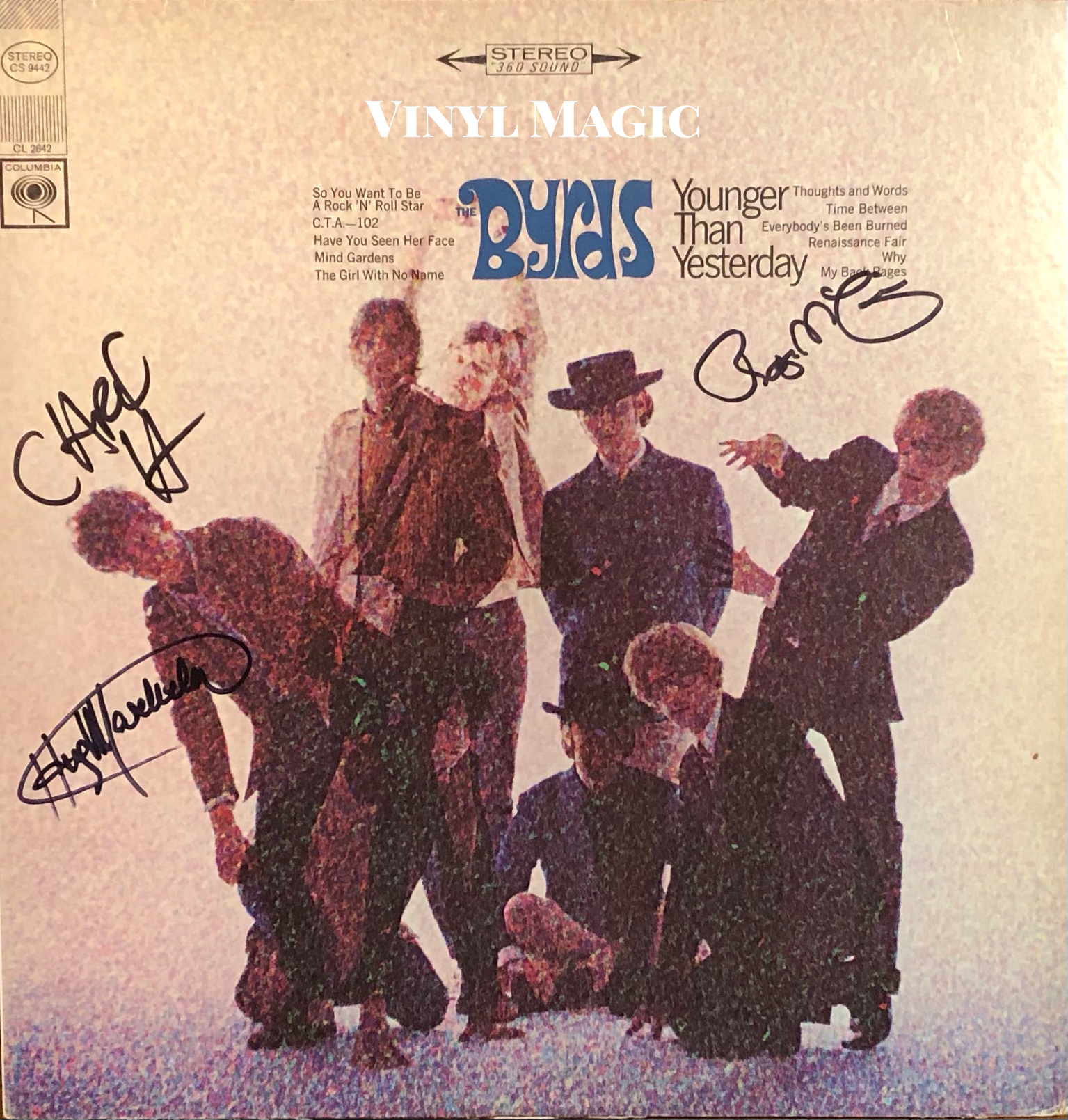
Patti was touring in support of her (then) new release Wave, and she was not well received by the audience of Dead Heads. Greeted with a smattering of boos, and worse, disinterest, as several Dead Heads in the front row turned their backs to her, Patti responded with a tight, incendiary set which was astonishing in its force and energy. From the initial salvo of her reworked version of Van Morrison's  "Gloria", with one of the great opening lines in rock 'n' roll - "Jesus died for somebody's sins, but not mine..." - through the reggae infected beats of "Redondo Beach" to the blistering guitar attack of The Byrd's "So You Want To Be A Rock 'n' Roll Star", the Patti Smith Group was a flight in full ferocity. 

Wave (1979) signed by Patti

Wave (1979) signed by Patti

As an introduction to her eleven minute opus "Birdland", Patti gave a rambling and meandering speech on how she saw the Grateful Dead at The Fillmore East when she lived at the Chelsea Hotel in New York City in the late 1960s. She said that she was amazed at the length of the Dead's songs, how they would go on and on and on. And on and on. With no end. Patti said that their singing inspired her, that if the Grateful Dead could sing (and they were never known for their exquisite harmonies), then anybody could sing, including her. She didn't care how ragged and raw she sounded. It all made perfect sense to me, but most of the Dead Heads seemed oblivious to her observations, which were heartfelt and sincere yet barbed with a stinging rebuke. Me, I didn't really care, the guitars were angry and loud. It was a remarkable performance. I was a fan then, and remain a bigger fan today.

In the late 1990s, I met Patti at Tower Records on lower Broadway in New York City. She was doing an in-store signing for her latest CD release, and there was a long line of Lower East side hipsters waiting to meet her. A sign was posted that said Patti would not be signing any memorabilia, only her recent CD. To steal a line from Woody Guthrie (who stole from everyone), but on the other side (of the sign), it didn't say nothin', that side was made for you and me. 

When I got to the counter where Patti was ensconced, I told her how much I loved her work. I mentioned that I saw her open for the Grateful Dead some twenty years ago. She smiled warmly. "You blew them off the stage!" I added. "Well, thank you, that was quite an interesting show," she replied. "I have all your stuff on vinyl, would you mind signing a couple?" "Sure" came the quick response. I quickly slid the albums toward her under the watchful gaze of the Tower Records border patrol. She was very gracious and signed each album much to their dismay. These were the first five albums of her career, beautifully photographed by Robert Mapplethorpe, her roommate from their early days when they lived together in the Chelsea Hotel as artists, best friends, and lovers. Their relationship and artistic exploits were chronicled in Patti's National Book Award winning memoir Just Kids (released in 2010), a deft and revealing examination of their time together as nascent, struggling artists.

Dream Of Life (1988) signed by Patti, all album photography by Robert Mapplethorpe

Dream Of Life (1988) signed by Patti, all album photography by Robert Mapplethorpe

She smiled when she signed Horses, her 1975 debut and a punk rock masterpiece. It is an iconic album cover taken by a young (and not yet controversial) Robert Mapplethorpe. Patti is wearing a men's monogrammed white shirt (bought at a thrift store) with her jacket thrown over her shoulder with a Sinatra insouciance. On her lapel, she is wearing a horse pin which was a gift from her then paramour, Allen Lanier, guitarist and keyboardist for Blue Oyster Cult (BOC). Lanier produced and played on "Kimberly" while the rest of Horses was produced by the Velvet Underground's John Cale. In fact, Patti Smith was considered and, even auditioned for the BOC lead singer in the early 1970s and she contributed several lyrics to the Blue Oyster Cult songbook through the years, including "Career Of Evil", "The Revenge Of Vera Gemini" and "Shooting Shark." How the music gods smiled beneficently and we rejoice that Patti did not join Blue Oyster Cult!

In her own inimitable words: "I believe that we, that this planet, hasn't seen its Golden Age. Everybody says its finished ... art's finished, rock and roll is dead, God is dead. Fuck that! This is my chance in the world. I didn't live back there in Mesopotamia, I wasn't there in the Garden of Eden, I wasn't there with Emperor Han, I'm right here right now and I want now to be the Golden Age ...if only each generation would realize that the time for greatness is right now when they're alive ... the time to flower is now."

Words, truth, and respect from Patti Smith, an artist of uncompromising strength and talent. All hail...

Choice Cuts (per BK's request)

https://www.youtube.com/watch?v=JL2I1krvhIE
"Gloria" - Horses 1975

https://www.youtube.com/watch?v=5VfUZFPAC5k&list=RD5VfUZFPAC5k

“When Doves Cry" - Patti Sings Prince!

https://www.youtube.com/watch?v=XH8nsquhPqo

"The Revenge Of Vera Gemini" Patti Sings Blue Oyster Cult!

 https://www.youtube.com/watch?v=0peTfMOdDoo 

"Because The Night"  co-written by Bruce Springsteen - Live 1978

https://www.youtube.com/watch?v=LNnC8hYOmlw 
“Rock 'n' Roll N...er" - Live 1978

https://www.youtube.com/watch?v=3EoHJ30qZTU 
"Land > Hey Joe" - Live 1976

https://www.youtube.com/watch?v=e469wZERcYg

"People Have The Power" - Live with U2, Paris 2015

Patti Smith addendum:

We were blessed to see Patti Smith on November 4, 2024 at Joe’s Pub, an intimate club in NYC with a capacity of less than two hundred patrons. It was a celebration of her husband Fred ‘Sonic’ Smith on the 30th anniversary of his untimely passing and the 78th birthday of the master photographer Robert Mapplethorpe whose photographs grace many of Patti’s records including the transcendent Horses, where Patti, jacket slung over her shoulder, channels Sinatra with a give no f*cks insouciance. Her music have been staples in our household since I first saw her perform at UMass in 1979 opening for the Grateful Dead. Her set then was revelatory and blistering and she blew the Dead off the stage with her energy and ferocity.

Forty-five years later, her show was no less satisfying. She was accompanied by her longtime guitarist Lenny Kaye, bassist extraordinaire Tony Shanahan, her daughter Jesse on piano and special guest Ben Harper on percussion and guitar. It was an extraordinary night of music curated by Patti and Jesse, including remembrances, a Kerouac poetry reading, and Patti’s uncompromising music. What made it especially gratifying for Erin and I was that we got to share the event with our two daughters who love Patti’s books  as much as her music. Patti is a consummate and inter generational artist in every sense, and she is as vital and as au courant now as when she started. Her fires still burn bright.

Special thanks to Tony Shanahan for being so gracious and spending time with us after the show, our family is brimming with gratitude.

All pics including the set list taken by me 

Easter signed by Patti, People Have The Power

Townes Van Zandt and Me...

I was just tapped on the shoulder from above and told to write these songs, as opposed to wanting to be a success in the music business. What I do is between me and the Lord, to examine and possibly alter the state of grace in which I live, and thereby the state of grace of anybody who listens.

Townes Van Zandt

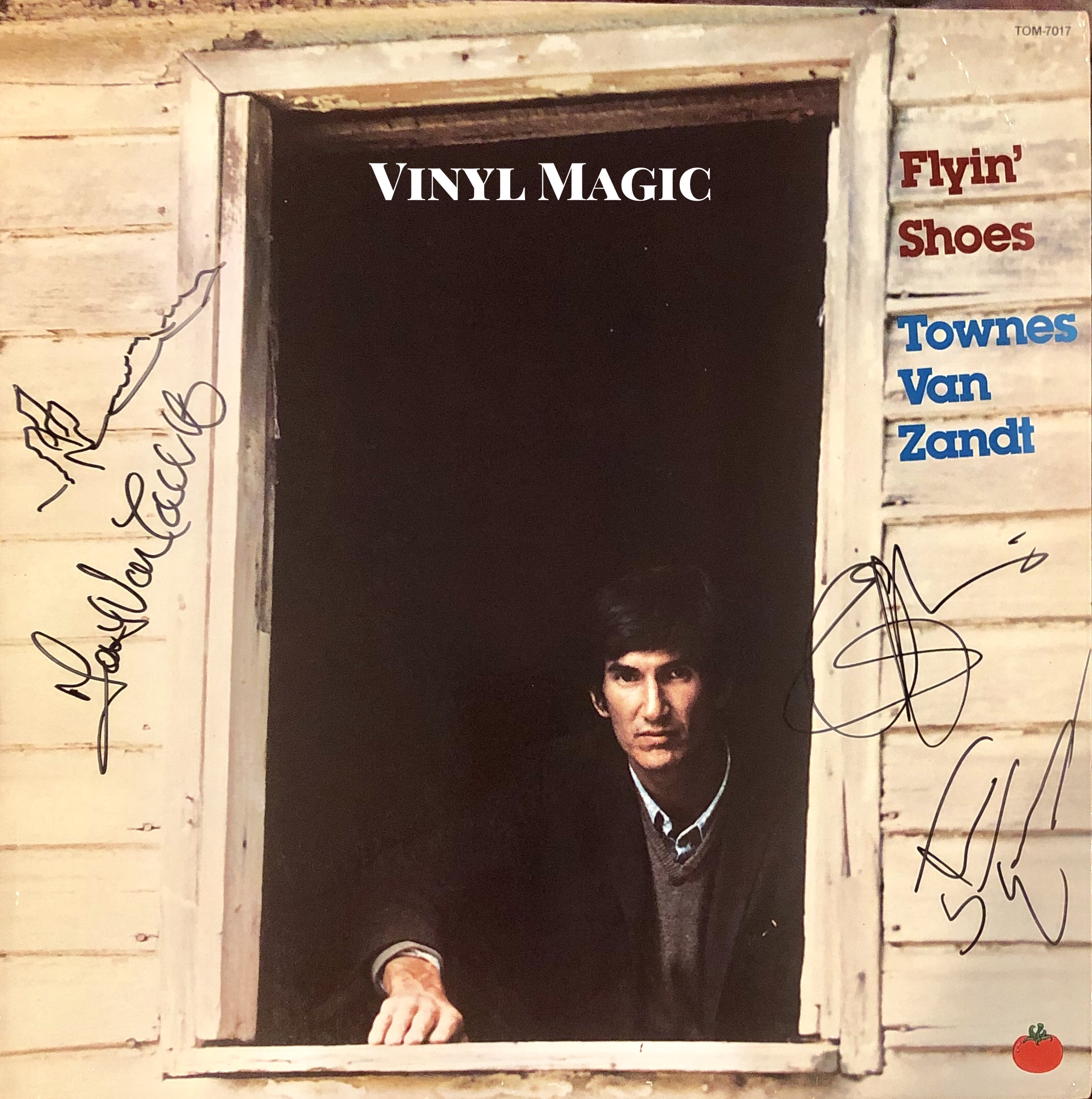
Flyin’ Shoes (1978) signed by Townes, Emmylou Harris, Steve Earle

Flyin’ Shoes (1978) signed by Townes, Emmylou Harris, Steve Earle

Townes Van Zandt ls the best songwriter in the whole world and I‘ll stand on Bob Dylan's coffee table in my cowboy boots and say that.

              Steve Earle


I’ve met Bob Dylan's bodyguards and if Steve Earle thinks he can stand on Bob Dylan's coffee table. he's sadly mistaken.

               Townes Van Zandt

 An influential songwriter, Townes Van Zandt's songs have been covered by Bob Dylan, Willie Nelson, Lyle Lovett, Merle Haggard, and Robert Plant (Led Zeppelin does Townes!). An insightful lyricist, Townes was a compelling performer, He led a well documented, shambling mess of a life off stage, and succumbed to his addictions, alcoholism and demons when he was only fifty two years old. He died New Year’s Day, 1997, forty four years to the day when his hero, Hank Williams also departed. As Steve Earle once said, “Townes was a great teacher and a bad role model.”

I saw Townes once. He was doing a small tour with Guy Clark, another acclaimed Texas songwriter, and Erin and I went to see them perform at the Tin Angel in Philadelphia in November ‘95. The Tin Angel is a tiny listening room, with seats for maybe 100 people on the second floor of a bar/restaurant. I was really excited to see this brilliant, yet mercurial performer. As Erin and I approached the hostess in the bar to get our seats, I noticed Townes on the street with his guitar case. I told Erin, 'I’ll be right back.' Outside, I greet Townes, and ask him if he’ll sign a couple albums. He mumbles something. I can’t understand a word he says. I decide to let him go, I’ll see him after the show. I watch Townes as he enters the restaurant, struggling with his guitar, and making his way past the bar and up the stairs to the performance area. Unsteady as he goes.

High, Low and In Between (1972) signed by Townes

High, Low and In Between (1972) signed by Townes

 Guy Clark comes on first and performs some of his great songs: “LA Freeway”, “Desperados Waiting For A Train”, and “Dublin Blues” among them. I excuse myself, and go back to see Townes again, as I was not sure he would last Guy’s set. I hand Townes Flying Shoes and he starts muttering again incoherently. Townes draws some flying shoes on the cover, and then signs High, Low And In-Between. Again, he babbles uncontrollably and not a word can I decipher. He may be speaking in tongues or Swahili, I am not sure which. I accept the signed albums gladly, thank him, and head back to Erin and my seat. Erin asks, “How It’d go?” 'This is going to be a very interesting show,' I reply. Guy Clark finishes his set to rousing applause. Townes comes next.

 Frail and worn, Townes emerges from backstage. He has trouble walking. He gets on stage, slumps in his chair, adjusts the microphone, and then drops his pick. Uh oh, here we go. We watch him struggle to get the pick, and the neck of his guitar clangs up against the microphone. A hot mic. I exchange a knowing glance with Erin, this is going to be a disaster. After what seemed like 10 minutes, Townes is able to retrieve the errant pick and mumbles incoherently. Again. Then he starts playing. Beautifully, crisply, flawlessly. I have never seen a more dramatic transformation. “Dollar Bill Blues”, “Flyin’ Shoes”, “Pancho and Lefty”, “To Live Is To Fly”, “If I Needed You”, and an amazing “Tecumseh Valley” in which he deftly wove the Rolling Stones’ “Dead Flowers”. His brilliance flashed in torrents. It was a remarkable performance. Townes played almost ninety minutes, smiled, got up and staggered off. He was dead within 13 months.

 Townes left behind a treasure trove of songs, and he continues to inform so many writers (young and old) like the Avett Brothers, Andrew Bird, Devendra Banhart, Emmylou Harris, Mark Lanegan, Mumford and Sons, Norah Jones and Gillian Welch, all of whom have covered his songs. I mean, when Bob Dylan plays your songs, you know how deep and strong your songwriting chops are. In 2010, the rock icon Robert Plant covered an unpublished Townes’ song, “Harm’s Swift Way” on his Band Of Joy album. It is a brilliant song on a brilliant album, and Plant made it a centerpiece of the tour he did to promote his new album. I saw Robert Plant and his Band Of Joy cohorts – Patty Griffin, Buddy Miller, and Darrell Scott – at the Bowery Ballroom and the Beacon Theater in New York City, and they were terrific shows.

 Steve Earle tells the story of an early meeting with Townes back in the day:

“About 2:30 in the morning, Townes walked in. It was the first time I’d ever been in an environment with him where we weren’t separated by a microphone. And he had on this beautiful buckskin jacket. And Townes started a craps game and lost every dime he had. And that jacket. Within 15 minutes. And I thought, ‘My hero.’”

Well, I never drank, did drugs, or rolled dice with Townes Van Zandt, but I love his music and his legacy endures.

Townes (2009) signed by Steve Earle

Townes (2009) signed by Steve Earle

Choice Townes Van Zandt Cuts (per BKs request)


https://www.youtube.com/watch?v=m9trdd3kFwc

“Pancho and Lefty” Heartworn Highways 1975

https://www.youtube.com/watch?v=zJN5W-EreVs

“Buckskin Stallion Blues” live 1988

https://www.youtube.com/watch?v=7rdTInh13zc

“Snowin’ On Raton” At My Window 1992

https://www.youtube.com/watch?v=A6lXAGli3JU&list=RDv-Rq-4spRz4&index=3

“Flying Shoes” live 1995

https://www.youtube.com/watch?v=TqLiUG_keV8

“White Freightliner Blues” Rear View Mirror 1997

https://www.youtube.com/watch?v=VNASR1RoRe0

“Colorado Girl” Townes Van Zandt 1969


https://www.youtube.com/watch?v=GSAQFMuh5i0

“If I Needed You” live Holiday Inn, Houston 1988

https://www.youtube.com/watch?v=APFo3YrT97w

“No Place To Fall” Flyin’ Shoes 1978

https://www.youtube.com/watch?v=Kc6AsDmuD2U

“Tecumseh Valley” live with Nanci Griffith 1993

https://www.youtube.com/watch?v=l4zfEkKs2ZM

“Waitin’ Round To Die” Ten Songs For You 1969

Bonus picks:

https://www.youtube.com/watch?v=UoKvUYbGu7A

“Pancho and Lefty” Willie Nelson and Merle Haggard video

https://www.youtube.com/watch?v=ag_lnCcfr7E

“Colorado Girl” Steve Earle on David Letterman 2009

https://www.youtube.com/watch?v=VVSOxXs63EE

“Harm’s Swift Way” Robert Plant and Band Of Joy 2010

https://www.youtube.com/watch?v=-FhjevjNLRQ

“Rex’s Blues > Ft. Worth Blues” 2012

Roberta Flack, Luther Vandross and Me...

Roberta Flack, a great soul singer, grew up in North Carolina, and relocated to Washington DC to attend Howard University as a fifteen year old studying classical piano and voice. Upon graduation at nineteen, she stayed in DC, taught school and gave private music lessons, and started honing her craft as a performer at local restaurants and bars, most notably Mr. Henry's on Capitol Hill.

First Take (1969) signed by Roberta

First Take (1969) signed by Roberta

 By 1969, she had attracted a considerable following, and Roberta went into the studio to record her first album, First Take,  produced by Joel Dorn. The record featured her first Number 1 hit, "The First Time Ever I Saw Your Face" - a radical re-working of a folk song written in 1957 by British folkie and political activist Ewan MacColl. First Take had some formidable jazz players, including Ron Carter on bass, Frank Wess, Benny Powell, and Joe Newman from the Count Basie horn section, and Bucky Pizarelli on guitars. It was a compelling mix of songs from  gospel, "I Told Jesus", to  Mexican folk, "Angelitos Negros", to Broadway show tunes, "Ballad Of The Sad Young Men" to Leonard Cohen's "Hey That's No Way To Say Goodbye." An impressive debut, it is a great album.

Quiet Fire (1971) signed by Roberta

Quiet Fire (1971) signed by Roberta

 I was lucky to see Roberta perform several times over the years, but the most memorable was at a small club in New York City called the Sugar Bar, owned by noted Motown artists and husband and wife, Nick Ashford and Valerie Simpson. Ashford and Simpson were a prolific songwriting team, who penned hits like, "Ain't No Mountain High Enough", "Ain't Nothing Like The Real Thing", "Reach Out And Touch Somebody's Hand", "I'm Every Woman" and "You're All I Need To Get By". Their songs were recorded by Marvin Gaye, Tammi Terrell, Ray Charles, Diana Ross, Teddy Pendergrass, Whitney Houston, and Chaka Kahn, among many others. When they opened the Sugar Bar in 1996, they decided to have some of their friends perform on Monday nights, usually a quiet night for the industry. One of my old college roommates lived across the street on 72nd and West End, and he became good friends with Nick and Valerie, stopping in almost daily, and boozing there. One night he called me, he told me that I had to come the next Monday night, it was not advertised but Roberta Flack would be performing. He reserved two tickets and I agreed to meet him at the show.

Nick Ashford and Valerie Simpson

Nick Ashford and Valerie Simpson

The Sugar Bar is a tiny venue, with seats for maybe sixty to seventy-five people. Valerie Simpson is at the hostess stand when we arrive. She greets my friend Billy by name, and escorts us to our seats. She couldn't have been any nicer. "Where's Nick?", Billy asks. "He's upstairs. He'll be down soon," she replies. The room is a long rectangle, at most fifteen feet wide. There is no stage; they simply cleared out a couple of tables in the back, and set up Roberta's band along the back wall; a simple line up of drums, bass and keyboard. Nick comes down from his office upstairs, and looks exactly like one of their album covers, shirt unbuttoned to the waist, gold chains blingin’, perfectly coifed mane. He starts working the room, saying hello to old friends and guests, and stops by our table to see Billy. I meet Nick and tell him how much I have enjoyed his music.

Roberta starts her set, and runs through her hits, "First Time Ever I Saw Your Face", "Where Is The Love?",  "The Closer I Get To You", "You've Got A Friend", etc. She then coaxes her friend, the great Luther Vandross, who is sitting at a front table to the left of the stage, to join her for a duet in "Killing Me Softly". Luther kills it, and the crowd erupts in thunderous applause. The show is over, and I make a quick beeline to meet Luther at his table. I have a story to share with Luther, and I can't wait to meet (unexpectedly!) one of my favorite soul singers.

Funky Christmas (1976) Luther Vandross at the piano! signed by Lou Donaldson

Funky Christmas (1976) Luther Vandross at the piano! signed by Lou Donaldson

I sidle up to Luther. He is taller than I expected. 'Luther, you lived in an apartment building with a great friend of mine in San Francisco, Steve Mittel?" I offer. Luther stares blankly, "I have never lived in San Francisco in my life." I become defiant and insistent, almost grabbing his arm. 'No Luther, you remember, Steve, big red glasses? Mitzi Buffet? They called him Mitzi, You remember Mitzi?' I plead. Luther turns away, as if to look for security, and says, "I don't know who you are talking about, and I have never lived in San Francisco. Ever." His voice trails as he turns and walks away from me.

A sinking feeling envelops me as if I am in quicksand. Then it dawns on me. I have been played by a master. Steve Mittel planted the seed for this ruse many years ago, when he said that he knew Luther Vandross, that they shared the same apartment building in San Francisco, and I should say hello if I ever met him. I knew Steve Mittel for many years as the head of Nob Hill Capital, a San Francisco based hedge fund. Steve was also a world class practical joker, crank caller, and reveled in all things mischievous, though he was never mean spirited. I returned to my table to tell Billy the tale of my Luther encounter. I accepted defeat and the outcome of my actions, and we laughed at the absurdity of my behavior.

 Unfortunately, I never saw Luther again. But I will never forget his duet with Roberta Flack at the Sugar Bar. Nor will I ever forget being duped by Steve Mittel. Again. Sadly, both Luther, Steve and Nick Ashoford are no longer with us. Everything doesn't always work out the way you want it. As Nina Simone counsels, "It be's that way sometimes."

The Best Of Roberta Flack (1981) signed by Roberta, Peabo Bryson

The Best Of Roberta Flack (1981) signed by Roberta, Peabo Bryson


Choice Roberta Flack Cuts (per BKs request)

https://www.youtube.com/watch?v=VqW-eO3jTVU

“First Time Ever I Saw Your Face” First Take 1969

https://www.youtube.com/watch?v=k49yMJE8jyg

“Bridge Over Troubled Water” Quiet Fire 1971

https://www.youtube.com/watch?v=l2n167F0eBc&list=PL1JmU8l-9JbWuH-VaQVI18TfiMs9rDW_9

“Killing Me Softly With His Song” Killing Me Softly 1973

https://www.youtube.com/watch?v=ZcHPNUN-U8E

“Where Is The Love?” Where Is The Love 1972

https://www.youtube.com/watch?v=xn5Y5eJA_Vs

“The Closer I Get To You” The Closer I Get To You 1978

https://www.youtube.com/watch?v=MtX_Omc1Xqk

“Feel Like Makin’ Love” live with Luther singing background

https://www.youtube.com/watch?v=k90ILIe3p_U

“Will You Still Love Me Tomorrow” Quiet Fire 1971

https://www.youtube.com/watch?v=1tBI0YJjCtk

“Angelitos Negros” First Take 1969

https://www.youtube.com/watch?v=zyg4lA7lUcI

“To Love Somebody” Quiet Fire 1971

https://www.youtube.com/watch?v=FC9TzYVNWNY

“Lowenbrau Commercial” Roberta and Luther Vandross, mid 1970$

Johnny Rotten and Me...

I love discordancy. It makes people ill at ease, and wakes up a part of their brain that's normally asleep.

John Lydon

Never Mind The Bollocks (1977) signed by Johnny Rotten

Never Mind The Bollocks (1977) signed by Johnny Rotten

Johnny Rotten (born John Lydon) is an important Irish born, London bred punk musician. Spotted by designer Malcolm McLaren in the mid 1970s wearing a Pink Floyd t shirt (on which he scrawled ‘I Hate'“ in black marker), Johnny was enlisted to be the lead singer of The Sex Pistols. His winning audition was a butchered, off-key rendition of Alice Cooper's "I'm Eighteen."

Never Mind The Bollocks, Here's The Sex Pistols (1977) is one of the great rock and roll records of all time, and helped usher in the punk rock era. Johnny Rotten's harsh, grating nasal whine was propelled by Steve Jones' impossibly loud guitars, Sid Vicious' pedestrian bass thumbing, and Paul Cook's ferocious drumming. If there is such a thing as tuneful nihilism, this is it.

Anarchy In The U.K. (12” single 1977) signed by Johnny Rotten

The first single, "Anarchy In The UK", was released in November 1976 and created quite a stir. Featuring loud, blistering guitars, and Johnny's potent lyrics: "Your future dream is just a sharpie's scheme." It was not the first punk rock single, but it was certainly the most influential. Colin Newman of Wire called it , "The clarion call for a new generation."

The second single, "God Save The Queen", was even more incendiary and inflammatory. The opening salvo, "God save the Queen, the fascist regime that made you a moron..." would not engender an invitation to Buckingham Palace or 10 Downing Street. The song was banned by the BBC and all independent radio stations, so, of course, it hit Number 1. Actually, Number 2 to Rod Stewart's "The First Cut Is The Deepest", but conspiracy theorists abound who opine that "God Save The Queen" sold many more copies, but was relegated to Number 2 because of its slanderous and vitriolic content.

Rotten: No Irish, No Blacks, No Dogs (1994)

Rotten: No Irish, No Blacks, No Dogs (1994)

Inside cover signed by Johnny

Inside cover signed by Johnny

I met Johnny Rotten in April 1994 at a book store signing. He was promoting his autobiography, lovingly titled, "No Irish, No Blacks, No Dogs". He was generous, if incomprehensible, as he signed some albums. Kurt Cobain had just died so I said, It's a shame about Kurt Cobain. Johnny replied, "He should piss off, he's just a f...... wanker..." Then he muttered some other things in a brogue that was so thick it was indecipherable. I was startled. I felt pretty vacant. I iust nodded and smiled beatifically. There was an element of danger. I thought at any moment, Johnny might start spitting or snotting. He is Rotten, his reputation is well earned. I wish I could remember what else we talked about, but I just wanted to get away from Johnny with my albums intact.

The Sex Pistols were inducted into the Rock n Roll Hall of Fame in March 2006, but in characteristic Pistols fashion, they didn't show up for the ceremony. In a rambling press release, they decried the museum as a "piss stain." At least, the ethos of the Sex Pistols remains consistent...

First Issue (1978) signed by JohnnyI’m not here for your amusement. You’re here for mine.John Lydon

First Issue (1978) signed by Johnny

I’m not here for your amusement. You’re here for mine.

John Lydon

Public Image (12” single 1978) signed by Johnny

Public Image (12” single 1978) signed by Johnny


Choice Sex Pistols Cuts (per BKs request)

https://www.youtube.com/watch?v=02D2T3wGCYg

“God Save The Queen” 1977

https://www.youtube.com/watch?v=cBojbjoMttI

“Anarchy In The U.K” 1977

https://www.youtube.com/watch?v=2Ah1JM9mf60

“Holidays In The Sun” 1977

https://www.youtube.com/watch?v=wHiGR0iuTUo

“No Feelings” 1977

https://www.youtube.com/watch?v=QBVDSz5Qd6g

Live At Winterland, San Francisco January 14, 1978

James Moody and Me…

Jazz is a spiritual music.

James Moody

Last Train From Overbrook (1958) signed by Moody

Last Train From Overbrook (1958) signed by Moody

I remember saying to Diz one time, ‘I wish I would have gone to school and studied music.’ Diz looked at me and said, “Moody, you ain’t dead.” That lightbulb went on. I immediately went and bought some music books.

James Moody

Dizzy Gillespie Big Band (circa 1946-1948) signed by Moody, Ray Brown photo by William Gottlieb

The first night I was there, Thelonious Monk was the piano player, Ray Brown, Kenny Clarke and Milt Jackson were in the band. Clark Monroe, the manager, was a Negro, so he was probably fronting it; he dressed well and took care of business. The club was very small, and it was jammed every night; all the different people I’d heard on the radio — Coleman Hawkins, Artie Shaw, Benny Goodman — would be in the audience. It was a thrill sitting there playing the music. Dave Burns showed me the line of ‘Things To Come’ just before the gig, and I played it. It was a breeze; I could read a little bit, and with time I learned to read more and more.

James Moody on his first gig with Dizzy Gillespie’s 1946 big band

Miles Davis/Tad Dameron (1949 recordings) signed by Moody

Miles Davis/Tad Dameron (1949 recordings) signed by Moody

The way I came up musically was wrong, I think, from the standpoint that I thought improvising was spontaneous. I was playing by ear, and I thought you just did it; I didn’t realize that you had to practice changes. I started drinking, because people were saying how great I was, and I couldn’t play crap. It’s like I was flying an airplane but I didn’t know what the route was. If you don’t know the changes, you’re skimming. My music thing started changing later, when I started trying to find out about chords and theory.

James Moody

In The Beginning (1949) signed by Moody

In The Beginning (1949) signed by Moody

Moody started off with a gift, and he developed it. As an ear player, he was already extremely advanced; right now, he’s one of the greatest players who ever lived. I admire his tenacity and focus. If he hears you play a lick or a sequence that he hasn’t heard, he’ll ask you what it is, and once you show it to him, man, Moody takes it into his own style and elaborates on it, turns it inside-out, and does everything possible with that idea to make it his own.

Jimmy Heath on James Moody

Moody With Strings (1951) signed by Moody

Moody With Strings (1951) signed by Moody

I’d been a friend of Moody’s since 1946 when he came to Philadelphia with Dizzy’s band. He’s still with me. We were in the same saxophone section many times and we called each other Section. And we were both indebted to the genius, Mr. Dizzy Gillespie. My whole life in music is dedicated to Dizzy. Moody felt the same way… I liked Moody on all his instruments. I liked him on flute, but at the end of his life he backed away from the flute because it wasn’t classical sounding, like Jean-Pierre Rampal. But it was James Moody on flute, and he had a jazz interpretation that was unique. I wrote a composition for Moody and the lyric tells the whole story. He was one of he most giving people I’ve ever met. He gave me hats, and he gave me dolls that played the saxophone, and mouthpieces and books. And Moody was a loving person to everybody. We went on tours together and you’d meet him at breakfast and he’d give you a kiss on both cheeks. At lunch, another kiss, at dinner, one more. I said he’s got more kisses than Hershey’s. He was all love; a beautiful person. He has a unique sound. When he had his small group after Dizzy, he didn’t know all the changes. Others could tell you every chord in every song. Moody just had a big ear for music. That solo he played on “Emenon” with Dizzy? That’s a classic. But he wanted to learn to play by the changes, so he would ask me and some others who knew the inside of music, because we were writers. He’d say, “Section, show me how you do that.” And I’d show Moody stuff on the diminished chord and he’d play it so fast, I still can’t play it as fast as he could. I showed it to him and he could outplay me on it. He was a person who could grasp anything he wanted. Tom McIntosh also showed Moody how to play by changes. When I wrote “Moody’s Groove,” he liked that.

Jimmy Heath on his friend James Moody, 2011 interview

Brass Figures (1967) signed by Moody, Kenny Barron, Jimmy Owens

Brass Figures (1967) signed by Moody, Kenny Barron, Jimmy Owens

An arranger, composer, flautist and saxophonist, James Moody was born in Savannah, Georgia in 1925. Soon, Moody's family moved to New Jersey where he grew up, and he was influenced by the great Count Basie bands of the 1930s and 1940s, and his heroes, Coleman Hawkins and Lester Young. Following his discharge from the military, he joined the Dizzy Gillespie Big Band in 1946-1948 which featured future jazz legends Miles Davis, John Lewis, Ray BrownMilt Jackson and Kenny Clarke.

James Moody’s Moods (1954) signed by Moody

James Moody’s Moods (1954) signed by Moody

Moody had his first big hit with "Moody's Mood For Love" in 1952. The melody was lifted out of a saxophone solo Moody did for "I'm In The Mood For Love", a song written in 1935. An early form of sampling, Eddie Jefferson wrote new lyrics: "There I go, there I go, there I go, pretty baby you are the soul who snaps my control...." and voila, a new hit song and jazz standard. In the ensuing years, "Moody's Mood" has been sung by everyone from Aretha Franklin to Barbra StreisandVan Morrison to Amy Winehouse.

Flute ‘n’ The Blues (1956) signed by Moody

Flute ‘n’ The Blues (1956) signed by Moody

James Moody's career was almost derailed by his alcoholism. Twice. He tried a geographic cure in 1949 when he moved to Paris to live with his uncle. That worked for awhile until it didn't. Unlike many of his jazz peers who succumbed to the ravages of alcoholism and drug addiction, Moody sought help and entered the Overbrook Hospital in Cedar Grove, New Jersey in 1957. Upon his successful treatment and release, he recorded Last Train From Overbrook (1958), which included the title cut, a percussive and locomotive blues. The liner notes (written by Moody's producer, Dave Usher and novelist Frank London Brown) were quite startling. They explicitly mentioned Moody's treatment for alcoholism at Overbrook, not the usual fodder circa 1958 for an African American jazz man. I have read a lot of liner notes over the years, but none like this:

"Jimmy took his first train to Overbrook in April of this year. In talking to him prior to his voluntary commitment, he sounded almost hopelessly drowned in the juice he was hung up with.... Overbrook is a mental institution in Essex County, New Jersey. Behind him stood the clean, quiet buildings of the hospital; behind that stood the awful memory of the alcoholic, sick, confused James Moody of the past...The Last Train From Overbrook is a brief history of how one James Moody, musician wailed....fell...and got up and wailed again."

IMG_9880.png
James Moody (1959) signed by Moody

James Moody (1959) signed by Moody

To his friends and fans, James Moody had no first name, he was just Moody. He was full of life and energy, and he had an indomitable spirit that was infectious. Moody could play alto or tenor saxophone or flute with equal dexterity and proficiency. He was born partially deaf and he had a noticeable lisp or speech impediment. Only Moody didn't think so. He said, "And that's why I sound like I have a lisp. But I don't have a lisp. It's cause I don't hear S's." So he sang "Moody's Mood For Love" at every performance with as much soul and passion as Aretha, or anyone else who ever sang his song.

Cookin’ The Blues (1961) signed by Moody

Cookin’ The Blues (1961) signed by Moody

At Birdland in NYC in the late 1990s after another great performance, Moody was excited when I showed him the Dizzy Gillespie Big Band poster. He grabbed it out of my hands, and took it to show his wife and some friends who were sitting at a nearby table. "Look at me! Look how handsome and young I was!" he exclaimed.  A nineteen year old Miles Davis was in the back row, along with other jazz greats like Milt Jackson, John Lewis, Ray Brown and Cecil Payne. And Dizzy was playing a straight horn, not the bent upright horn which he became famous for later in his career.

Great Day (1964) signed by Moody, Hank Jones

Great Day (1964) signed by Moody, Hank Jones

I never asked Moody about his recovery from alcoholism. It seemed unnecessary and intrusive. Every Moody performance was uplifting and imbued with his warmth and generous, welcoming spirit. Moody signed every album "much spiritual love” and he meant and lived every word. Jimmy Heath once said, "He was one of the most giving human beings. Everybody who knew Moody knew he was a beautiful person."

Thanks Moody. Much spiritual love indeed.

Comin’ On Strong (1963) signed by Moody

Comin’ On Strong (1963) signed by Moody

Mood To Be Wooed (1967) signed by Moody

Mood To Be Wooed (1967) signed by Moody

The Blues And Other Colors (1969) signed by Moody, Kenny Barron

Never Again (1972) signed by Moody

Never Again (1972) signed by Moody

Heritage Hum (1972) signed by Moody

Heritage Hum (1972) signed by Moody

Choice James Moody Cuts (per BKs request)

https://www.youtube.com/watch?v=028UoUkO7zc

“Last Train From Overbrook” Last Train From Overbrook 1957

https://www.youtube.com/watch?v=Oe49P8u0nEk

“Moody’s Mood For Love” Live at Montreux 2000

https://www.youtube.com/watch?v=TaewAoFmy_4

“Stardust” Moody’s Mood For Love 1957

https://www.youtube.com/watch?v=t0LQjdAnFWM

“One Note Samba” live with Dizzy Gillespie 1965

https://www.youtube.com/watch?v=zwnkrcIn1VE

”Parker’s Mood” live at Carnegie Hall

https://www.youtube.com/watch?v=H4hjSJcPf90

Mmm..Hmm” live with Dizzy Gillespie 1965

https://www.youtube.com/watch?v=nW4SMTOOiWk

”Giant Steps” live at IAJE 1987

https://www.youtube.com/watch?v=8i6upMImKn4

”Giant Steps” live with Tito Puente 1993

https://www.youtube.com/watch?v=d8NoQ1Txiv0

”Over The Rainbow” Swedish All Stars Greatest Hits 1993

https://www.youtube.com/watch?v=liHZA3_w1dk&list=RDEMYCqCslXnlr5k0gkhw-19rg&start_radio=1

”The World Is A Ghetto” Sax & Flute Man 1973

Sax & Flute Man (1973);signed by Moody

Sax & Flute Man (1973);signed by Moody

Summit Meeting (1975) signed by Moody, Elvin Jones, Clark Terry

Summit Meeting (1975) signed by Moody, Elvin Jones, Clark Terry

James Moody’s Moods (1968) signed by Moody

James Moody’s Moods (1968) signed by Moody

Something Special (1986) signed by Moody

Something Special (1986) signed by Moody

Tony Bennett and Me...

I have a simple life. I mean, you just give me a drum roll, they announce my name, and I come out and sing. In my job, I have a contract that says I'm a singer. So I sing.
Tony Bennett

Tony Bennett Sings (1971) signed by Tony

Tony Bennett Sings (1971) signed by Tony

Born and raised in Astoria, Queens, Anthony Benedetto (aka Tony Bennett) sang at an early age. He attended New York's School of Industrial Art where he studied music and painting. Tony dropped out at age sixteen to pursue his dream of being a singer, appearing in small restaurants and nightclubs as he learned his craft. Drafted into the Army in November 1944, Tony served as an infantrymen and saw front line combat as the war was ending. Later, he described his war experience as a "front row seat in hell. Anybody who thinks that war is romantic obviously hasn't gone through one."

Publicity Shot 1950s signed by Tony

Publicity Shot 1950s signed by Tony

Tony had his first number one hit, “Because Of You", in 1951 and it sold over one million copies. He followed with a rendition of Hank Williams' "Cold, Cold Heart", which introduced popular music with country music's greatest songwriter. His best known hit "I Left My Heart In San Francisco" was brought to him by his long time pianist, Ralph Sharon, which they debuted at the Venetian Room in San Francisco's fabled Fairmont Hotel in 1961. Tony once said, "That song helped make me a world citizen. It allowed me to live, work and sing in any city on the globe. It changed my whole life." Tony is also an accomplished painter, and his oils sell for $50,000 or more, and can be found in several museums, including the Smithsonian and the National Portrait Gallery in Washington, DC.

Tony Bennett’s All Time Greatest Hits (1972) signed by Tony

Tony Bennett’s All Time Greatest Hits (1972) signed by Tony

I saw Tony many times over the years at some interesting venues including the Kennedy Center, the 9:30 Club and Blues Alley in Washington, DC. A skilled and nuanced performer, one of his most memorable shows was at Blues Alley, a tiny club with seats for one hundred-fifty patrons in '84/'85. Tony was accompanied by the Ralph Sharon Trio, led by Ralph on piano. The place was packed, and Tony delivered a stirring performance. He opened with “Rags To Riches” and went through his catalog of hits from the Great American Songbook. Tony even sang "Fly Me To The Moon" without a mic, and the crowd was hushed by his riveting performance. You could hear a pin drop.

The Tony Bennett Bill Evans Album (1975) signed by Tony

The Tony Bennett Bill Evans Album (1975) signed by Tony

Shortly after the stock market crash in 1987 (a real crash, the S&P 500 was down 22% in one day!), I met Tony at an art gallery opening which was showcasing his beautiful paintings. He signed a couple of albums and I bought a poster which he signed "Benedetto", his family surname. I told Tony how much I enjoyed his Blues Alley performance from a couple years back. How did you pick such a small club? "My kids went to Georgetown and they thought it would be great for me to play such a small venue. That was a great club." He was pensive when he signed the Bill Evans duet album. "Bill was a beautiful player and person. What a terrible loss. I miss him." I couldn't resist, the market had just crashed, he's selling paintings for $50,000. Tony, are you worried about the stock market? "Yes, the crash was awful. And I live in New York, so I'm concerned. I guess I will keep on singing."

Yes. More than thirty years later, Tony Bennett is still singing and painting. Beautifully.

Art Poster signed by Tony Bennett/Benedetto

Art Poster signed by Tony Bennett/Benedetto

Choice Tony Bennett Cuts (per BKs request)


https://www.youtube.com/watch?v=hT5VOnaGRSU

“I Left My Heart In San Francisco” Ed Sullivan Show 1964

https://www.youtube.com/watch?v=zJ82mHBtrc8&list=PLnBE6CMNMLh2CLpu5XIaoNakMbL_0248R&index=3

“The Good Life” I Wanna Be Around 1963

https://www.youtube.com/watch?v=bu8XQq4PS6s

“Yesterday I Heard The Rain” Yesterday I Heard The Rain 1968

https://www.youtube.com/watch?v=VLjXbkSm8B4

“Fly Me To The Moon” live MTV Unplugged 1994

https://www.youtube.com/watch?v=Y22tIJ6toPY

“Rags To Riches” 1953

https://www.youtube.com/watch?v=_OFMkCeP6ok

“Body And Soul” with Amy Winehouse 2006

https://www.youtube.com/watch?v=xyTa_gJkYwI

“I’ve Got You Under My Skin” with Lady Gaga 2021

https://www.youtube.com/watch?v=PqXAmFS8bNs

“Over The Rainbow” Live By Request

https://www.youtube.com/watch?v=dPGqZq-wTes

“Who Can I Turn To?” 1964

https://www.youtube.com/watch?v=f89FStHEoZA

“I’ll Be Seeing You” 1992

Playin’ With My Friends (2001) signed by Tony

Playin’ With My Friends (2001) signed by Tony

Dizzy Gillespie and Me...

His playing showcases the importance of intelligence. His rhythmic sophistication was unequaled. He was a master of harmony and fascinated with studying it. He took in all the music of his youth, from Roy Eldridge to Duke Ellington, and developed a unique style built on complex rhythm and harmony balanced by wit. Gillespie was so quick-minded, he could create an endless flow of ideas at unusually fast tempo. Nobody had ever even considered playing a trumpet that way, let alone had actually tried. All the musicians respected him because, in addition to outplaying everyone, he knew so much and was so generous with that knowledge...

Wynton Marsalis

The Greatesr Trumpet Of Them All (1958) signed by Dizzy

The Greatesr Trumpet Of Them All (1958) signed by Dizzy

He told me, “It took me all my life to know what notes not to play."

James Moody

Musically, the most important facet of Dizzy’s playing is not just his rhythm, harmony, chord changes or his technical facility alone. It’s the whole thing. Knowing that horn, he can do anything with it.

Cab Calloway

Diz And Getz (1956 recordings) signed by Dizzy, John Lewis, Max Roach, Ray Brown, Herb Ellis

Diz And Getz (1956 recordings) signed by Dizzy, John Lewis, Max Roach, Ray Brown, Herb Ellis

When we went to a gig, while many of the musicians would go backstage and change, the first thing Diz would do was go to the piano and start playing something. He would try to figure out something he was working on or improve on something he had heard. Diz was a teacher from the standpoint that if he played something and you asked him what it was, he would bring you to the piano and explain it. He knew the importance of the piano. Long ago, while pointing to a piano, he told me, “Moody, this is it, right here.” He felt that if a player knows the piano, then he will know what the trombones are doing, what the trumpets are doing, and what the saxophones are doing, because every instrument is right there on the piano. And he was right; it is there. Many of the great musicians know something about the piano, because, as Diz said, that is where everything is.

James Moody

Dizzy In Paris (1953 10” Vinyl) signed by Dizzy

Dizzy In Paris (1953 10” Vinyl) signed by Dizzy

John Birks "Dizzy" Gillespie was a jazz composer, educator, performer and trumpeter with few if any equals. He and Charlie Parker were the principal architects in moving jazz from swing to bebop, or modern jazz. For his part, Dizzy was modest about his contributions: “People talk about the (Earl) Hines band being 'the incubator of bop' and the leading exponents of that music ended up in the Hines band. But people also have the erroneous impression that the music was new. It was not. The music evolved from what went before. It was the same basic music. The difference was in how you got from here to here to here...naturally, each age has got its own shit." Yes, it was some shit that Gillespie and Parker pursued...and John Coltrane, Miles Davis, Charles Mingus, Sonny Rollins and so many others quickly followed.

Dizzy Gillespie was born in Cheraw, South Carolina, attended the Laurinburg Institute in North Carolina on a music scholarship and then moved to Philadelphia when his family relocated there. His first professional gig was The Frank Fairfax Orchestra in 1935, and then Teddy Hill's Orchestra replacing his idol Roy Eldridge in 1937. His big break occurred when he joined the Cab Calloway Orchestra in 1939, and Dizzy was already plotting a new course for his music.

As bassist Milt Hinton observed in his book Playing For Changes, "Diz's music was revolutionary. Even back then he was way ahead of the times. But only a couple of us who had our ears open listened. I knew he'd take music to a new place...Diz's biggest musical problem was that he'd try playing things he couldn't technically handle. I'd often hear him start a solo he just couldn't finish. Whenever that happened, some of the older guys would look at him and make ugly faces. Cab usually showed the same kind of disgust and often scolded Diz at rehearsals or after a performance. He'd say things like, 'Why in the hell can't you play like everyone else? Why d'ya make all those mistakes and have all those funny sounds come outta your horn? Play it like the other guys do!' "

Dizzy and Cab's enmity for each other simmered and finally boiled over in the infamous "spitball" incident in 1941 at the State Theater in Hartford, Connecticut. Cab was angry that Milt Hinton had just blown a bass solo and he saw Dizzy mocking Milt's performance. Just then, a large spitball landed next to Chu Berry, the star saxophonist. Cab was watching from the wings and he became incensed. As Milt wrote, "He never saw who threw it, but in Cab's eyes, Diz was always wrong, so he didn't have to study the situation any further." After the show, words escalated to a slap across Dizzy's face by a much bigger and physically imposing Cab Calloway. Dizzy reached for his knife and sliced Cab ruining his white tux and tails stage outfit. Though Cab's wounds were superficial (he was able to perform the second and third shows!), Dizzy was fired. Many years later, their friendship was mended and Dizzy revealed the real culprit of the "spitball" - fellow trumpeter Jonah Jones, who was sitting next to him.

Dizzy Gillespie Big Band (circa 1946-1948) signed by Ray Brown, James Moody

Upon leaving Cab, the music gods smiled when Dizzy joined the Earl Hines band in late 1941 and he was reunited with the virtuoso alto saxophonist and composer Charlie Parker, whom he had met while sitting in with the Jay McShann Orchestra in 1939. The history of jazz would be forever altered as these two brilliant talents helped usher in bebop, a music of blazing tempos, rapid chord changes and unprecedented improvisation. After a short stint with singer Billy Eckstine's big band, Dizzy started his own big band in 1946, and James Moody, Thelonious Monk, Ray Brown, Kenny Clarke, Miles Davis, John Lewis, and Milt Jackson are just a few of the jazz legends who played in Dizzy's band. As the big band era drew to a close because of economics, Dizzy started a quintet: trumpet, sax, piano, bass and drums which showcased his compositions.

An Electrifying Evening (1961) signed by Dizzy

An Electrifying Evening (1961) signed by Dizzy

Dizzy was a noted composer and many of his songs have become jazz standards: "Groovin' High", "Salt Peanuts", "Woody 'n' You", "A Night In Tunisia", "Con Alma." Dizzy also introduced elements of Cuban rhythms in his compositions co-written with noted Cuban congo player Chano Pozo on "Tin Tin Deo" and "Manteca." Through the aegis of the US State Department, Dizzy traveled to many countries as a musical ambassador, and helped discover Arturo Sandoval. Paquito D'Rivera and Chucho Valdes among others. As a propagandist for exquisite jazz, Dizzy was nonpareil.

Despite all his accomplishments as a composer, performer, and mentor, Dizzy is probably best known for two things: his upturned horn and puffy cheeks. The origin of his bent horn is attributed to his wife's birthday party on January 6, 1953, when two dancers, Stump and Stumpy, fell into Dizzy's horn and the bell was bent. Dizzy liked the tone so much from the damaged horn, that his wife, Lorraine, drew a picture of the horn and it was sent to his horn manufacturer, Martin to make a custom horn. Thereafter, Dizzy always appeared with this distinctive horn. His puffy cheeks were also a signature. When playing, Dizzy's cheeks would swell and puff to an almost grotesque size, as if the bellows of a fireplace blower had run amok. As a testament to his legend, a photograph of Dizzy in all his puff glory resides in theMuseum Of Fine Arts in Boston as a gift from photographer Herb Ritts.

One Night In Washington (1955 recordings) signed by Dizzy

One Night In Washington (1955 recordings) signed by Dizzy

I saw Dizzy perform many times through the years, first at the Berklee School of Music in Boston in the late 1970s (Carmen McRae opened for him!), and mostly at smaller venues later in his career, like Blues Alley, a small club in Washington DC in the 1980s and early 1990s. He always had great musicians with him and he was such an affable and engaging performer. I was struck by the speed, skill and ferocity of his trumpet which belied his genial and (almost) goofy stage presence. When Dizzy blew his horn, he was all business.

After a Sunday late show performance at Blues Alley, I snuck backstage to get some vinyl signed. I knocked on the door and Dizzy said "Come in." I cracked the door open, Dizzy was seated and the manager of the club was next to him with a bag of money, counting the week's receipts. I explained, "I don't mean to interrupt...." Dizzy cut me off quickly, all the charm and good nature drained from his visage. "You cannot come in here right now. We have to settle our bill. Please leave and I will deal with you later." "OK, I'm really sorry," I stammered as I withdrew and Dizzy closed the door. In my face. Oops, that wasn't as smooth as I thought it would go. Five or ten minutes later, the door opened, the manager left, and Dizzy welcomed me. All the charm and wit had returned. "Let's see what you got" he said reaching for an album. I apologized again for the intrusion but Dizzy would have none of it. It was time to sign the vinyl. He had been paid, the band had been paid, and there were more shows to play. A showman's life.

Dizzy Gillespie, The Greatest Trumpet Of Them All, just like the vinyl proclaims.

Evolution Of Man by Gary Larsen - Blues Alley fundraiser - signed by Dizzy

Java Man > Peking Man > Cro-Magnon Man > Jazz Man

Choice Dizzy Gillespie Cuts (per BKs request)

https://www.youtube.com/watch?v=jHQaUNeErVM

"Tin Tin Deo" with Kenny Barron, James Moody live 1966

https://www.youtube.com/watch?v=mkemox0461U

"A Night In Tunisia" live 1981

https://www.youtube.com/watch?v=RRG8-LcILq8

"Groovin' High" with Charlie Parker, Max Roach live at Town Hall 1945

https://www.youtube.com/watch?v=zbfg7i6u8-I

"Manteca" with Chano Pozo

https://www.youtube.com/watch?v=FjnMXaExUgM

"Con Alma" Live in Denmark 1970

https://www.youtube.com/watch?v=ADyr9Qloy1c

"On The Sunny Side Of The Street" with Sonny Stitt, Ray Brown Live 1958

https://www.youtube.com/watch?v=LT0x84GqdJE

"Woody 'n' You" Have Trumpet, Will Excite 1959 studio